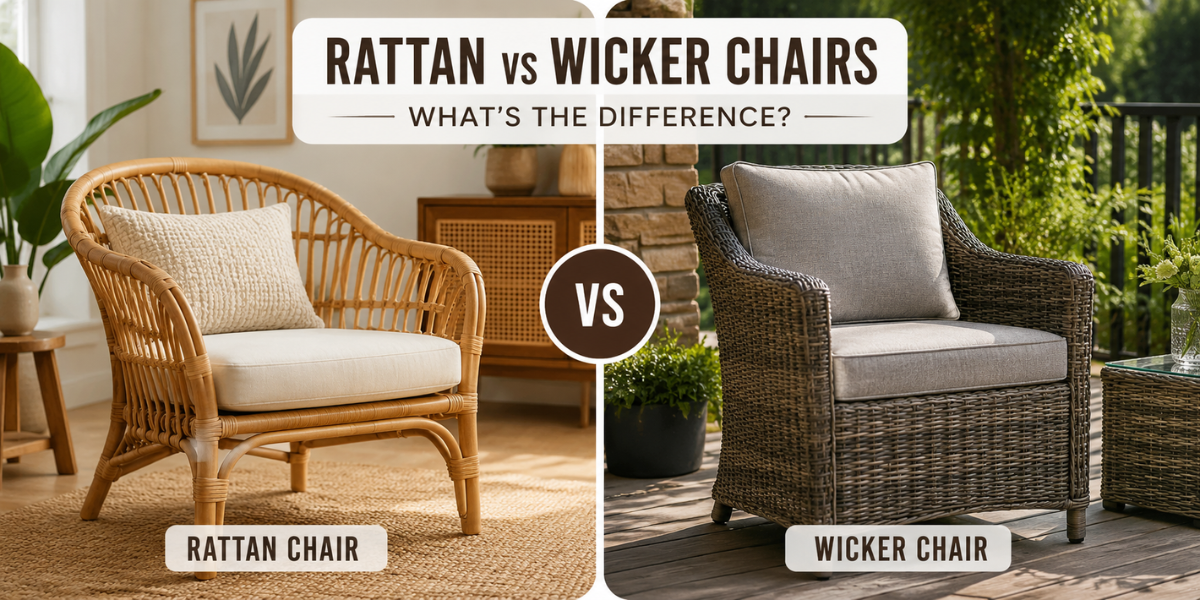
If you’ve ever shopped for furniture online or visited a home décor store, you’ve probably seen the terms rattan and wicker used almost interchangeably. Many homeowners assume they describe the same material, but that’s one of the biggest misconceptions in the furniture industry.
As someone who has worked in home improvement and furniture selection for more than a decade, I’ve noticed this confusion leads many people to buy furniture that doesn’t suit their needs. Someone searching for durable outdoor seating might purchase a natural rattan chair expecting it to withstand rain, while another buyer may overlook beautifully crafted wicker furniture because they believe it’s a completely different product.
The truth is much simpler.
Rattan is a natural material, while wicker is a weaving technique. A chair can be made from rattan and woven using the wicker method, but wicker furniture can also be crafted from bamboo, willow, reed, synthetic resin, or other flexible materials.
If you’re new to natural furniture, you may also enjoy reading our guide on What Is a Rattan Chair?, where we explain how rattan is harvested, manufactured, and used in modern home décor.
In this guide, we’ll compare rattan and wicker chairs in detail, including their materials, durability, comfort, maintenance requirements, appearance, cost, and the best situations for using each one.
Quick Answer
The biggest difference between rattan and wicker is that they describe two completely different things.
Rattan is a naturally growing climbing palm found mainly in Southeast Asia. It is strong, lightweight, and commonly used to build furniture frames. According to Encyclopaedia Britannica, rattan has been valued for centuries because of its flexibility, strength, and versatility in furniture making.
Wicker is a weaving method used to create furniture and decorative items. Wicker furniture can be woven from natural rattan, bamboo, reed, willow, or modern synthetic materials like resin.
In simple terms:
Rattan is the material. Wicker is the weaving style.
Because many rattan chairs are woven using the wicker technique, manufacturers often market them simply as “wicker chairs,” which is why the two terms are frequently confused.
What Is Rattan?
Rattan is a naturally renewable vine-like palm that grows in the tropical forests of countries such as Indonesia, Malaysia, Vietnam, and the Philippines. Unlike traditional trees, rattan grows quickly and develops long, flexible stems that can reach remarkable lengths while remaining surprisingly lightweight.
Its unique combination of strength and flexibility has made it one of the world’s most popular materials for handcrafted furniture.
After harvesting, the stems are cleaned, dried, and treated before being shaped into furniture frames. Skilled craftsmen then bend the material using heat and steam to create elegant curves without sacrificing structural strength.
One of the reasons homeowners love rattan furniture is its natural appearance. Every piece features unique colour variations and grain patterns that give furniture warmth and character.
Common products made from natural rattan include:
- Dining chairs
- Lounge chairs
- Coffee tables
- Storage baskets
- Bed frames
- Shelving units
- Indoor sofas
- Decorative accessories
Natural rattan works particularly well indoors because it creates a warm, organic atmosphere that complements Scandinavian, coastal, bohemian, farmhouse, and contemporary interior designs.
Although rattan is highly durable, prolonged exposure to heavy rain, snow, or intense sunlight can gradually weaken untreated natural fibres. For outdoor use, many manufacturers now produce synthetic rattan, which offers the same woven appearance with significantly greater weather resistance.
What Is Wicker?
Unlike rattan, wicker isn’t a material at all.
Instead, wicker refers to the weaving process used to create furniture, baskets, storage containers, and decorative pieces.
This weaving technique has been used for thousands of years across different cultures because it produces furniture that is both lightweight and visually appealing.
A wicker chair may be woven from a variety of materials, including:
- Natural rattan
- Bamboo
- Reed
- Willow
- Cane
- Water hyacinth
- Synthetic resin (PE rattan)
This explains why two wicker chairs can look almost identical while being made from completely different materials.
Modern outdoor furniture often uses synthetic wicker, a weather-resistant resin woven around aluminium or steel frames. It closely resembles natural wicker but offers better resistance to moisture, UV rays, and temperature changes, making it a popular choice for patios, balconies, and gardens.
When shopping for furniture, it’s important to read the product description carefully. A listing that says “wicker chair” doesn’t automatically mean it’s made from natural rattan—it could just as easily be woven from synthetic resin or another material.
Rattan vs Wicker Chairs: Side-by-Side Comparison
If you’re still wondering whether to choose a rattan or wicker chair, the table below highlights the key differences at a glance.
| Feature | Rattan Chairs | Wicker Chairs |
|---|---|---|
| Definition | Made from natural rattan palm | Made using a weaving technique |
| Material | Natural rattan | Can be rattan, bamboo, willow, reed, cane, or synthetic resin |
| Construction | Material used for the frame and sometimes the weave | Style of weaving, not a material |
| Best For | Indoor furniture and covered outdoor spaces | Indoor and outdoor use (depending on the material) |
| Weather Resistance | Limited unless protected | Synthetic wicker performs very well outdoors |
| Appearance | Natural wood-like texture | Available in many colours, textures, and designs |
| Maintenance | Requires occasional care | Synthetic wicker is generally easier to maintain |
| Lifespan | 10–20 years or more with proper care | Natural wicker lasts many years indoors; synthetic wicker can last 10–15 years outdoors |
Quick takeaway: Every rattan chair can feature a wicker weave, but not every wicker chair is made from rattan. That’s the distinction many shoppers overlook.
Key Differences Between Rattan and Wicker Chairs
Although the terms are often used interchangeably, understanding their differences can help you choose furniture that fits your lifestyle and your home.
1. Material vs Technique
This is the most important difference.
Rattan is a naturally growing palm harvested for furniture making. It provides strength, flexibility, and a warm, organic appearance.
Wicker, on the other hand, is simply the weaving process used to create furniture. That weaving can be done with natural materials like rattan or with synthetic materials designed for outdoor use.
Think of it this way:
- Leather is a material.
- Stitching is a technique.
In the same way:
- Rattan is the material.
- Wicker is the weaving method.
Once you understand this, furniture labels become much easier to interpret.
2. Appearance
At first glance, rattan and wicker chairs can look almost identical, especially when natural rattan is woven into a traditional wicker pattern.
However, there are noticeable differences.
Natural rattan offers a warm, earthy colour with subtle variations in texture that give every piece a unique character. Its handcrafted appearance makes it a favourite for homeowners who want a cosy, timeless interior.
Wicker furniture, meanwhile, comes in a much wider variety of styles because it can be woven from different materials. Synthetic wicker is available in colours such as black, grey, white, espresso, and even modern mixed tones that suit contemporary outdoor spaces.
If you’re decorating a living room, conservatory, or reading corner, natural rattan creates a softer, more organic look. For patios and gardens, synthetic wicker offers greater design flexibility while maintaining a similar woven aesthetic.
3. Strength and Durability
Both options are durable, but their longevity depends on where they’re used.
Natural rattan is remarkably strong for its weight. Its solid core allows it to support everyday use while remaining lightweight enough to move around the house with ease.
When properly cared for, quality rattan furniture can last for decades.
The downside is that natural fibres don’t perform well in constant exposure to rain or harsh sunlight. Over time, excessive moisture can weaken the material, while prolonged UV exposure may cause fading or brittleness.
Synthetic wicker addresses these challenges by using weather-resistant resin woven over powder-coated aluminium or steel frames. This construction resists cracking, fading, and moisture far better than natural fibres.
For homeowners looking for low-maintenance outdoor furniture, synthetic wicker is usually the more practical choice.
Which Is Better for Outdoor Use?
This is one of the most common questions homeowners ask before buying garden furniture.
The answer depends on whether you’re considering natural rattan or synthetic wicker.
Natural Rattan
Natural rattan performs best indoors or in covered outdoor areas such as:
- Enclosed patios
- Conservatories
- Sunrooms
- Covered porches
If left outside year-round, natural rattan may absorb moisture, develop mould, or deteriorate more quickly.
Synthetic Wicker
Synthetic wicker is specifically designed for outdoor conditions.
Most high-quality outdoor wicker furniture is made from UV-resistant polyethylene (PE) resin woven around rust-resistant metal frames. This combination allows it to withstand:
- Rain
- Strong sunlight
- Humidity
- Temperature fluctuations
That’s why you’ll often see synthetic wicker furniture around swimming pools, hotel terraces, cafés, and outdoor lounges.
If your furniture will remain outdoors for most of the year, synthetic wicker is generally the better investment.
Which One Lasts Longer?
There’s no single winner because lifespan depends on how and where the furniture is used.
A well-maintained natural rattan chair kept indoors can easily last 20 years or more, developing character as it ages.
By comparison, premium synthetic wicker furniture typically lasts 10 to 15 years outdoors, even in challenging weather conditions, provided it’s cleaned regularly and protected during extreme weather.
The key is matching the furniture to its environment:
- Choose natural rattan for beautiful indoor spaces.
- Choose synthetic wicker for gardens, patios, balconies, and poolside seating.
Making the right choice from the beginning can save you money and ensure your furniture stays attractive for years to come.
Comfort Comparison
Comfort is one of the biggest factors when choosing any chair, but it’s important to understand that the material alone doesn’t determine how comfortable a chair feels. The frame design, seat depth, backrest angle, and cushions all play a major role.
Natural rattan is slightly flexible, allowing it to absorb small movements when you sit down. This subtle give makes many rattan chairs feel more comfortable than rigid wooden furniture. Combined with thick seat cushions, a quality rattan chair can provide excellent comfort for reading, relaxing, or enjoying a cup of coffee.
Synthetic wicker furniture offers a similar seating experience. Since it’s usually woven around a sturdy aluminium or steel frame, the comfort depends largely on the quality of the cushions included. Premium outdoor sets often feature weather-resistant foam cushions that remain supportive while standing up to the elements.
For indoor relaxation: Natural rattan is often the preferred choice because of its warm, inviting appearance.
For patios and gardens: Synthetic wicker provides excellent comfort with the added benefit of weather resistance.
Maintenance and Cleaning
Even so, covering your outdoor furniture during heavy storms or storing cushions indoors during winter can significantly extend its lifespan. If your furniture includes removable fabric cushions, cleaning them correctly is just as important as maintaining the frame. Our guide on How to Wash Sofa Covers Without Shrinking explains the safest washing methods to keep cushion covers clean while preventing shrinkage and fabric damage.
How to Clean Natural Rattan
Natural rattan should be dusted regularly using a soft cloth, feather duster, or vacuum cleaner with a brush attachment.
For deeper cleaning:
- Mix a small amount of mild dish soap with warm water.
- Lightly dampen a soft cloth.
- Wipe the surface gently.
- Dry the furniture immediately with a clean towel.
Avoid soaking natural rattan, as excessive moisture can weaken the fibres over time.
To maintain its appearance:
- Keep it away from prolonged direct sunlight.
- Avoid placing it in damp areas.
- Clean spills immediately.
- Apply furniture polish designed for natural fibres if recommended by the manufacturer.
How to Clean Synthetic Wicker
Synthetic wicker is much easier to maintain.
Most dirt can be removed using:
- Warm water
- Mild soap
- A soft sponge
- A garden hose (if permitted by the manufacturer)
Because synthetic resin doesn’t absorb moisture like natural fibres, it dries quickly and is less likely to develop mould or mildew.
Even so, covering your outdoor furniture during heavy storms or storing cushions indoors during winter can significantly extend its lifespan.
Price Comparison
Price varies depending on craftsmanship, brand, and materials, but there are some general trends.
Natural Rattan Chairs
Natural rattan furniture is often handcrafted, making each piece unique. The harvesting, treatment, and skilled weaving involved usually result in a higher price.
Premium handmade rattan chairs are considered long-term investments and can remain stylish for decades.
Synthetic Wicker Chairs
Synthetic wicker furniture is available across a wide range of prices.
Affordable sets are ideal for homeowners furnishing patios on a budget, while luxury collections use thicker resin weaves, stronger frames, and premium cushions that rival high-end indoor furniture.
Overall, synthetic wicker often provides excellent value, especially if outdoor durability is your priority.
Pros and Cons
Natural Rattan Chairs
Pros
- Beautiful natural appearance
- Lightweight and easy to move
- Eco-friendly and renewable material
- Durable with proper care
- Perfect for indoor living spaces
- Timeless design that suits many interior styles
Cons
- Not ideal for constant outdoor exposure
- Can fade in strong sunlight
- Requires occasional maintenance
- Sensitive to excess moisture
Synthetic Wicker Chairs
Pros
- Excellent weather resistance
- Low maintenance
- UV-resistant options available
- Suitable for year-round outdoor use
- Available in many modern colours and styles
Cons
- Doesn’t have the same authentic natural texture as real rattan
- Lower-quality products may become brittle over time
- Premium models can be expensive
Which One Should You Buy?
The right choice depends entirely on where and how you plan to use the furniture.
Choose natural rattan if you:
- Want authentic handcrafted furniture
- Are decorating a living room, conservatory, or bedroom
- Prefer natural materials
- Appreciate timeless interior design
Choose synthetic wicker if you:
- Need furniture for a patio or garden
- Live in an area with frequent rain or strong sunlight
- Want minimal maintenance
- Prefer long-lasting outdoor furniture
If you’re investing in furniture that will stay outside throughout the year, synthetic wicker is generally the smarter option. For creating a warm and welcoming indoor space, however, natural rattan remains difficult to beat.
Expert Buying Tips
After years of working with home improvement projects and helping homeowners choose furniture that lasts, here are a few practical tips:
- Don’t assume every wicker chair is made from natural rattan.
- Always read the product description before buying.
- Check whether outdoor furniture uses UV-resistant synthetic resin.
- Inspect the frame—powder-coated aluminium is ideal for outdoor use because it resists rust.
- Look for tight, even weaving with no loose strands or gaps.
- If cushions are included, choose removable, washable covers for easier maintenance.
- Measure your available space before ordering to ensure the furniture fits comfortably.
Spending a few extra minutes comparing materials can save you money and help you choose furniture that suits your home for many years.
Final Thoughts
Although the terms are often used interchangeably, understanding the difference between rattan and wicker can help you make a smarter furniture investment.
Remember the simple rule:
- Rattan is the material.
- Wicker is the weaving technique.
If you’re furnishing an indoor living room, conservatory, or reading nook, a natural rattan chair offers warmth, elegance, and long-lasting appeal. If you’re shopping for a patio, balcony, or garden, synthetic wicker furniture provides excellent durability with minimal maintenance.
By choosing the right option for your space, you’ll enjoy furniture that not only looks beautiful but also stands the test of time.
FAQs
Is rattan the same as wicker?
No. Rattan and wicker are not the same thing. Rattan is a natural material, while wicker is a weaving technique. Many rattan chairs are woven using the wicker method, which is why the two terms are often confused.
Which is better, rattan or wicker chairs?
Neither is universally better—it depends on where you’ll use the furniture. Natural rattan is an excellent choice for indoor spaces because of its warm, organic appearance. Synthetic wicker is generally better for outdoor use thanks to its resistance to moisture and UV exposure.
Can wicker chairs be left outside?
Natural wicker furniture should not be left outdoors for extended periods, especially in wet weather. However, synthetic wicker made from high-quality resin is specifically designed to withstand outdoor conditions.
Are rattan chairs durable?
Yes. High-quality natural rattan chairs are extremely durable when used indoors and properly maintained. It’s not uncommon for well-made rattan furniture to last 20 years or more.
Is synthetic wicker better than natural rattan?
For outdoor furniture, synthetic wicker is usually the better option because it’s weather-resistant and requires less maintenance. For indoor furniture, many homeowners still prefer natural rattan because of its authentic texture and timeless style.
How can I tell if furniture is real rattan?
Real rattan typically has natural colour variations, visible grain, and slight imperfections that make each piece unique. Synthetic wicker usually has a more uniform appearance and is woven around a metal frame for added durability.