Introduction
If you’re planning to study architecture—or you’re a parent helping someone choose a career—you’ve probably wondered whether will architecture be considered a professional degree in 2026. It’s an important question because the answer affects licensing, job opportunities, salary potential, and even whether you’ll be able to legally call yourself an architect in many countries.
I’ve spoken with homeowners, contractors, and young professionals throughout my career, and one thing is always clear: people often confuse an architecture degree with becoming a licensed architect. The two are connected, but they’re not exactly the same.
In this guide, we’ll explain what makes architecture a professional degree, how professional accreditation works in 2026, the differences between academic and professional architecture programs, licensing requirements, career opportunities, and what prospective students should know before enrolling.
Quick Answer
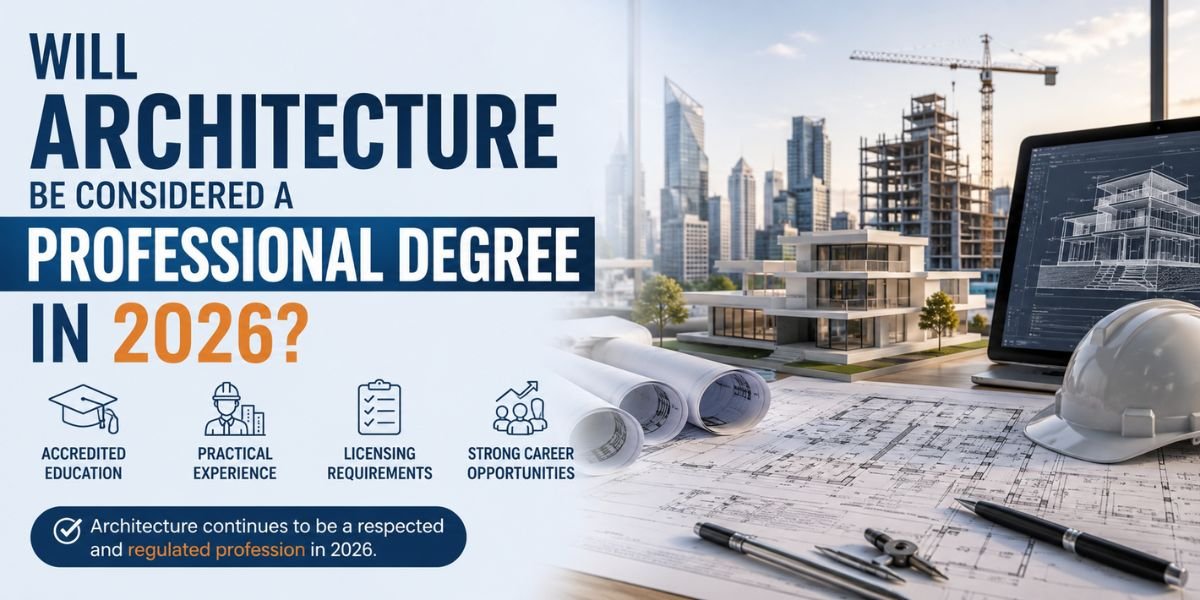
Yes. Architecture will continue to be considered a professional degree in 2026—but only if the program is professionally accredited by the appropriate accrediting body in your country.
A professional architecture degree is specifically designed to meet the educational requirements needed to pursue architectural licensure. Simply earning any degree in architecture does not automatically qualify someone to become a licensed architect.
What Is a Professional Degree in Architecture?
A professional degree is an educational program that prepares graduates for entry into a regulated profession.
Unlike general academic degrees, professional architecture programs are developed to meet licensing standards established by government agencies and professional architectural organizations.
Students typically study subjects such as:
- Architectural design
- Structural engineering fundamentals
- Building construction
- Construction materials
- Building codes
- Environmental systems
- HVAC integration
- Sustainable design
- Urban planning
- Site development
- Accessibility standards
- Professional ethics
- Construction documentation
These subjects prepare graduates to design buildings that are functional, safe, structurally sound, and compliant with local regulations.
Why Accreditation Matters in 2026
Not every architecture degree qualifies graduates for professional licensing.
The most important factor is program accreditation.
Different countries have different accreditation organizations.
For example:
- United States
- Canada
- United Kingdom
- Australia
- European Union countries
Each has its own system that determines whether a university program satisfies professional education standards.
If your degree comes from an accredited program, it generally satisfies the educational requirement needed before beginning the licensing process.
Without accreditation, graduates may need additional education before becoming licensed.
Will Architecture Still Be a Professional Degree in 2026?
Absolutely.
In fact, architecture continues to become more regulated, not less.
Modern architects are responsible for designing increasingly complex buildings that include:
- Structural support systems
- Fire safety planning
- Accessibility compliance
- Energy efficiency
- Smart building technology
- Sustainable construction
- Building Information Modeling (BIM)
- Climate resilience
Because buildings directly affect public safety, governments continue requiring architects to meet professional education and licensing standards.
That makes architecture one of the classic professional degrees alongside engineering, medicine, dentistry, and law.
What Makes Architecture Different from Other Design Degrees?
Many people confuse architecture with interior design or graphic design.
While all involve creativity, architecture carries legal responsibility.
Architects must understand:
- Foundations
- Concrete slab design
- Load-bearing walls
- Roofing systems
- Framing
- Insulation
- Waterproofing
- Vapor barriers
- Mechanical systems
- Electrical coordination
- Plumbing layouts
- Building permits
- Zoning regulations
An architect’s drawings become legal construction documents used by contractors during construction.
Errors in design can create structural failures, safety hazards, or costly delays.
That’s why professional education is required.
Typical Educational Path in 2026
Although requirements vary by country, the pathway generally includes:
Step 1: Earn a Professional Architecture Degree
Students complete either:
- Bachelor of Architecture (B.Arch)
- Master of Architecture (M.Arch)
The appropriate degree depends on the country’s licensing system.
Step 2: Complete Practical Experience
Graduates usually complete supervised work experience under licensed architects.
This practical training teaches:
- Construction administration
- Project coordination
- Building inspections
- Permit documentation
- Contractor communication
- Client meetings
- Site supervision
Step 3: Pass Licensing Exams
Most countries require professional examinations covering:
- Building systems
- Structural concepts
- Professional practice
- Building codes
- Project management
- Construction contracts
- Life safety
Only after meeting all requirements can individuals legally practice as licensed architects.
Skills Students Learn During an Architecture Degree
Professional architecture education combines technical knowledge with creative problem-solving.
Students develop skills in:
Architectural Design
Creating functional, attractive spaces that meet client needs.
Structural Awareness
Understanding how framing, beams, columns, foundations, and load-bearing walls support buildings.
Construction Materials
Learning the strengths and weaknesses of:
- Concrete
- Steel
- Wood
- Masonry
- Glass
- Composite materials
Building Codes
Understanding local regulations that ensure occupant safety.
Environmental Design
Designing buildings with improved energy efficiency and indoor comfort.
Construction Documentation
Preparing professional drawings used by builders and inspectors.
Career Opportunities After Graduation
Graduates with professional architecture degrees can pursue careers including:
- Licensed Architect
- Residential Architect
- Commercial Architect
- Urban Designer
- Sustainable Design Consultant
- BIM Specialist
- Construction Project Manager
- Building Envelope Consultant
- Design Manager
- Facilities Planner
- Architectural Technologist (depending on country)
Some professionals later specialize in healthcare, education, industrial, hospitality, or high-rise construction.
Average Costs of an Architecture Degree
Education costs vary significantly by country and institution.
Typical categories include:
| Education Option | Typical Cost |
|---|---|
| Public universities | Lower tuition, especially for residents |
| Private universities | Higher tuition with more variation |
| International study | Often the highest overall cost due to tuition and living expenses |
Additional expenses often include:
- Design software
- Studio supplies
- Large-format printing
- Model-building materials
- Computer hardware
- Books
- Licensing exam fees
Always compare total educational costs rather than tuition alone.
Is Architecture Worth It in 2026?
For many students, yes.
Architecture offers opportunities to combine creativity with engineering and problem-solving.
However, prospective students should understand that becoming licensed requires:
- Years of education
- Practical experience
- Professional examinations
- Continuing education throughout one’s career
Those who enjoy solving technical problems, designing buildings, and working with engineers, contractors, and clients often find architecture highly rewarding.
Common Misconceptions About Professional Architecture Degrees
“Any architecture degree lets me become an architect.”
Not necessarily.
Only accredited professional programs typically satisfy licensing education requirements.
“Architecture is mostly drawing.”
Modern architecture involves much more than sketching.
Professionals regularly coordinate with:
- Structural engineers
- HVAC engineers
- Electrical consultants
- Plumbing designers
- Civil engineers
- General contractors
“Architects only design luxury homes.”
Architects work on:
- Schools
- Hospitals
- Offices
- Airports
- Museums
- Apartment buildings
- Factories
- Public infrastructure
- Historic preservation projects
Professional vs DIY Home Design
Homeowners sometimes wonder whether hiring an architect is necessary.
Simple cosmetic projects like painting, flooring replacement, or cabinet updates often don’t require architectural services.
However, projects involving:
- Removing load-bearing walls
- Home additions
- Foundation modifications
- Roof structure changes
- Major framing alterations
- New construction
should involve qualified professionals because these changes affect structural safety and local building code compliance.
If you’re planning a major renovation, understanding modern building design principles can help you make informed decisions. You can explore more practical construction and home improvement guides on IngeBIM: https://ingebim.com/
Expert Recommendations
If you’re considering architecture in 2026:
- Choose an accredited professional program.
- Research licensing requirements before enrolling.
- Develop strong math and communication skills alongside design abilities.
- Learn Building Information Modeling (BIM) software early.
- Gain internship experience whenever possible.
- Stay informed about sustainable construction practices and evolving building codes.
- Understand that architecture combines creativity with technical responsibility.
Conclusion
So, will architecture be considered a professional degree in 2026? The answer is yes. Architecture remains one of the world’s established professional fields because architects are responsible for designing safe, functional, and code-compliant buildings that serve the public.
However, students should remember that not every architecture degree automatically leads to professional licensure. Choosing an accredited program, completing supervised work experience, and passing licensing examinations remain essential steps toward becoming a licensed architect.
Whether you’re planning your education or simply exploring career options, understanding these requirements now can help you make informed decisions that benefit your future. For more expert advice on architecture, renovation, and construction topics, or if you have questions about your next project, visit the Contact page at IngeBIM: https://ingebim.com/contact/
Frequently Asked Questions
1. Is architecture a professional degree in 2026?
Yes. Accredited architecture programs continue to be recognized as professional degrees that meet educational requirements for architectural licensure in many countries.
2. Can I become an architect with any architecture degree?
No. In most cases, only graduates of professionally accredited architecture programs qualify to begin the licensing process.
3. What is the difference between a B.Arch and an M.Arch?
A Bachelor of Architecture is typically a first professional degree, while a Master of Architecture may serve as the professional degree for students with a different undergraduate background, depending on the country’s education system.
4. Do architects need a license?
Yes. In most jurisdictions, architects must complete accredited education, gain supervised experience, and pass licensing examinations before practicing independently.
5. Is architecture a good career in 2026?
For individuals who enjoy design, engineering concepts, construction, and problem-solving, architecture continues to offer rewarding long-term career opportunities.
6. How long does it take to become a licensed architect?
The timeline varies by country but generally includes several years of university education, supervised professional experience, and licensing examinations.
7. Is architecture more technical than interior design?
Generally, yes. Architects are responsible for structural planning, life safety, building systems, and code compliance, while interior designers primarily focus on interior functionality and aesthetics.
8. Can architects work in construction?
Yes. Many architects work closely with contractors during construction administration, project management, site inspections, and quality control to ensure projects are built according to approved plans.