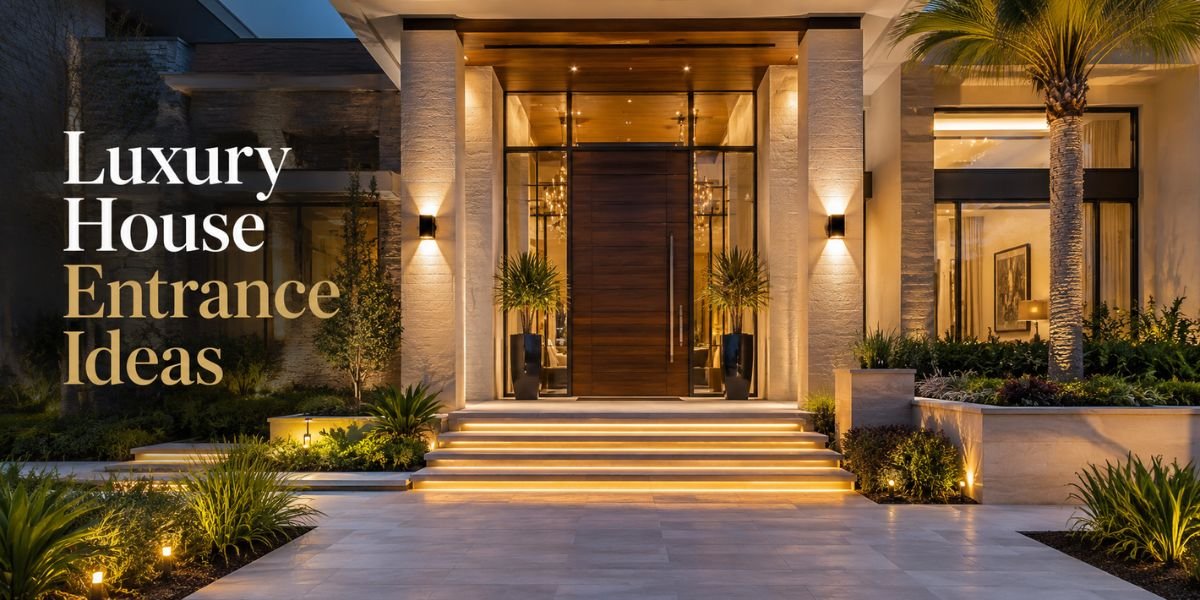
If you’ve ever pulled up to a house and felt something shift before you even reached the front door, that’s not an accident. That’s design doing its job. I’ve walked hundreds of properties over the years, and I can tell you the entrance is the single most under-budgeted area relative to how much it affects a buyer’s or guest’s first impression. Homeowners will drop $40,000 on a kitchen remodel and leave a cracked concrete stoop and a builder-grade door untouched. That’s backwards thinking.
If you’re searching for luxury house entrance ideas, you’re probably standing at your front door right now, looking at it with fresh eyes, wondering how to make it feel like the rest of the house you’ve invested in — or the house you’re planning to build. This matters more than most people realize. Real estate agents will tell you curb appeal, especially the entrance itself, can influence a buyer’s perception of value before they’ve seen a single interior room. It’s the handshake of your home.
Quick Answer
A luxury entrance combines four things working together: a statement door (solid wood, oversized, or a custom pivot design), quality architectural lighting, upgraded materials underfoot (natural stone, brick, or large-format pavers), and intentional landscaping that frames the walkway. You don’t need all four maxed out — but skimping on any one of them will make the others look cheap by comparison. Budget-wise, a meaningful entrance upgrade can range from $3,000 for smaller cosmetic changes to $50,000+ for a full portico, stonework, and custom door package.
What Makes an Entrance Feel “Luxury”
It’s rarely one single element. It’s proportion, materials, and consistency. A mansion-sized door on a modest ranch house looks silly. A $15,000 iron door next to peeling vinyl siding looks worse than no upgrade at all. Luxury entrances work because every piece — door, lighting, hardware, flooring, landscaping — speaks the same design language.
I always tell clients: think of the entrance as a frame around the front door. Everything within that frame needs to feel deliberate, not thrown together over five years of piecemeal projects.
Statement Front Doors
This is where most of the visual impact lives.
Solid wood doors — mahogany, walnut, or white oak — remain the gold standard for a reason. They age well, they’re substantial (you feel the weight when you open them), and they take stain and finish beautifully.
Pivot doors are the current high-end trend. Instead of swinging on hinges, they rotate on a vertical pivot point, allowing for oversized panels (sometimes 8 feet tall, 4 feet wide) that would be too heavy for standard hinges. These start around $4,000-$6,000 for the door alone and climb past $15,000 for custom glass-and-wood combinations.
Iron and glass doors bring in natural light while keeping a substantial, secure feel. Popular in Mediterranean and modern farmhouse styles.
Double doors widen the entrance visually and physically — great for larger homes where a single door would look undersized.
Whatever you choose, don’t cheap out on hardware. A $3,000 door with a $15 hinge set will look off. Solid brass or matte black oil-rubbed bronze hardware, in a consistent finish throughout, ties the whole thing together.
Architectural and Landscape Lighting
Lighting is the most overlooked luxury upgrade, and honestly, it’s one of the best value-per-dollar improvements you can make.
- Sconces flanking the door — symmetrical placement reads as intentional and formal.
- Up-lighting on columns or stonework — creates dramatic shadow and texture at night.
- Path lighting — low-voltage fixtures along the walkway guide the eye (and your guests) toward the door.
- Overhead pendant or lantern — especially effective under a covered portico.
A good rule from experience: layer at least two lighting types (e.g., sconces plus path lighting) rather than relying on a single overhead fixture. Flat, single-source lighting looks like a motel. Layered lighting looks like a resort.
Flooring and Walkway Materials
What’s underfoot matters as much as what’s overhead.
- Natural stone pavers (bluestone, travertine, flagstone) — premium look, higher cost, holds up for decades.
- Brick — timeless, especially for colonial or traditional-style homes.
- Large-format concrete pavers — budget-friendly option that still reads as upscale when laid in a clean pattern.
- Stamped concrete — the most affordable route, can mimic stone at a fraction of the cost, though it won’t fool anyone standing close up.
If you’re replacing a walkway, this is also the moment to check drainage and slope away from the foundation — a mistake I see constantly. Pretty pavers over poor grading just means you’re paving over a future water intrusion problem near your foundation.
Portico and Overhang Additions
If your entrance currently has zero coverage — no roof, no portico — this is often the highest-impact structural addition. A covered entry does three things: protects the door from weather (extending its life), creates shadow and depth (which reads as luxury), and gives you a spot to add that pendant lighting we talked about.
Adding a portico is a real construction project, not a weekend DIY job. It typically involves tying new framing into the existing roofline, sometimes adjusting load paths, and almost always requires a permit since you’re altering the structure and roofline of the home. Expect $8,000-$25,000 depending on size and roofing material match.
Cost Breakdown
Costs vary significantly by region, labor rates, and material choices, but here’s a general range based on typical residential projects:
| Upgrade | Budget Option | Mid-Range | Premium |
|---|---|---|---|
| Front door | $800-$1,500 | $2,500-$5,000 | $8,000-$20,000+ |
| Exterior lighting package | $500-$1,000 | $1,500-$3,500 | $5,000+ |
| Walkway/flooring | $1,500-$4,000 | $5,000-$10,000 | $15,000+ |
| Portico/overhang | N/A (structural) | $8,000-$15,000 | $18,000-$30,000+ |
| Landscaping/hardscape | $1,000-$3,000 | $4,000-$8,000 | $10,000+ |
These are national ballpark figures. Actual pricing depends heavily on your local labor market, material availability, and whether permits are required for structural changes.
Materials Needed (For DIYers Tackling Smaller Upgrades)
If you’re handling smaller pieces yourself — swapping hardware, adding lighting, repainting the door — here’s what you’ll typically need:
- Exterior-grade paint or stain (if refinishing a door)
- New hardware set (handle, deadbolt, hinges) in matching finish
- Low-voltage landscape lighting kit
- Paver base material, sand, and edging (for walkway work)
- Caulk and weatherstripping (often neglected during door upgrades)
Step-by-Step: Refinishing an Existing Door for a Luxury Look
This is a great weekend project if your door’s bones are solid but it looks tired.
- Remove the door from its hinges (get a helper — solid doors are heavy).
- Strip old finish using a chemical stripper or sanding, working with the grain.
- Sand progressively — 120 grit, then 220 grit — until smooth.
- Clean thoroughly to remove dust before staining.
- Apply stain in thin, even coats, wiping excess per product instructions.
- Seal with exterior-rated polyurethane — at least 2-3 coats, sanding lightly between coats.
- Reinstall hardware — ideally upgraded to match your new finish.
- Rehang the door, check alignment, adjust hinges if needed.
Skill Level: Intermediate
Estimated Time: 1-2 full weekends (including dry time between coats)
Tools Required: Chemical stripper or orbital sander, sawhorses, stain brushes, foam applicators, screwdriver/drill
Safety Precautions: Work in a ventilated area, wear a respirator mask when stripping or sanding, wear gloves when handling chemical strippers.
Common Errors: Rushing dry time between coats (causes cloudy or tacky finish), not sanding evenly (leaves visible blotches), skipping primer on bare wood.
Common Mistakes to Avoid
- Oversizing the door for the house. A grand door on a small home looks like a costume, not a renovation.
- Mismatched hardware finishes. Brass door handle, black hinges, silver mailbox — pick one metal tone and stay consistent.
- Ignoring drainage during walkway upgrades. Beautiful pavers won’t matter if water pools against your foundation.
- Overlighting or underlighting. Too many fixtures looks like a car dealership; too few looks unfinished.
- Skipping permits on structural additions. Porticos and overhangs that tie into the roofline almost always need permitting — skipping this can cause problems when you sell.
Professional vs. DIY
Painting, hardware swaps, and basic landscape lighting are well within reach for a motivated homeowner. Structural work — porticos, load-bearing changes, anything altering the roofline or requiring a permit — should go to a licensed contractor. I’ve seen well-meaning DIY portico additions fail inspection because the ledger board wasn’t properly flashed or tied into structural framing, leading to water intrusion behind the siding within a year or two.
Safety Considerations
- Doors are heavy — solid wood or iron doors can weigh 100+ pounds. Never attempt to hang or remove one alone.
- Any electrical work for new lighting fixtures should follow local code; if you’re not comfortable with wiring, hire a licensed electrician.
- Structural changes (portico, overhang) require permits in most municipalities — check with your local building department before starting.
Expert Recommendations
If you’re working with a limited budget, prioritize in this order: door hardware and paint/stain refresh first (cheapest, highest visual impact), then lighting, then flooring, then structural additions like a portico if your budget allows. This order gives you the most visual transformation per dollar spent, and each phase builds naturally on the last.
Final Thoughts
A luxury entrance doesn’t require unlimited budget — it requires intention. Start with the door and hardware, layer in quality lighting, upgrade what’s underfoot, and if budget allows, add coverage with a portico. Each piece should feel like it belongs with the others, not like separate projects stacked over the years. If you’re planning a larger structural change like a portico or roofline extension, it’s worth checking in with a licensed contractor early in the process to confirm what’s feasible with your home’s existing framing before you fall in love with a design that won’t work structurally. For more entrance and curb appeal projects, check out our related guide on exterior home renovation ideas here on IngeBIM.
FAQs
Does upgrading the front entrance actually increase home value?
Curb appeal improvements, including entrance upgrades, are generally considered among the higher-return renovation categories, though actual return varies by market, home price point, and the quality of the work. It’s best viewed as a value-supporting improvement rather than a guaranteed dollar-for-dollar return.
What’s the most cost-effective luxury upgrade for an entrance?
Lighting and hardware. Both are relatively inexpensive compared to door replacement or structural additions but dramatically change how the entrance reads, especially at night or during evening showings.
Do I need a permit to add a portico?
In most areas, yes, since you’re altering the roofline and tying new framing into the existing structure. Requirements vary by municipality, so check with your local building department before starting.
How much does a custom pivot door cost installed?
Installed costs typically range from $6,000 to $20,000+ depending on size, materials (wood vs. glass vs. iron), and whether structural modifications are needed to support the heavier pivot hardware.
Can I install exterior lighting myself?
Low-voltage landscape lighting kits are generally DIY-friendly. Hardwired fixtures tied into your home’s electrical system should be installed or at least inspected by a licensed electrician.
What door material lasts longest in harsh weather?
Fiberglass and iron doors tend to hold up better than solid wood in extreme humidity or temperature swings, though a well-maintained and properly sealed wood door can last decades.
Should my front door match my home’s architectural style?
Yes — a modern pivot door on a colonial home, or an ornate carved door on a minimalist modern build, tends to look mismatched rather than intentional. Consistency with the home’s existing architecture reads as higher quality.
Is stamped concrete a good alternative to real stone for walkways?
It’s a solid budget option that mimics the look of stone at a lower cost, though it won’t have the same texture or longevity as natural stone up close.