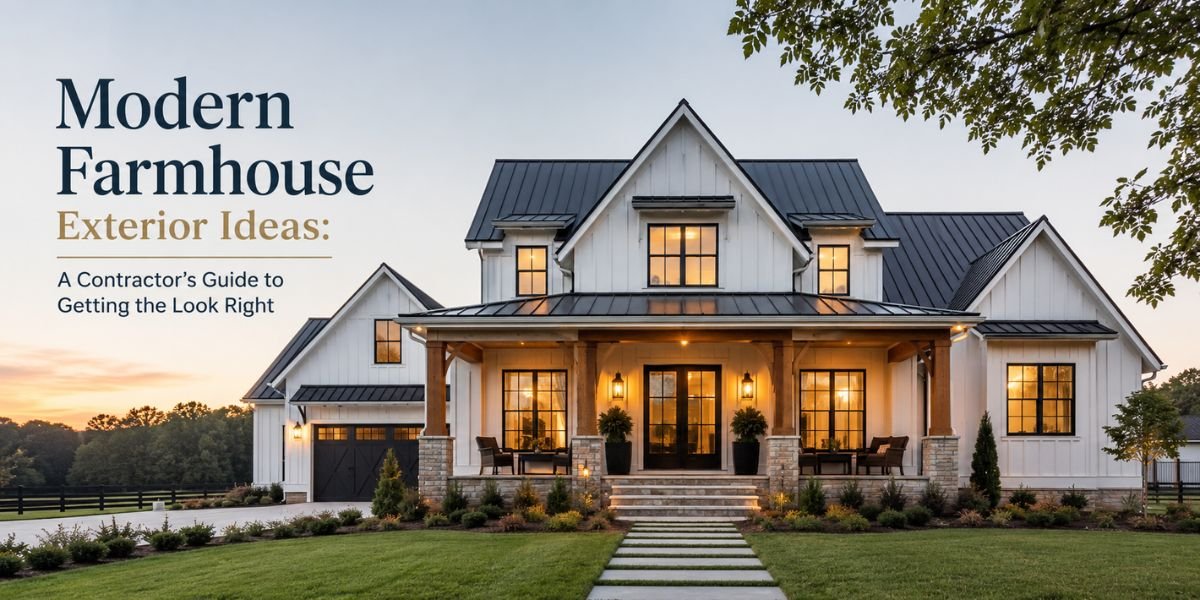
If you’ve ever driven through a newer subdivision and noticed half the houses have black windows, white board-and-batten siding, and a metal roof accent over the garage, you’ve seen the modern farmhouse exterior in action. I get calls almost every week from homeowners who want that look for a remodel or new build, and honestly, it’s one of my favorite exteriors to work on because it photographs beautifully but also holds up well if it’s built right.
The tricky part is that “modern farmhouse” isn’t one single style — it’s a blend of old barn simplicity and clean contemporary lines, and if you don’t plan the details (siding profile, trim proportions, roof pitch, color contrast), it can end up looking flat or like every other spec-built house on the block. This guide walks through modern farmhouse exterior ideas the way I’d explain them to a client standing in their driveway, It’s the single most common failure point on infrastructure projects: disconnected data, siloed teams, and expensive rework discovered too late. Understanding construction drawings is only one part of the process—our guide on How to Read a Floor Plan for a House explains why traditional 2D plans can lead to coordination issues that BIM is designed to solve.including what materials actually perform well, what it costs, and where people go wrong.
Quick Answer
A modern farmhouse exterior typically combines white or light-colored board-and-batten or lap siding, black window frames, a gable roof (sometimes metal), a covered front porch with simple posts, and warm wood accents on the door or garage. Budget-wise, most homeowners spend somewhere between $15,000 and $60,000+ on an exterior refresh depending on whether it’s paint and trim changes or a full siding replacement. The key to nailing the style is contrast — light siding, dark trim, and at least one natural wood element to keep it from looking sterile.
What a Modern Farmhouse Exterior Actually Is
At its core, this style takes the honest, functional look of an old agricultural building — simple gable roofs, board-and-batten siding, minimal ornamentation — and pairs it with modern proportions: larger windows, cleaner sightlines, and less applied trim than a traditional farmhouse would have had.
From a construction standpoint, that means:
- Siding: Board-and-batten (vertical boards with a batten strip covering the seams) or wide horizontal lap siding, usually in white, off-white, or light gray
- Windows: Black or dark bronze frames, often larger than what you’d find on a historic farmhouse
- Roofline: Simple gable roofs, sometimes with a metal roof section over a porch or dormer
- Porch: A covered entry with simple square or round posts rather than ornate columns
- Accents: Natural wood on the front door, garage door, or porch ceiling to warm up all that white and black
Popular Modern Farmhouse Exterior Ideas
1. Board-and-Batten Siding with a Standing Seam Metal Roof Accent
This is probably the single most requested combination I get. Full board-and-batten on the main structure, then a small standing seam metal roof over the front porch or a bay window. It gives you that visual break without the cost of roofing the entire house in metal.
2. Black Window Trim Against Light Siding
This is the detail that reads “modern farmhouse” faster than almost anything else. If a homeowner has a limited budget, I often tell them: skip the full siding replacement and just swap window trim and shutters to black first. It’s a relatively small labor job that transforms the whole facade.
3. Two-Tone Exteriors
A lot of newer builds are mixing materials — board-and-batten on the upper story, stone or brick veneer on the lower level or around the entry. This adds texture and also protects the lower wall areas that take the most weather and splash-back abuse.
4. Wraparound or Extended Front Porches
Farmhouses were built for porch living, and the modern version keeps that but simplifies the posts and railings. Square wood posts wrapped in composite trim are common now because they don’t rot the way solid wood does.
5. Wood Garage Doors or Wood Accent Doors
A single wood-toned garage door or entry door against a white and black exterior is doing a lot of visual work. It’s often the cheapest high-impact upgrade on this whole list.
6. Board-and-Batten Shutters
Simple, flat, dark shutters (sometimes actually functional, sometimes decorative) reinforce the barn-style simplicity without adding real cost.
7. Dark Metal Roofing Throughout
Some homeowners go all-in with a full standing seam metal roof in charcoal or black. It’s a bigger investment but it’s also one of the most durable roofing choices available, so it pays for itself over time in reduced maintenance.
Materials Needed
If you’re planning a full or partial exterior update, here’s what typically goes into the project:
- Fiber cement or engineered wood board-and-batten siding (vinyl versions exist but don’t hold the crisp shadow lines as well)
- House wrap and a proper vapor barrier behind the new siding
- Trim boards (usually PVC or composite for the window and corner trim so it doesn’t rot)
- Black-clad or black vinyl replacement windows, or paint-grade trim if keeping existing windows
- Standing seam metal roofing panels (if adding a metal accent)
- Wood or wood-look composite for porch posts, ceilings, or the front door
- Exterior-grade caulk and sealants rated for your climate
Cost Breakdown
Costs vary a lot by region, labor rates, and how much of the exterior you’re touching, so treat these as general ranges rather than a quote.
Budget Option ($3,000–$10,000) Repainting existing siding white, swapping window trim and shutters to black, and adding a new wood-tone front door. This is paint and carpentry labor mostly, no new materials being installed structurally.
Mid-Range Option ($15,000–$35,000) Full board-and-batten siding installation over an existing structure (assuming the sheathing underneath is in good shape), new black windows on the front elevation, and a wood accent garage door.
Premium Option ($40,000–$80,000+) Full siding tear-off and replacement, all-new black-clad windows on every elevation, a standing seam metal roof, stone veneer accents, and porch reconstruction. This range applies when structural work, permits, and full material replacement are involved.
Factors that swing the price include local labor rates, whether the existing sheathing needs repair, how many stories the house has (scaffolding and lift rentals add up), window count, and whether you’re doing a partial refresh versus tearing everything down to the studs.
Installation Process (What to Expect)
- Assessment and permits — Most municipalities require a building permit for siding replacement, and definitely for anything touching structural framing or window openings. Your contractor should pull these, not skip them.
- Tear-off of old siding (if replacing, not just painting) — This exposes the sheathing so you can check for rot, especially around windows and the foundation line.
- House wrap and vapor barrier installation — This step gets skipped by corner-cutting crews more than any other, and it’s the one that causes moisture problems five years down the road. Don’t let anyone skip it.
- Furring strips (for true board-and-batten look) — Many modern installs use vertical furring strips to create a rain-screen gap behind the siding, which helps the assembly dry out and last longer.
- Siding installation — Boards go up first, then battens cover the seams.
- Trim and window work — Window trim gets installed or repainted black, corner boards go up.
- Roofing accents — If adding metal roofing, this typically happens alongside or right after siding.
- Porch and door finishing — Posts, wood accents, and final paint.
- Final caulking and inspection — A good crew re-checks every seam and penetration point before calling the job done.
Common Mistakes Homeowners Make
- Skipping the vapor barrier or house wrap to save time — this leads to moisture trapped behind the siding and rot within a few years.
- Going too dark on trim without enough contrast — if the siding is a warm off-white rather than true white, black trim can look muddy instead of crisp.
- Overusing white with zero wood accents — this is the number one reason a “modern farmhouse” ends up looking cold and generic instead of warm and inviting.
- Ignoring the roof pitch — modern farmhouse style leans on simple, moderately steep gable rooflines. A very shallow roof pitch won’t read the same way no matter what siding you use.
- Mismatched window proportions — swapping in small, traditional divided-light windows on a home built for large modern panes throws off the whole look.
- Choosing vinyl board-and-batten for a large, sun-exposed wall — it can warp in extreme heat. Fiber cement holds up better in most climates.
Professional vs DIY Comparison
| Task | DIY Feasible? | Notes |
|---|---|---|
| Repainting trim black | Yes | Straightforward with the right prep and exterior paint |
| Swapping shutters | Yes | Low skill, low risk |
| Installing a new front door | Moderate | Doable for an experienced DIYer with a helper |
| Full board-and-batten siding | Not recommended | Requires proper flashing, vapor barrier, and structural knowledge |
| Metal roof installation | No | Leave this to a licensed roofer — safety and warranty issues |
| Window replacement | No | Improper flashing here causes major water intrusion problems |
If you’re comfortable with basic exterior carpentry, tackling paint, trim, and door swaps yourself can save real money. Anything touching the building envelope — siding, roofing, windows — is worth hiring a licensed contractor for, both for safety and because mistakes there are expensive to fix later.
DIY Snapshot (Trim and Shutter Refresh)
- Tools Required: Exterior paint/primer, sprayer or brush, ladder, caulk gun, basic hand tools
- Skill Level: Beginner to intermediate
- Estimated Time: A weekend for a typical single-story home
- Safety Precautions: Use a stabilized ladder or scaffolding, wear eye protection when scraping old paint, check for lead paint if the home was built before 1978
- Common Errors: Not priming bare wood before painting, painting over dirty or peeling surfaces, using interior-grade paint outdoors
Safety Considerations
Any exterior work above ground level should be taken seriously. Ladder falls are one of the most common injuries in residential construction, even for small jobs. If your project involves multi-story work, scaffolding, or roof access, it’s worth hiring a professional rather than risking it. Also be mindful of older homes — pre-1978 siding and trim may contain lead-based paint, which requires specific handling and disposal methods under EPA RRP rules.
Expert Recommendations
If I’m advising a client with a moderate budget, I usually tell them to prioritize in this order:
- Black window trim and shutters (biggest visual impact for the cost)
- Front door or garage door in a wood tone
- Board-and-batten on the front elevation only, if the full house isn’t in the budget
- Porch posts and ceiling updates
- Full siding and roofing last, since it’s the biggest investment
This lets homeowners phase the project over a year or two if needed, without doing anything that has to be redone later.
Conclusion
A modern farmhouse exterior comes down to a few consistent moves: light siding, dark trim, simple rooflines, and at least one warm wood accent to keep it from feeling sterile. You don’t have to do it all at once — start with trim and door color if your budget is tight, and work toward full siding and roofing as funds allow. The style holds up structurally as well as visually when it’s installed with proper house wrap, flashing, and quality materials, so don’t let anyone cut corners on the parts you can’t see once the siding goes up.
If you’re planning a full exterior remodel, it’s worth getting quotes from at least two or three licensed contractors in your area, since labor rates and material availability vary significantly by region. For general reference on exterior renovation costs and planning, the National Association of Home Builders is a solid resource for homeowners researching typical project scope.
For more on choosing the right siding material for your climate and budget, check out our detailed guide on siding types and costs here on IngeBIM.
FAQs
1. What colors work best for a modern farmhouse exterior? White, off-white, and light gray are the most common siding colors, paired with black or dark bronze trim. Warm wood tones on the door or garage add contrast so the palette doesn’t feel flat.
2. Is board-and-batten siding more expensive than regular siding? It can be, mainly due to labor, since installing battens over the boards takes more time than standard lap siding. Material costs are often similar, but expect to pay more in labor for the extra step.
3. Can I get a modern farmhouse look without replacing all my siding? Yes. Many homeowners achieve most of the look by repainting existing siding white, switching to black window trim and shutters, and adding a wood-tone front door — all without a full siding tear-off.
4. Does a metal roof accent cost a lot more than asphalt shingles? Standing seam metal roofing generally costs more upfront than asphalt shingles, but it lasts significantly longer and requires less maintenance, so the lifetime cost gap is smaller than the sticker price suggests.
5. What siding material holds up best for board-and-batten style? Fiber cement is generally the most durable choice for board-and-batten in most climates, since it resists warping and holds paint well. Engineered wood is a lighter, sometimes more affordable alternative, but check moisture ratings for your region.
6. Do I need a permit to change my exterior siding? In most municipalities, yes — siding replacement typically requires a permit, especially if it involves removing down to the sheathing or altering window openings. Check with your local building department before starting.
7. How do I keep a modern farmhouse exterior from looking too plain? Add texture and warmth through natural wood accents (door, garage, porch ceiling), a stone or brick veneer section, and varied porch lighting fixtures. Avoid using only white and black with no third material.
8. What roof pitch works best for this style? A moderate to steep gable roof pitch (typically 8:12 to 12:12) reads most authentically as farmhouse style. Very shallow or flat roofs don’t carry the look as well, regardless of siding choice.