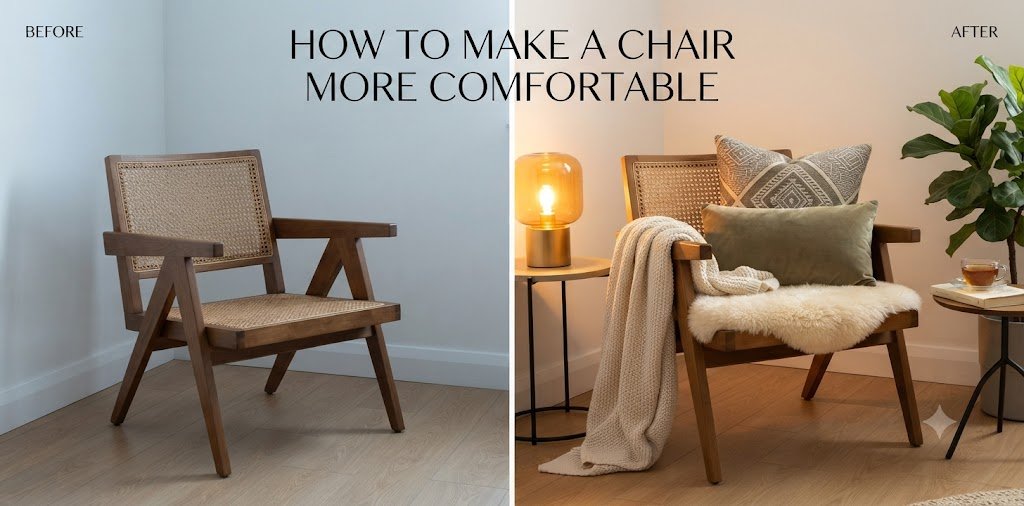
Sitting in an uncomfortable chair for hours can lead to back pain, poor posture, and constant fidgeting. Whether you work from home, study at a desk, relax in the living room, or use a dining chair every day, comfort matters more than most people realize. If you’re choosing a new seating option for better posture, our guide on the Criss Cross Chair explains why this modern chair has become popular for home offices.
The good news is that you do not always need to buy a new chair. In many cases, a few simple adjustments and affordable accessories can make a dramatic difference. However, if you’re planning to replace your existing chair instead, our guide to choosing the right Rattan Chair can help you find a stylish and comfortable option for your home.
In this guide, I will share practical methods that homeowners and office workers can use to make almost any chair more comfortable. If you’re looking for a more relaxing seating solution for reading or lounging, you may also enjoy our complete Hammock Chair buying guide.
Why Chairs Become Uncomfortable
Before fixing the problem, it helps to understand what causes discomfort. Common reasons include:
- A hard seat cushion
- Lack of lower back support
- Incorrect chair height
- Poor posture
- Worn-out padding
- Uncomfortable armrests
- Sitting for long periods without movement
Identifying the main cause makes it easier to choose the right solution.
1. Add a Seat Cushion
One of the fastest ways to improve comfort is to add a seat cushion.
Look for:
- Memory foam cushions
- Gel seat pads
- Ergonomic office chair cushions
These distribute weight more evenly and reduce pressure on the hips and tailbone. They are especially useful for wooden dining chairs and older office chairs.
2. Use Lumbar Support
Many chairs fail to support the natural curve of the lower back.
A lumbar support pillow:
- Encourages better posture
- Reduces lower back strain
- Helps prevent slouching
You can buy an adjustable lumbar cushion or roll up a small towel and place it behind your lower back as a temporary fix.
3. Adjust the Chair Height
A chair that is too high or too low can cause discomfort throughout the body.
For proper height:
- Feet should rest flat on the floor.
- Knees should be at roughly a 90-degree angle.
- Thighs should be parallel to the ground.
If the chair is too high, use a footrest. If it is too low, consider a seat cushion to raise your sitting position.
4. Improve the Backrest Angle
A perfectly upright chair is not always the most comfortable.
For desk work:
- Recline slightly, around 100–110 degrees.
- Keep your shoulders relaxed.
- Avoid leaning too far back while typing.
This reduces pressure on the spine and helps you stay comfortable for longer periods.
5. Add Armrest Padding
Hard armrests can create pressure on the elbows and shoulders.
Simple solutions include:
- Foam armrest covers
- Memory foam pads
- Soft fabric wraps
Padded armrests are particularly helpful if you spend several hours at a computer each day.
6. Use a Footrest
A footrest can make a surprisingly big difference.
Benefits:
- Improves circulation
- Reduces pressure on the thighs
- Encourages better posture
Even a sturdy box or low stool can work if you do not have a dedicated footrest.
7. Replace Worn-Out Cushioning
If your chair used to feel comfortable but no longer does, the internal foam may have compressed over time.
For upholstered chairs:
- Replace the foam insert.
- Add an extra layer of batting.
- Reupholster the seat if necessary.
This can extend the life of the chair for years.
8. Add a Soft Throw or Blanket
For dining chairs, accent chairs, or outdoor seating, a folded throw blanket can provide extra padding and warmth.
This is an inexpensive solution that also improves the look of the chair.
9. Improve Your Sitting Position
Sometimes the chair is not the main problem.
Try:
- Sitting all the way back in the seat.
- Keeping both feet on the floor.
- Relaxing your shoulders.
- Keeping your head aligned with your spine.
Good posture can make an average chair feel much better.
10. Take Regular Breaks
Even the most expensive ergonomic chair becomes uncomfortable if you sit for too long.
A simple rule:
- Stand up every 30–60 minutes.
- Stretch for a minute or two.
- Walk around briefly.
This reduces stiffness and improves circulation.
11. Add a Headrest (If Possible)
For office chairs with high backs, a headrest can reduce neck strain.
A headrest is most helpful when:
- You recline frequently.
- You work long hours.
- You experience neck tension.
Some aftermarket headrests can be attached to existing chairs.
12. Use Breathable Materials
Heat buildup can make a chair feel uncomfortable.
Consider:
- Mesh seat covers
- Breathable fabric cushions
- Cotton or linen chair pads
These help keep you cooler during long sitting sessions.
13. Stabilize a Wobbly Chair
A chair that rocks or shifts unexpectedly feels uncomfortable and unsafe.
Check:
- Loose screws
- Damaged joints
- Uneven legs
Tightening the hardware often improves both comfort and stability.
14. Add Extra Padding to Hard Chairs
Wooden and metal chairs often need additional cushioning.
Easy DIY options:
- Foam cut to size
- Chair pads with ties
- Upholstered seat covers
These can transform a hard chair into a comfortable everyday seat.
15. Know When to Replace the Chair
Sometimes modifications are not enough.
Consider a replacement if:
- The frame is damaged.
- The seat sags severely.
- The chair causes persistent pain.
- Repairs would cost almost as much as a new chair.
A supportive chair is an investment in your comfort and health.
Best Comfort Upgrades by Chair Type
| Chair Type | Best Upgrade |
|---|---|
| Office Chair | Lumbar support + seat cushion |
| Dining Chair | Chair pad + foot support |
| Wooden Chair | Thick foam cushion |
| Accent Chair | Extra back pillow |
| Outdoor Chair | Weather-resistant cushion |
Final Thoughts
Making a chair more comfortable does not have to be expensive. In many cases, adding a cushion, improving back support, adjusting the height, and taking regular movement breaks can completely change how a chair feels.
Start with the simplest fixes first. You may discover that a chair you were ready to replace only needed a few small upgrades to become comfortable again.
FAQs
How can I make a hard chair more comfortable?
Add a memory foam seat cushion, use a lumbar pillow, and place a footrest under your desk or table.
Is a seat cushion or lumbar support more important?
For most people, lumbar support provides the biggest improvement because it helps maintain healthy spinal alignment.
Can I improve an old chair without spending much money?
Yes. A rolled towel for lumbar support, a folded blanket for cushioning, and proper posture adjustments can noticeably improve comfort at little or no cost.
How often should I stand up from my chair?
Experts generally recommend standing and moving every 30–60 minutes.