I’ve walked into a lot of living rooms over the years — new builds, remodels, staging jobs before a sale — and the couch is almost always the piece of furniture that gives homeowners the most grief. It’s not the wallpaper or the flooring they worry about. It’s the sofa that’s covered in coffee stains, dog hair, and a mystery spot nobody wants to talk about.
Learning how to clean a couch properly matters more than people think. A sofa is usually one of the most expensive pieces of furniture in the house, and the wrong cleaning method can shrink fabric, strip color, or leave permanent water rings. I’ve seen homeowners grab a steam cleaner or a bottle of bleach-based spray without checking the fabric first, and end up with a bigger problem than the stain they started with. The good news: with the right approach, most couches can look almost new again using tools you probably already have at home.
Quick Answer
To clean a couch, first check the manufacturer’s cleaning code (usually on a tag under a cushion), vacuum thoroughly to remove dust and debris, then treat stains with the appropriate cleaner for that fabric type — water-based for “W,” solvent-based for “S,” and a light touch for “X” codes that mean vacuum-only. Blot, don’t scrub, and always test any cleaner on a hidden area first. For deep cleaning, a fabric-safe upholstery cleaner or professional steam cleaning every 12–18 months keeps most sofas looking new.
Why the Cleaning Code Matters More Than Any Product You Buy
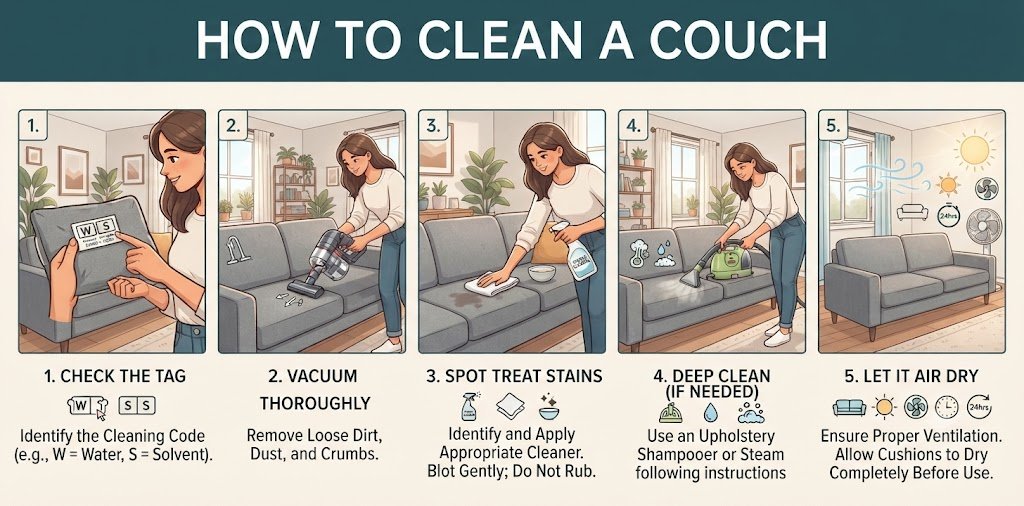
Before you touch a single cleaning product, flip over a cushion and look for a small tag, usually stitched into the seam. This is your roadmap, and skipping it is the single most common mistake I see homeowners make.
- W (Water-based cleaner): Safe for water and standard upholstery shampoos.
- S (Solvent-based cleaner): Water can cause rings or shrinkage — use a dry-cleaning solvent instead.
- WS (Water or Solvent): Flexible, both methods are generally safe.
- X (Vacuum only): No liquid cleaners at all. Professional cleaning only.
If there’s no tag, treat the couch like an “S” until you’ve done a test patch — it’s the safer assumption, especially with silk blends, velvet, or delicate natural fibers.
What You’ll Need
Tools Required:
- Vacuum with upholstery attachment
- Soft-bristle brush
- Microfiber cloths (white, so you don’t transfer dye)
- Spray bottle
- Mild dish soap or a fabric-specific upholstery cleaner
- Distilled white vinegar (for odor and light stains)
- Baking soda
- A dry-cleaning solvent (only if code is “S”)
Skill Level: Beginner to intermediate Estimated Time: 45 minutes to 2 hours, depending on stain severity and couch size Safety Precautions: Work in a ventilated room if using solvents, spot-test all products, and keep cleaning chemicals away from pets and kids until fully dry.
Step-by-Step Guide to Cleaning a Couch
1. Vacuum Everything First
Pull off cushions and vacuum every crevice, including under and behind the couch. This step alone removes the dust, crumbs, and pet hair that make fabric look dull. Skipping it means you’re just rubbing dirt deeper into the fibers when you start wiping down the surface.
2. Check for Loose Debris and Pretreat Stains
Use a soft brush to loosen dried debris before applying any liquid. For fresh spills, blot immediately with a dry cloth — never rub, since that pushes the stain deeper into the padding underneath.
3. Mix Your Cleaning Solution
For “W” or “WS” codes, a simple solution of one tablespoon of mild dish soap in a cup of warm water works surprisingly well. For tougher grease or body-oil stains (common on armrests and headrests), add a tablespoon of white vinegar.
4. Test in a Hidden Spot
Apply your solution to a small, inconspicuous area — the back of a cushion or underside of an arm — and wait 10 minutes. Check for discoloration or texture changes before treating the whole couch.
5. Clean in Sections
Work in small areas using a microfiber cloth, applying the solution and blotting rather than saturating the fabric. Over-wetting is a common cause of water rings and mildew smells that develop days later inside the cushion foam.
6. Deodorize with Baking Soda
Sprinkle baking soda over the entire couch, let it sit for 15–20 minutes, then vacuum it up. This pulls out trapped odors from pets, smoke, or general daily use without any liquid at all.
7. Dry Completely
Open windows or run a fan to speed drying. Damp upholstery left closed up in a room is one of the fastest ways to develop mold or mildew inside the cushion foam — something I’ve had to explain to more than one homeowner after finding a musty smell weeks later.
Cleaning by Fabric Type
Leather: Wipe with a damp cloth and mild soap, then condition with a leather-specific product every few months to prevent cracking. Avoid baby wipes long-term — the alcohol in many brands dries out leather over time.
Microfiber: Usually an “S” code. Rubbing alcohol in a spray bottle works well since it evaporates quickly and doesn’t leave water marks. Brush the nap back into place with a soft-bristle brush once dry.
Cotton/Linen Blends: Typically “W” or “WS.” These handle mild soap solutions well but can shrink slightly, so avoid soaking.
Velvet: Treat gently — steam rather than heavy scrubbing revives the nap without crushing the pile.
Common Mistakes Homeowners Make
- Using bleach-based cleaners on colored fabric, which causes permanent fading.
- Over-saturating cushions, leading to mold growth inside the foam that you won’t see until it starts to smell.
- Skipping the spot test, which is how “invisible” cleaners end up leaving visible rings.
- Scrubbing instead of blotting, which spreads stains and damages fibers.
- Ignoring the cushion covers, many of which are removable and machine-washable — check zippers before hand-cleaning everything.
Professional vs. DIY Cleaning
DIY cleaning works well for regular maintenance, light stains, and general refreshing between deeper cleans. It’s the budget-friendly option and something most homeowners can handle safely with the right products.
Professional upholstery cleaning makes more sense for antique or delicate fabrics, deep-set stains, pet odor that’s soaked into the padding, or “X” coded furniture that can’t be treated with any liquid. Professional steam cleaning typically runs $100–$300 per sofa depending on size, fabric, and regional labor rates — costs can vary based on your location, so it’s worth getting a couple of local quotes. For heavily soiled or antique pieces, a professional often catches issues a DIY approach would miss, like structural padding damage or dye instability.
Maintenance Tips to Keep It Clean Longer
- Vacuum weekly to prevent dirt from settling into fibers.
- Rotate and flip cushions regularly for even wear.
- Use a fabric protector spray after cleaning to repel future spills.
- Keep pets off the couch or use a washable throw if that’s not realistic.
- Address spills immediately — the first five minutes after a spill matter more than any product you use later.
Safety Considerations
Always ventilate the room when using solvent-based cleaners, and never mix cleaning chemicals — combining bleach and ammonia-based products, for example, creates dangerous fumes. Keep cushions and fabric protector sprays away from open flames until fully dry, and store any solvent-based products out of reach of children and pets.
Expert Recommendation
If you’re only doing one thing to extend the life of your couch, make it this: vacuum it weekly and address spills the moment they happen. Most of the deep staining and odor problems I’ve seen in client homes could have been avoided with those two habits alone. For a deeper reference on care and maintenance standards used by professional cleaners, the Institute of Inspection, Cleaning and Restoration Certification (IICRC) publishes widely recognized guidelines on fabric care and cleaning codes.
If you’re dealing with odor that seems to be coming from more than just the couch, it’s worth checking your flooring too — our guide on how to remove pet odor from carpet walks through a similar process for rugs and carpet padding.
Conclusion
Cleaning a couch isn’t complicated once you know your fabric type and follow the right order of steps: vacuum first, test before you treat, blot instead of scrub, and let everything dry fully. Whether you’re tackling a quick spill or a deep clean before guests arrive, matching your method to the fabric code is what separates a couch that looks refreshed from one that ends up damaged. When in doubt — especially with antique furniture or delicate fabrics — it’s worth the cost of bringing in a professional rather than risking a cleaner that isn’t suited to the material.
FAQs
How often should I clean my couch? Vacuum weekly and do a full deep clean every 3–6 months, or more often if you have kids, pets, or allergies.
Can I use a steam cleaner on any couch? No. Steam cleaners use water, so they’re only safe for “W” or “WS” coded fabrics. Using steam on an “S” or “X” coded couch can cause shrinkage or water stains.
What removes dog smell from a couch? Baking soda is one of the most effective at-home options. Sprinkle it generously, let it sit for at least 20 minutes, then vacuum thoroughly. Repeat if the odor persists.
Is vinegar safe for all fabric types? Vinegar is generally safe for “W” and “WS” codes but should be diluted and spot-tested first, since some natural fibers can be sensitive to acidity.
How do I get old stains out of a couch? Older, set-in stains often need a slightly stronger approach — repeated applications of your cleaning solution, gentle blotting, and patience. Deeply set stains may require a professional-grade enzyme cleaner or upholstery cleaning service.
Can I machine wash my couch cushion covers? Only if the manufacturer’s tag confirms it and the zipper allows full removal. Always check for shrink warnings before washing.
Does baking soda damage upholstery? No, baking soda is safe for nearly all fabric types since it’s dry and mild. It’s one of the safest odor treatments available for upholstery.
How much does professional couch cleaning cost? Typically $100–$300 per sofa, though pricing varies by region, fabric type, and level of soiling. Always get a quote based on your specific piece.