At some point, almost every homeowner looks around the house and thinks:
“We need more space.”
Maybe the kitchen feels cramped.
Maybe the kids have somehow doubled in size overnight.
Or maybe working from home has turned the dining room into a permanent office.
The obvious solution might seem like moving.
But have you checked house prices lately?
Exactly.
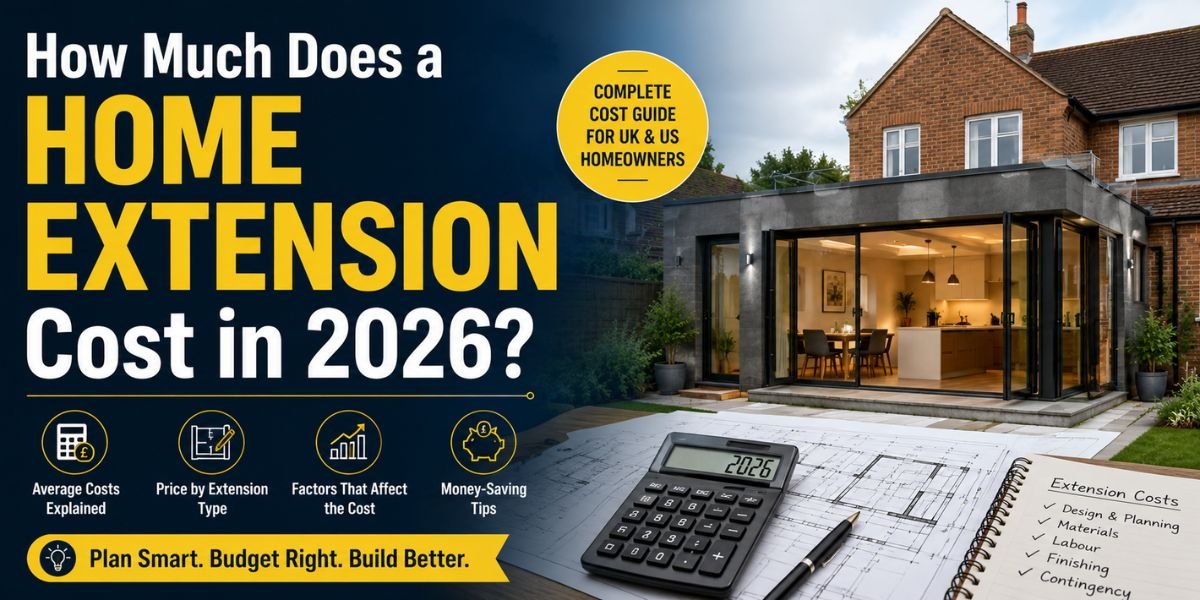
That’s why home extensions continue to be one of the most popular renovation projects in 2026. Instead of packing boxes and paying moving costs, many homeowners are choosing to expand the space they already love.
But here’s the million-dollar question:
How much does a home extension actually cost in 2026?
The answer isn’t as simple as one number.
Costs vary depending on size, location, materials, labor, and the type of extension you’re planning.
The good news?
We’re breaking everything down in simple terms so you can plan your budget without nasty surprises.
Why More Homeowners Are Choosing Extensions
A few years ago, moving house seemed like the obvious answer when families needed extra room.
Today?
Not so much.
Higher property prices, mortgage rates, and moving expenses have made extensions a much more attractive option.
A well-designed extension can:
- Increase living space
- Add property value
- Improve functionality
- Create open-plan layouts
- Boost resale appeal
And unlike moving, you get to stay in the neighborhood you already know and love.
That’s a pretty big win.
The Average Home Extension Cost in 2026
Let’s get straight to the numbers.
In 2026, most homeowners can expect to pay between:
$180 and $350 per square foot in the United States
or
£1,800 to £3,000 per square meter in the UK
The final price depends heavily on location and project complexity.
For example:
Small Extension (150–250 sq ft)
Average Cost:
$30,000 – $80,000
Perfect for:
- Small offices
- Utility rooms
- Compact kitchen expansions
Medium Extension (300–500 sq ft)
Average Cost:
$80,000 – $180,000
Perfect for:
- Larger kitchens
- Family rooms
- Dining room extensions
Large Extension (500+ sq ft)
Average Cost:
$180,000 – $400,000+
Perfect for:
- Multi-room additions
- Luxury extensions
- Open-plan living spaces
As you can see, the range is pretty wide.
That’s because several important factors affect the final cost.
The Type of Extension Matters More Than You Think
Not all extensions are created equal.
Some projects are relatively straightforward.
Others can quickly become construction marathons.
Single-Storey Extensions
This is the most common type of extension.
It adds ground-floor living space and is usually less expensive than multi-level projects.
Average Cost:
$40,000 – $150,000
Double-Storey Extensions
Need a lot more space?
A double-storey extension can add both ground-floor and upper-floor rooms.
While more expensive, it often delivers better value per square foot.
Average Cost:
$100,000 – $300,000+
Rear Extensions
These extend into the backyard and are popular for creating large open-plan kitchens and family areas.
Average Cost:
$50,000 – $200,000
Side Return Extensions
Particularly popular in urban areas where space is limited.
These utilize narrow side passages that often go unused.
Average Cost:
$40,000 – $120,000
Wrap-Around Extensions
This combines side and rear extensions into one large project.
The result can completely transform a property.
Average Cost:
$120,000 – $350,000+
What Factors Affect Home Extension Costs?
Here’s where things get interesting.
Two homeowners can build similar-sized extensions and end up with completely different bills.
Why?
Because several variables impact pricing.
Location
Location remains one of the biggest cost factors.
Construction work in major cities typically costs significantly more than rural areas.
Labor rates, permits, material availability, and local demand all play a role.
Materials
Want premium stone flooring?
Custom windows?
Luxury finishes?
Your material choices can dramatically increase costs.
On the other hand, choosing quality mid-range materials can save thousands without sacrificing appearance.
Structural Changes
Removing load-bearing walls?
Adding steel beams?
Altering foundations?
These changes increase engineering requirements and construction complexity.
Which usually means higher costs.
Labor Costs
Skilled tradespeople remain in high demand in 2026.
Electricians, plumbers, roofers, and builders all contribute to project costs.
And experienced professionals don’t come cheap.
The Hidden Costs Many Homeowners Forget
Here’s something nobody talks about enough.
The construction cost isn’t the entire cost.
Several additional expenses often catch homeowners off guard.
Architectural Plans
Professional drawings are usually required before construction begins.
Expected Cost:
$2,000 – $10,000+
Structural Engineering
Some projects require engineering calculations and reports.
Expected Cost:
$1,000 – $5,000+
Planning Applications and Permits
Depending on local regulations, permit fees can add significantly to the budget.
Utility Relocation
Moving plumbing, gas lines, or electrical systems can increase costs quickly.
Interior Finishes
Painting, flooring, cabinetry, lighting, and furniture often add thousands beyond the construction budget.
That’s why experts recommend setting aside a contingency fund.
Budgeting for the Unexpected
Speaking of contingencies…
One of the biggest mistakes homeowners make is budgeting only for the estimated build cost.
Construction projects rarely go exactly according to plan.
Unexpected discoveries happen.
Weather causes delays.
Material prices fluctuate.
Additional work becomes necessary.
Most contractors recommend adding:
10% to 20% contingency
to your overall budget.
Future-you will thank present-you.
Trust me.
Can a Home Extension Increase Property Value?
This is the question homeowners really want answered.
The short answer?
Usually, yes.
A well-designed extension often increases a property’s market value.
Popular value-adding projects include:
- Kitchen extensions
- Additional bedrooms
- Open-plan living areas
- Home offices
- Family rooms
According to the National Association of Realtors (NAR), home improvement projects can significantly improve both homeowner satisfaction and resale appeal.
Of course, the exact return depends on your location and project quality.
But many homeowners view extensions as both a lifestyle upgrade and a long-term investment.
How BIM Technology Is Helping Modern Home Extensions
Construction planning has evolved dramatically in recent years.
Many architects and contractors now use Building Information Modeling (BIM) to visualize projects before construction begins.
This helps identify design issues, improve coordination, and reduce costly mistakes.
If you’d like to learn more, check out our guide on BIM vs CAD: What’s the Difference? (Internal Link).
Understanding these technologies can help homeowners make more informed renovation decisions.
Tips to Save Money on Your Home Extension
Let’s be real.
Nobody wants to spend more than necessary.
Here are some practical ways to keep costs under control:
Plan Everything Early
Last-minute changes are expensive.
The more decisions made before construction starts, the better.
Get Multiple Quotes
Always compare several contractors.
Prices can vary dramatically.
Avoid Unnecessary Complexity
Simple designs often deliver better value than overly complicated layouts.
Choose Materials Wisely
Not every upgrade is worth the premium price.
Focus spending on features that provide long-term value.
Work With Experienced Professionals
The cheapest quote isn’t always the best quote.
Poor workmanship often costs far more to fix later.
Final Thoughts
A home extension can completely transform how you live.
It can create more space, improve functionality, increase property value, and eliminate the need to move.
But successful projects start with realistic budgeting.
In 2026, most homeowners should expect extension costs to range anywhere from $30,000 to well over $300,000 depending on project size and complexity.
While that might sound like a significant investment, many families find the benefits far outweigh the costs.
The key is careful planning, smart budgeting, and working with experienced professionals.
Get those right, and your dream extension could be closer than you think.