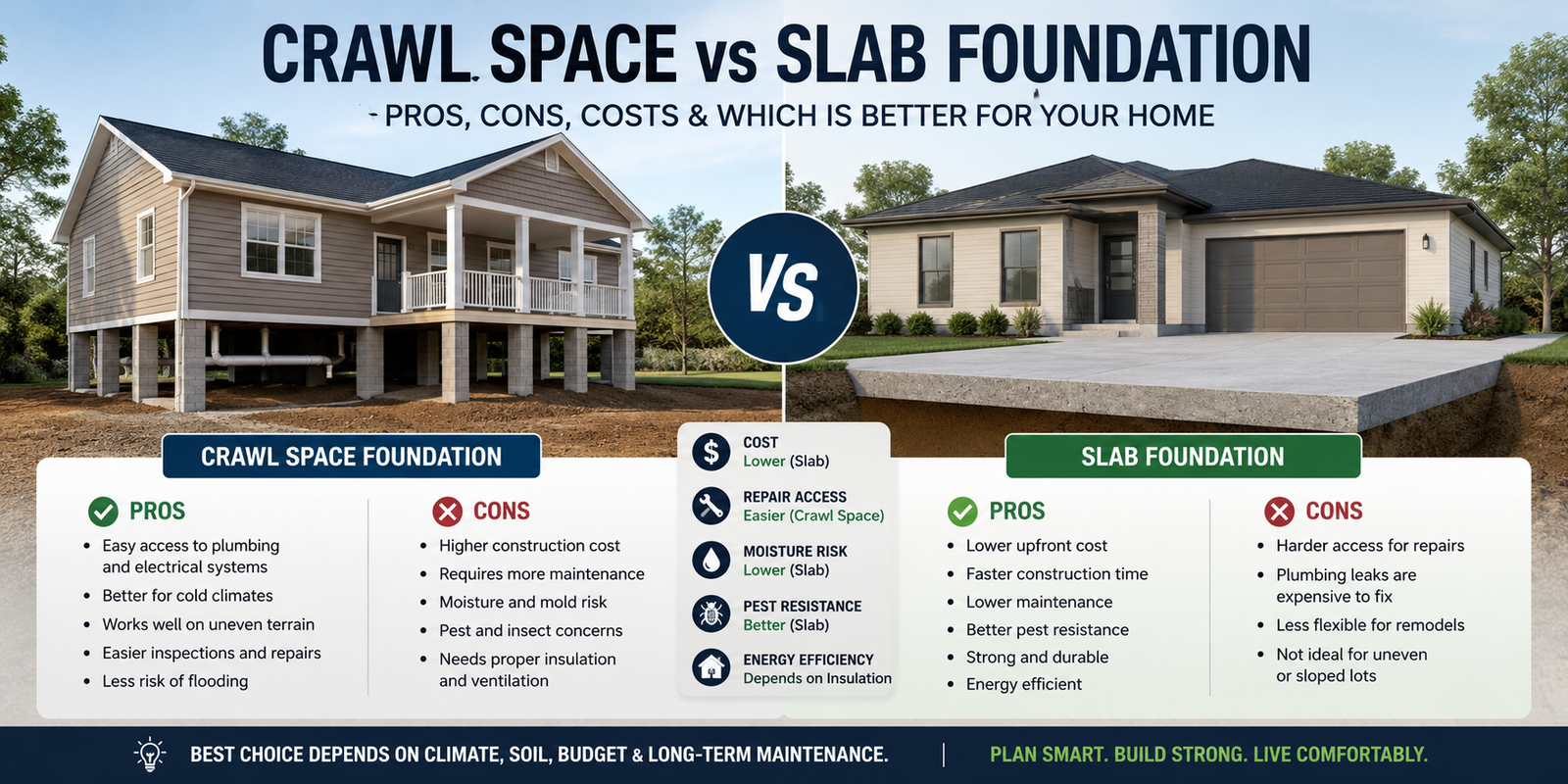
When building a new home or buying an existing one, most people focus on the floor plan, kitchen design, or neighborhood. However, one of the most important decisions lies beneath the house—the foundation.
The debate over crawl space vs slab has been ongoing for decades because each foundation type offers unique advantages and drawbacks. A slab foundation is affordable, durable, and requires less maintenance, while a crawl space provides easier access to plumbing, electrical systems, and HVAC components. The best choice depends on your climate, soil conditions, budget, and long-term maintenance expectations.
Understanding how each foundation performs can save thousands of dollars in future repairs while improving your home’s comfort, energy efficiency, and resale value.
In this comprehensive guide, you’ll learn the key differences between crawl space and slab foundations, compare their costs, explore their pros and cons, and discover which option is best for different climates and home types.
Quick Answer
A slab foundation is a single layer of reinforced concrete poured directly on the ground. It is generally less expensive to build, faster to install, and requires minimal maintenance.
A crawl space foundation raises the home 18–48 inches above the ground, creating an accessible area beneath the floor for plumbing, electrical wiring, and HVAC systems. While crawl spaces cost more initially, they simplify future repairs and renovations.
For warm, dry climates, slab foundations are often the most practical choice. In colder regions or areas with uneven terrain, crawl spaces usually provide greater long-term flexibility.
Crawl Space vs Slab at a Glance
| Feature | Slab Foundation | Crawl Space |
|---|---|---|
| Initial Cost | Lower | Higher |
| Construction Time | Faster | Longer |
| Plumbing Access | Difficult | Easy |
| Electrical Repairs | Difficult | Easy |
| Pest Resistance | Better | Moderate |
| Moisture Risk | Moderate | Higher if not sealed |
| Energy Efficiency | Good | Excellent when insulated |
| Maintenance | Low | Moderate |
| Best For | Warm climates | Cold or humid climates |
| Lifespan | 80–100+ years | 80–100+ years |
What Is a Slab Foundation?
A slab foundation is a thick, reinforced concrete pad poured directly onto prepared soil. Once the concrete cures, the house is built directly on top of it without leaving any space underneath.
Modern slab foundations typically include:
- Reinforced concrete
- Steel rebar
- Gravel base
- Moisture barrier
- Anchor bolts
- Thickened edges for additional support
Because everything sits directly on the concrete, slab foundations provide excellent structural stability while reducing construction costs.
They’re one of the most common foundation types used throughout southern and western parts of the United States.
Advantages of Slab Foundations
- Lower construction costs
- Faster installation
- Minimal maintenance
- Better resistance against rodents and insects
- Improved accessibility for older homeowners since there are usually no stairs
- Strong performance in warm climates
Disadvantages
- Plumbing repairs can become expensive because pipes are embedded beneath concrete.
- Remodeling may require cutting into the slab.
- Hidden water leaks are harder to detect.
- Less insulation from cold ground temperatures in some regions.
What Is a Crawl Space Foundation?
A crawl space foundation raises the home above ground using foundation walls, piers, or concrete blocks, creating an accessible space underneath the structure.
Most crawl spaces range between 18 inches and 4 feet high, allowing technicians to crawl beneath the home to inspect or repair utilities.
Inside a crawl space you’ll commonly find:
- Plumbing pipes
- HVAC ductwork
- Electrical wiring
- Water lines
- Drain pipes
- Insulation
Because these systems remain accessible, maintenance and future renovations become much easier.
Advantages of Crawl Spaces
Many builders prefer crawl spaces because they provide long-term flexibility.
Major benefits include:
- Easy plumbing repairs
- Simple electrical upgrades
- Convenient HVAC maintenance
- Better adaptability for uneven lots
- Easier foundation inspections
- Additional protection against minor flooding
Homes built on slopes often use crawl space foundations because creating a level concrete slab would require extensive excavation.
Disadvantages
Despite their advantages, crawl spaces require more maintenance.
Potential drawbacks include:
- Higher construction costs
- Moisture buildup
- Mold growth
- Wood rot
- Increased pest activity
- Need for proper ventilation or encapsulation
Without a quality vapor barrier and regular inspections, excessive humidity can damage wooden framing over time.
How Does Each Foundation Work?
Although both support the weight of a home, they distribute loads differently.
Slab Foundation
The entire concrete slab spreads the home’s weight evenly across the soil below.
This design minimizes movement when built on stable, compacted ground.
Because there is no empty space beneath the house, air infiltration is reduced, helping improve energy efficiency in warmer climates.
Crawl Space Foundation
A crawl space transfers the home’s weight through perimeter foundation walls and interior support piers.
The elevated floor system creates an air gap between the house and the ground.
This extra space provides easy access for repairs while helping reduce the impact of minor soil movement.
Crawl Space vs Slab Cost Comparison (2026)
Foundation costs are only one part of your overall building budget. Material quality, labor rates, home size, and local regulations also affect the final price. If you’re planning a new build, our house construction cost calculator can help you estimate your total construction expenses before breaking ground.
Cost is one of the biggest deciding factors when choosing a foundation.
While prices vary by location, soil conditions, labor rates, and home size, the following estimates reflect typical U.S. construction costs in 2026.
| Foundation Type | Average Cost Per Sq. Ft. |
|---|---|
| Slab Foundation | $6–$15 |
| Crawl Space Foundation | $12–$25 |
Example: 2,000-Square-Foot Home
| Foundation | Estimated Cost |
|---|---|
| Slab | $12,000–$30,000 |
| Crawl Space | $24,000–$50,000 |
Although a slab foundation usually costs less upfront, homeowners should also consider long-term repair expenses. Accessing plumbing beneath a slab often requires breaking through concrete, which can significantly increase repair costs. Crawl spaces are more expensive to build initially, but they generally make maintenance and utility repairs faster and less labor-intensive.
Factors That Influence Foundation Costs
Several variables affect the final price regardless of foundation type:
- Soil conditions and required site preparation
- Local labor and material costs
- Home size and layout
- Reinforcement requirements
- Drainage systems
- Moisture barriers
- Insulation needs
- Local building codes and permits
Choosing the lowest-cost option isn’t always the best long-term investment. A foundation that suits your climate, soil conditions, and maintenance expectations can save money over the life of the home.
Slab Foundation Pros and Cons
A slab foundation is one of the most common choices for modern homes because it is simple, durable, and cost-effective. However, like any construction method, it has strengths and weaknesses that homeowners should understand before making a decision.
Advantages of a Slab Foundation
1. Lower Construction Costs
One of the biggest reasons builders choose slab foundations is affordability. Since there is no crawl space or basement to excavate and frame, material and labor costs are significantly lower.
For budget-conscious homeowners, a slab foundation often provides the best value during new construction.
2. Faster Construction
Slab foundations can usually be completed much faster than crawl space foundations.
After site preparation and reinforcement are finished, concrete is poured and allowed to cure before framing begins. This shorter construction timeline can reduce overall project costs.
3. Better Protection Against Pests
Because the house sits directly on concrete, there are fewer openings where termites, rodents, snakes, or insects can enter.
This makes slab homes particularly attractive in regions where pest activity is common.
4. Lower Routine Maintenance
Unlike crawl spaces, slab foundations don’t require regular inspections for moisture, standing water, or damaged insulation.
Homeowners generally spend less time maintaining the foundation throughout its lifespan.
5. Improved Structural Stability
When built on properly prepared soil, slab foundations distribute weight evenly across the ground.
This creates a strong and durable base capable of supporting homes for decades with minimal movement.
Disadvantages of a Slab Foundation
Expensive Plumbing Repairs
One of the most significant drawbacks is repair accessibility.
Water supply lines and drain pipes are often embedded beneath the concrete. If a pipe leaks or breaks, contractors may need to cut through the slab to access it, increasing repair costs and disruption.
Hidden Water Leaks
Leaks beneath a slab are not always immediately visible.
Signs such as unexpectedly high water bills, damp flooring, or unexplained warm spots on the floor may indicate a slab leak that requires professional attention.
Limited Remodeling Flexibility
Adding new plumbing lines or relocating bathrooms and kitchens can be more challenging because the existing concrete must be cut and repaired.
Less Suitable for Freezing Climates
In colder regions, improperly insulated slab foundations can expose plumbing to freezing temperatures.
Modern building codes often require insulation and frost protection to minimize this risk.
Crawl Space Foundation Pros and Cons
A crawl space foundation provides an accessible area beneath the home, making inspections, repairs, and upgrades much easier.
Although it requires more maintenance than a slab foundation, many homeowners appreciate its flexibility.
Advantages of a Crawl Space Foundation
Easy Access to Plumbing and Utilities
One of the greatest benefits is repair accessibility.
Plumbers, electricians, and HVAC technicians can reach utility systems without breaking through concrete, reducing labor time and repair costs.
Simpler Future Renovations
Planning to add a bathroom, move a kitchen, or install new electrical wiring?
A crawl space makes these upgrades much easier because contractors have direct access beneath the floor.
Better Performance on Uneven Lots
Homes built on sloping or uneven land often benefit from crawl space foundations.
Instead of extensive grading and excavation, builders can create a level structure using foundation walls and support piers.
Reduced Flood Risk
Since the home sits above ground level, crawl spaces provide extra protection against minor flooding and surface water.
While they are not flood-proof, they generally perform better than slab foundations in flood-prone areas.
Improved Floor Comfort
Many homeowners notice that floors above crawl spaces feel warmer during winter because cold ground temperatures are separated from the living area by an insulated floor system.
Disadvantages of a Crawl Space Foundation
Higher Initial Construction Costs
Creating foundation walls, floor framing, insulation, and access points increases labor and material expenses.
This makes crawl spaces more expensive than slab foundations.
Moisture Problems
Without proper drainage and vapor barriers, crawl spaces can trap humidity.
Over time, excessive moisture may lead to:
- Mold growth
- Wood rot
- Rusted metal components
- Damaged insulation
A sealed or encapsulated crawl space significantly reduces these risks.
Increased Pest Activity
Dark, damp crawl spaces can attract termites, rodents, insects, and other pests if openings are not properly sealed.
Higher Maintenance Requirements
Unlike slab foundations, crawl spaces should be inspected periodically for:
- Standing water
- Mold
- Damaged insulation
- Pest activity
- Structural movement
Routine maintenance helps extend the foundation’s lifespan.
Crawl Space vs Slab: Which Is More Energy Efficient?
Energy efficiency depends on insulation quality, air sealing, and moisture control—not just the type of foundation.
Slab Foundation
A slab foundation can be energy efficient because there is no open space beneath the home where outside air can circulate.
However, poor edge insulation may allow heat transfer through the concrete.
Crawl Space
A properly insulated and sealed crawl space can perform exceptionally well, especially in humid climates.
Encapsulation systems, vapor barriers, and insulated foundation walls reduce heat loss and improve indoor comfort.
Moisture and Mold Comparison
Moisture control is critical for preventing mold growth, especially in crawl spaces. The U.S. Environmental Protection Agency offers detailed recommendations on identifying mold problems and maintaining healthy indoor air quality.
Moisture is one of the biggest factors affecting foundation performance.
Slab Foundations
Possible moisture-related issues include:
- Hidden slab leaks
- Damp flooring
- Cracked concrete from poor drainage
- Flooring damage caused by moisture migration
Proper grading and drainage around the home help minimize these problems.
Crawl Spaces
Common moisture concerns include:
- High humidity
- Condensation
- Mold growth
- Wood decay
- Musty odors
Installing a vapor barrier, maintaining gutters, and ensuring adequate drainage are essential for long-term protection.
Pest Resistance Comparison
| Pest | Slab Foundation | Crawl Space |
|---|---|---|
| Termites | Moderate risk | Higher risk |
| Rodents | Low | Moderate |
| Snakes | Very Low | Moderate |
| Moisture-loving insects | Low | High |
Regardless of foundation type, annual inspections and proper sealing help reduce pest problems.
Which Foundation Performs Better in Different Climates?
Climate has a major influence on foundation performance.
| Climate | Best Foundation |
|---|---|
| Warm and Dry | Slab Foundation |
| Cold with Frost | Crawl Space |
| Humid | Crawl Space (Encapsulated) |
| Flood-Prone | Crawl Space |
| Stable Soil | Slab Foundation |
| Uneven Terrain | Crawl Space |
Homes in southern states such as Texas, Arizona, and Florida commonly use slab foundations because frost is less of a concern.
In northern regions where freezing temperatures are common, crawl spaces provide better protection for plumbing and make seasonal maintenance easier.
Repair and Maintenance Costs
Although slab foundations are cheaper to build, repair expenses can become significant if underground plumbing fails.
| Repair Type | Slab | Crawl Space |
|---|---|---|
| Plumbing Repair | High | Low |
| Electrical Upgrade | Moderate | Low |
| HVAC Repair | Moderate | Low |
| Foundation Inspection | Moderate | Easy |
| Remodeling | More Difficult | Easier |
For homeowners planning long-term renovations, a crawl space often offers greater flexibility and lower labor costs.
Crawl Space vs Slab: Which Lasts Longer?
Both slab and crawl space foundations can last 80–100 years or more when they are properly designed, built on stable soil, and maintained over time. The foundation type alone doesn’t determine lifespan—factors such as drainage, soil movement, moisture control, and construction quality have a much greater impact.
Slab Foundation Lifespan
A well-built slab foundation is extremely durable because it has fewer structural components that can deteriorate over time.
However, its lifespan may be shortened by:
- Expansive clay soil
- Poor drainage around the home
- Tree roots growing beneath the slab
- Plumbing leaks causing soil erosion
- Freeze-thaw cycles in colder climates
Routine inspections and proper water management help prevent these issues.
Crawl Space Foundation Lifespan
Crawl space foundations are equally durable but require more maintenance to remain in excellent condition.
Potential threats include:
- Excess humidity
- Mold growth
- Wood rot
- Termite damage
- Poor ventilation
- Standing water
With a sealed crawl space, proper drainage, and regular inspections, these risks can be greatly reduced.
Which Foundation Adds More Resale Value?
Neither foundation automatically increases a home’s value. Buyers are generally more interested in the condition of the foundation than the type itself.
A home with a well-maintained crawl space or a crack-free slab foundation is likely to be more attractive than one with visible structural issues.
Resale value is often influenced by:
- Foundation condition
- Professional maintenance history
- Moisture control
- Energy efficiency
- Local market preferences
- Regional building practices
In areas where crawl spaces are common, buyers may appreciate the easier access for maintenance. In warmer regions, slab foundations are often expected and widely accepted.
Common Foundation Problems to Watch For
Regardless of the foundation type, homeowners should regularly inspect for early warning signs of structural issues.
Signs of Foundation Problems
- Large cracks in walls or floors
- Uneven or sloping floors
- Doors or windows that stick
- Gaps around door frames
- Water pooling near the foundation
- Persistent damp or musty odors
- Cracks in exterior brick or concrete
Ignoring these signs can lead to more expensive repairs over time.
How to Choose the Right Foundation
Your foundation choice should support your home’s layout, structural requirements, and future renovation plans. Before finalizing your design, explore these modern house design ideas to see how today’s floor plans, materials, and construction methods influence foundation selection.
Choosing between a crawl space and a slab foundation depends on several practical factors rather than a single “best” option.
A Slab Foundation May Be the Better Choice If You:
- Live in a warm, dry climate
- Want lower upfront construction costs
- Prefer minimal maintenance
- Have stable, well-drained soil
- Don’t expect major plumbing or remodeling changes
A Crawl Space May Be the Better Choice If You:
- Live in a colder region
- Need easy access to plumbing and wiring
- Plan future renovations
- Are building on uneven terrain
- Want additional protection from minor flooding
The right choice should balance your budget, local climate, soil conditions, and long-term maintenance expectations.
Expert Tips for Homeowners
Before deciding on a foundation type, keep these practical recommendations in mind:
- Request a professional soil test before construction.
- Install proper drainage systems around the home.
- Keep gutters and downspouts directing water away from the foundation.
- Repair plumbing leaks immediately.
- Inspect foundations annually for cracks and moisture.
- Seal crawl spaces with a vapor barrier if you choose this foundation type.
- Follow local building codes and engineering recommendations.
These simple steps can help extend the life of your home’s foundation and reduce costly repairs.
If you’re planning a custom-built home, it’s also helpful to understand the role of qualified architects in residential construction. Learn why an accredited professional architecture degree matters when designing safe, code-compliant, and durable homes.
Final Verdict
The crawl space vs slab debate doesn’t have a universal winner because the best foundation depends on where you live and how you plan to use your home.
If affordability, quick construction, and low maintenance are your priorities, a slab foundation is an excellent option. It performs especially well in warm climates with stable soil and offers a simple, durable solution for many homeowners.
If long-term flexibility, easier repairs, and access to plumbing and electrical systems matter more, a crawl space may be the smarter investment. Although it costs more upfront and requires regular maintenance, it can save time and money when repairs or renovations are needed.
Before making a final decision, consider your local climate, soil conditions, drainage, budget, and future plans for the property. Consulting an experienced builder or structural engineer can help ensure the foundation you choose will perform well for decades.
FAQs
Is a crawl space better than a slab foundation?
It depends on your needs. Crawl spaces provide easier access to plumbing, electrical systems, and HVAC equipment, making repairs and upgrades simpler. Slab foundations are generally less expensive to build and require less routine maintenance.
Which foundation is cheaper?
A slab foundation is typically less expensive because it uses fewer materials and requires less labor than a crawl space foundation.
Which foundation lasts longer?
Both foundation types can last over 100 years when properly designed, constructed, and maintained.
Are crawl spaces more prone to mold?
Yes, they can be if moisture is not controlled. Installing a vapor barrier, improving drainage, and sealing the crawl space can significantly reduce the risk of mold.
Is a slab foundation more energy efficient?
In many cases, yes. However, a properly insulated and encapsulated crawl space can achieve similar or even better energy performance depending on the climate.
Which foundation is best for cold climates?
Crawl spaces are often preferred because plumbing is easier to protect from freezing temperatures, and maintenance access is much simpler.
Which foundation is best for humid climates?
A sealed and encapsulated crawl space performs well in humid regions by controlling moisture and improving indoor air quality. Proper drainage is essential regardless of foundation type.
Can you convert a slab foundation into a crawl space?
Converting a slab foundation into a crawl space is technically possible but is a complex and expensive structural project. Most homeowners choose to repair or upgrade the existing foundation instead.