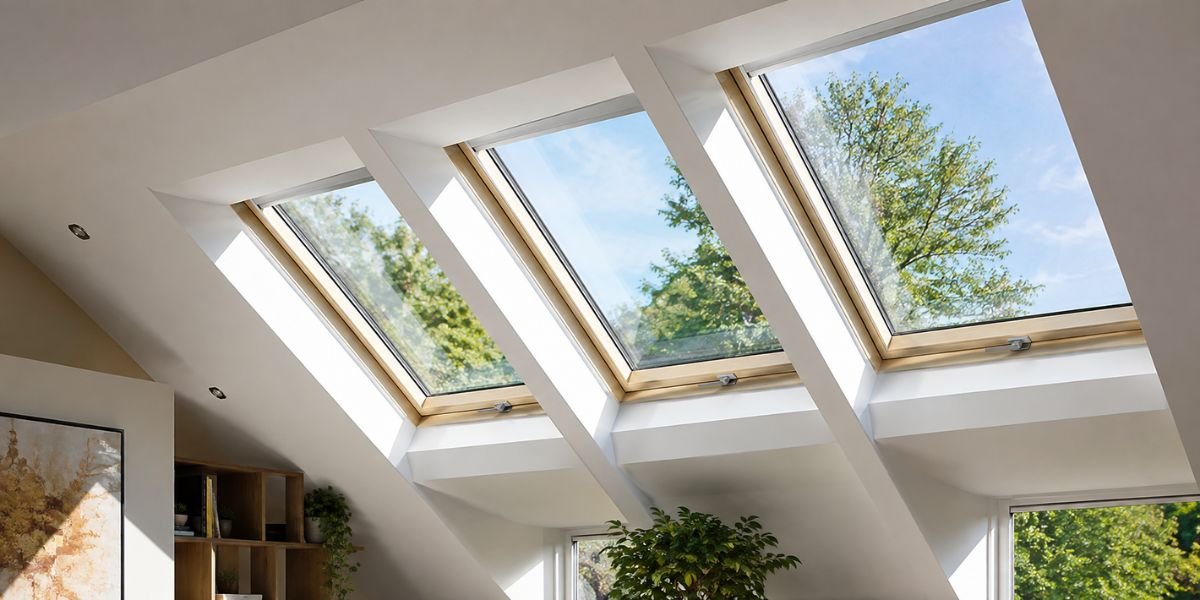
A skylight is a window or glazed opening installed in a roof to bring natural daylight into the rooms below. Unlike traditional windows that let light in from the side, skylights bring light in from above, making them especially useful for darker rooms, hallways, attics, and spaces where adding a vertical window is difficult.
Modern skylights can do more than brighten a room. Some are fixed in place, while others can open to improve ventilation. Tubular skylights can also channel sunlight into smaller spaces where a conventional skylight may not be practical.
In this guide, we’ll explain what a skylight is, how it works, the main types, its benefits and drawbacks, and what homeowners should consider before installing one.
What Is a Skylight?
A skylight is a roof-mounted window designed primarily to provide natural light inside a building. It can be installed on either a pitched or flat roof and may use glass, acrylic, polycarbonate, or other light-transmitting materials.
Because skylights receive light from above, they can brighten areas that receive little or no daylight from conventional windows. They can also provide a visual connection with the outdoors and, when designed to open, allow fresh air into the room.
A skylight can be particularly useful in:
- Windowless bathrooms
- Dark hallways
- Attic bedrooms
- Loft spaces
- Kitchens
- Stairwells
- Rooms with limited exterior wall space
Research-based home-design guidance notes that skylights and roof windows can provide more than three times as much light as a vertical window of the same size, making them useful for spaces that might otherwise depend heavily on artificial lighting.
How Does a Skylight Work?
A skylight works by creating a glazed opening in the roof through which daylight enters the building.
The light can pass directly through the glazing or be directed through a shaft or reflective tube before reaching the room below. The final amount of useful daylight depends on several factors, including the skylight’s position, roof orientation, size, shading, and local weather conditions.
For example, a skylight positioned where trees or nearby buildings block the sun may provide considerably less daylight than one with an unobstructed view of the sky.
The design also matters. A skylight that is properly sized and positioned can provide plenty of natural light without unnecessarily increasing unwanted heat inside the home.
Main Types of Skylights
Skylights are available in several designs. The right option depends on the room, roof structure, ventilation requirements, and amount of daylight needed.
1. Fixed Skylights
A fixed skylight is permanently closed and cannot be opened.
Its main purpose is to bring natural daylight into a room. Because there are no opening mechanisms, fixed skylights can be a straightforward choice when ventilation is not required.
They are often used in:
- Hallways
- Living rooms
- Kitchens
- Stairwells
- Rooms that already have adequate ventilation
2. Vented or Operable Skylights
An operable skylight can be opened to allow fresh air into the room.
Some models are manually operated, while others use electric or solar-powered controls. They can be particularly useful in upper-floor rooms where hot air tends to accumulate.
However, operable skylights have more moving components than fixed models, so those components may require occasional maintenance.
3. Tubular Skylights
A tubular skylight, also known as a tubular daylighting device or sun tunnel, uses a small roof-mounted opening connected to a highly reflective tube.
Sunlight travels down the tube and is distributed through a diffuser in the ceiling.
Tubular skylights are useful for smaller areas where a large conventional skylight would not be practical. They can also reduce heat transfer compared with a much larger roof opening because their cross-sectional area is smaller.
They tend to work particularly well in locations that receive plenty of clear sunshine.
4. Roof Windows
A roof window is essentially a window installed into the roof and is generally designed to be opened.
Roof windows are commonly used in attic rooms and spaces with cathedral ceilings. Many use double glazing to help reduce heat loss and condensation.
Although the terms skylight and roof window are sometimes used interchangeably, they are not always the same thing. Roof windows are generally designed more like conventional windows and are commonly operable.
Benefits of Skylights
Installing a skylight can provide several advantages for homeowners.
More Natural Light
The biggest benefit is additional daylight. A well-positioned skylight can brighten a room that feels dark even when conventional windows are present.
This can make smaller or windowless areas feel more open and comfortable.
Reduced Dependence on Artificial Lighting
More daylight during daytime hours can reduce the need to use electric lights. The amount of energy saved will depend on the room, skylight design, weather, and how occupants use the space.
Better Use of Difficult Spaces
Skylights allow homeowners to bring daylight into areas where a conventional window may not be possible because of wall layout, privacy concerns, or limited exterior wall space.
Improved Ventilation
If you choose an operable skylight, opening it can provide additional airflow and help release warm air from upper levels.
Architectural Appeal
A skylight can also become a design feature. It can change the character of a room by introducing daylight from above rather than from the side.
Disadvantages of Skylights
Skylights are not automatically the right choice for every home.
Unwanted Heat Gain
A skylight receives direct sunlight from above, which can cause a room to become warmer, particularly during hot weather.
The amount of heat entering the room depends on factors such as glazing, orientation, shading, size, and local climate.
Heat Loss in Cold Weather
Poorly designed or inefficient roof glazing can also contribute to heat loss during colder weather.
For this reason, homeowners should consider the thermal performance of the glazing, frame, shaft, and surrounding roof construction.
Potential for Leaks
Because a skylight creates an opening in the roof, incorrect installation or deteriorated flashing can create opportunities for water intrusion.
Professional installation and proper roof integration are therefore important.
Maintenance
Skylights need periodic cleaning and inspection. Leaves and other debris can accumulate around the exterior and may contribute to staining or damage over time.
Skylight vs. Roof Window: What’s the Difference?
The two terms are often confused, but there is a useful distinction.
| Feature | Skylight | Roof Window |
|---|---|---|
| Main purpose | Bring daylight into a room | Provide daylight and function more like a window |
| Opening | Fixed or vented | Usually designed to open |
| Common location | Various rooms and roof areas | Attics and rooms with roof-level ceilings |
| Ventilation | Depends on model | Commonly available |
| Design | Often integrated into a roof system | More similar to a conventional window |
The exact terminology can vary between manufacturers and regions, so it is important to check the product specifications rather than relying only on the name.
Where Should You Install a Skylight?
Choosing the location carefully is just as important as choosing the skylight itself.
The amount of daylight entering a room depends on factors such as:
- Roof orientation
- Sun position throughout the year
- Local climate
- Cloud cover
- Nearby trees and buildings
- Roof slope
- Skylight size
- Interior shaft design
These factors can significantly affect how much useful daylight reaches the room.
A skylight should also be positioned with the room’s purpose in mind. For example, a skylight over a kitchen work area may provide useful daylight, while one placed directly over a television could create unwanted glare.
Do Skylights Make a Room Hot?
They can.
A skylight exposed to strong direct sunlight can increase solar heat gain, especially if the glazing has poor thermal or solar-control performance.
However, this does not mean every skylight will make a room uncomfortably hot. Proper sizing, glazing, shading, insulation, and placement can help control unwanted heat.
In fact, smaller skylights can provide substantial daylight, so installing the largest possible skylight is not always the best approach.
How Much Light Does a Skylight Provide?
Skylights can provide significantly more daylight than similarly sized vertical windows because they receive light from above.
One source used for this guide states that a skylight or roof window can admit more than three times as much light as a vertical window of the same size.
The actual result will vary depending on the skylight’s size, position, glazing, roof orientation, weather, and surrounding obstructions.
This is why skylight design should focus on useful daylight, rather than simply choosing the biggest available unit.
Are Skylights Energy Efficient?
A skylight can contribute to lower daytime lighting demand by bringing more natural light into a building. However, energy performance depends heavily on the product and installation.
Poorly selected roof glazing can increase unwanted heat gain in summer or heat loss during winter.
Look for products with appropriate thermal and solar-control characteristics for your climate. Proper insulation around the skylight shaft and suitable shading can also improve performance.
Skylight Maintenance Tips
Regular maintenance can help keep a skylight performing properly.
A simple maintenance routine should include:
- Clean the visible glazing periodically.
- Remove leaves and debris from around the skylight.
- Check for signs of water staining around the interior.
- Inspect visible seals and flashing for deterioration.
- Check operable skylights for smooth movement.
- Lubricate moving hardware when recommended by the manufacturer.
- Look for cracks or damage in plastic or glass components.
If you notice persistent leaking, damaged flashing, or structural problems around the roof opening, it is better to have the issue inspected by a qualified professional.
Are Skylights Worth It?
For the right home and room, a skylight can be an excellent way to introduce natural daylight where conventional windows cannot do the job.
The key is choosing the correct type, size, glazing, and location. A well-designed skylight can make a dark room feel brighter and more comfortable, while a poorly selected or installed unit can create problems with heat, condensation, or water intrusion.
So, are skylights worth it? Yes—when they are properly designed and installed for the specific building and climate.
Final Thoughts
A skylight is much more than a window placed in a roof. It is a daylighting feature that can transform dark interior spaces by bringing natural light from above.
Fixed skylights are useful when daylight is the main goal, operable models can provide ventilation, and tubular skylights are a practical option for smaller spaces. Roof windows offer another solution for attic and roof-level living areas.
Before installing one, consider daylight requirements, roof structure, climate, heat gain, insulation, ventilation, and maintenance. With the right design and professional installation, a skylight can be a valuable addition to a home.