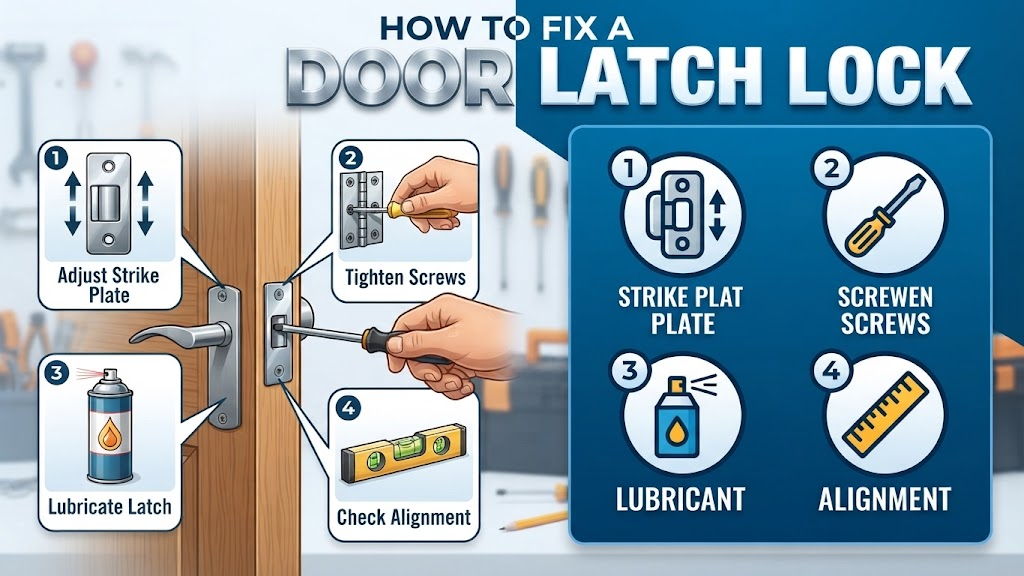
A door latch lock that won’t catch, sticks, or refuses to lock properly can be frustrating—and it can also leave your home less secure. In many cases, though, you don’t need to replace the entire lock. The problem is often caused by a misaligned strike plate, loose screws, worn hinges, or a latch that needs cleaning or adjustment.
The good news is that most minor door latch problems can be diagnosed and fixed with a screwdriver and a few basic tools.
In this guide, we’ll explain how to fix a door latch lock step by step, including what to check first, how to adjust the strike plate, and when it’s better to replace the latch or call a professional.
Quick Answer: How Do You Fix a Door Latch Lock?
To fix a door latch lock, first check whether the latch lines up correctly with the strike plate on the door frame. Tighten loose screws, inspect the hinges, clean and lubricate the latch, and adjust the strike plate if necessary.
If the latch is damaged, badly worn, or still fails to engage after alignment adjustments, replacing the latch mechanism may be the simplest solution.
What Causes a Door Latch Lock to Stop Working?
Before repairing the latch, it helps to identify what is actually causing the problem.
Common causes include:
- A misaligned strike plate
- Loose door hinges
- Loose latch or handle screws
- A dirty or sticky latch mechanism
- A door that has sagged over time
- A strike plate that has shifted
- A damaged or worn latch
- A warped door or frame
- Screws that no longer grip the wood properly
A small alignment problem can prevent the latch from entering the strike plate correctly. If the latch hits the edge of the opening instead of entering it, the door may bounce open or require extra force to close.
Tools You May Need
Most basic door latch repairs don’t require specialist equipment.
Keep these tools nearby:
- Phillips or flathead screwdriver
- Drill and drill bits
- Wood screws
- Pencil
- Tape measure
- File
- Chisel
- Pliers
- Wood glue and wooden toothpicks
- Dry or silicone lubricant
- Cleaning cloth
Wear safety glasses when filing or chiselling metal or wood.
1. Check the Door Latch Alignment
The first thing to check is whether the latch is lining up with the strike plate.
Close the door slowly and watch the latch as it approaches the plate. Does it hit the top, bottom, or side of the opening?
If the latch is contacting the strike plate instead of entering its opening, alignment is probably the problem.
You can also put a small amount of removable marking material on the end of the latch, close the door gently, and then inspect where the mark transfers to the strike plate. This can help you identify exactly where the latch is hitting.
Proper alignment is important because the latch needs to extend fully into the strike plate to keep the door securely closed.
2. Tighten the Strike Plate Screws
A loose strike plate is one of the easiest door latch problems to fix.
Open the door and inspect the metal plate attached to the frame. Try gently moving it with your fingers. If it feels loose, tighten the mounting screws.
After tightening the screws, close and open the door several times.
If the latch now enters the strike plate smoothly, you’ve solved the problem.
For additional strength, particularly on frequently used doors, make sure the screws are firmly anchored into solid wood rather than a damaged or stripped section of the frame.
3. Adjust the Strike Plate
If the strike plate is positioned too high, low, left, or right, tightening the screws won’t solve the problem.
Remove the screws and carefully reposition the plate so the latch lines up with its opening.
For a small adjustment, you may only need to move the plate slightly and create new pilot holes.
If the latch is only missing the opening by a few millimetres, you can sometimes enlarge the strike plate opening with a metal file.
Work slowly. Remove a small amount of material, reinstall the plate, and test the door before making another adjustment.
According to This Old House’s door latch repair guide, strike-plate alignment is a common cause of doors that won’t latch properly, and the plate can often be adjusted or its opening slightly enlarged.
4. Check and Tighten the Door Hinges
Loose hinges can change the position of the entire door.
When a door begins to sag, the latch may no longer line up with the strike plate. This is especially common on older doors that have been opened and closed thousands of times.
Open the door and check each hinge.
Tighten any loose screws and inspect the hinge leaves for movement. If a screw spins without tightening, the hole may be stripped.
For a stripped wooden screw hole, remove the screw and fill the hole with small pieces of wood and wood glue. Allow the repair to dry, then reinstall the screw.
If the door is significantly sagging, you may need to address the hinge alignment before adjusting the latch.
This is also a good time to check your other door hardware if the door has been difficult to operate. For related repairs, see our guide on how to fix a door that won’t latch.
5. Clean and Lubricate the Door Latch
Sometimes the latch itself is fine but has become dirty or sticky.
Open the door and operate the handle several times while watching the latch move in and out.
If the movement is slow or rough, clean the exposed mechanism with a cloth. Remove dust, dirt, and buildup around the latch.
Apply a small amount of suitable lubricant to the moving parts. Avoid flooding the mechanism with lubricant because excess product can attract dirt.
Operate the handle repeatedly to distribute the lubricant.
If the latch continues to stick after cleaning and lubrication, the internal spring or mechanism may be worn.
6. Fix a Loose Door Handle or Knob
A loose handle can also affect how the latch operates.
When the handle or knob moves excessively, it may not retract and release the latch correctly.
Check the mounting screws and tighten them carefully. Don’t overtighten them because excessive force can damage the hardware or strip the screws.
After tightening the handle, operate it several times and check whether the latch moves smoothly.
If the handle remains loose even after tightening, inspect the spindle and internal components for wear.
For another common door problem, see our guide on how to fix a loose door handle.
7. Repair Stripped Screw Holes
Sometimes the latch or strike plate appears loose because the screws can no longer grip the wood.
This is common in older doors and frames.
A simple repair is to remove the loose screw and fill the damaged hole with small wooden pieces and wood glue. Once the glue has fully dried, trim or sand the repair flush with the surface.
Drill a small pilot hole and reinstall the screw.
For heavily damaged frames, a longer screw that reaches solid framing can provide better support, provided it is appropriate for the door and frame construction.
8. Replace a Damaged Door Latch
If you’ve corrected the alignment, tightened the hardware, and lubricated the mechanism but the latch still doesn’t work, the latch itself may be damaged.
Look for signs such as:
- A latch that doesn’t spring back
- A bent latch bolt
- Broken internal components
- Excessive movement
- Rust or severe corrosion
- A handle that no longer retracts the latch properly
Replacing the latch mechanism is often easier than trying to repair damaged internal components.
Before buying a replacement, remove the existing latch and measure it carefully. Check the backset, faceplate dimensions, and latch shape so the replacement fits the existing door preparation.
9. Check the Door Frame for Larger Problems
If the latch repeatedly becomes misaligned, the problem may not be the latch at all.
Look at the gaps around the closed door. Are they even? Is there a noticeably larger gap at the top or bottom?
A warped frame, house movement, moisture-related expansion, or a badly sagging door can all affect latch alignment.
In these situations, repeatedly filing the strike plate may only hide the underlying problem.
If the frame is severely damaged or the door has moved significantly out of square, professional repair may be necessary.
How to Test a Door Latch After Repair
Once you’ve completed the repair, don’t immediately assume the problem is solved.
Test the door several times.
- Close the door gently.
- Make sure the latch enters the strike plate.
- Push the door lightly to confirm it stays closed.
- Operate the handle and make sure the latch retracts smoothly.
- Lock and unlock the door if it has a separate locking mechanism.
- Open and close the door repeatedly.
- Check that the door doesn’t require excessive force.
The latch should engage without slamming, lifting, or pushing the door unusually hard.
When Should You Replace the Door Latch?
A simple adjustment is usually enough when the latch is healthy but misaligned.
Consider replacing the latch when:
- The spring mechanism is broken
- The latch bolt is bent
- The mechanism repeatedly sticks
- The latch doesn’t extend fully
- Internal parts are badly worn
- The hardware is heavily corroded
- Repairs don’t restore reliable operation
A replacement latch is generally inexpensive compared with replacing an entire door or lockset.
When to Call a Professional
Most minor latch and strike-plate adjustments are suitable DIY projects. However, some problems require professional help.
Consider contacting a locksmith, carpenter, or qualified door professional if:
- The door frame is severely warped
- The lock mechanism is damaged beyond simple replacement
- The door is an exterior security door and won’t lock reliably
- The door has significant structural damage
- You cannot identify the source of the problem
- The repair involves major frame modification
For an exterior door, don’t ignore a latch that won’t engage properly. A door that appears closed but isn’t securely latched can create a genuine security concern.
How to Prevent Door Latch Problems
Regular maintenance can help prevent small latch problems from becoming bigger repairs.
Check your door hardware every few months and:
- Tighten loose hinge screws
- Check the strike plate
- Clean the latch
- Lubricate moving components when appropriate
- Avoid repeatedly slamming the door
- Watch for signs of door sagging
- Repair stripped screw holes early
- Check that the latch fully engages
Catching alignment problems early can save you from replacing the entire lockset later.
Final Thoughts
Learning how to fix a door latch lock is a useful DIY skill for homeowners. In many cases, the latch itself isn’t broken—the real problem is a loose hinge, shifted strike plate, worn screw hole, or simple misalignment.
Start with the easiest fixes: check the alignment, tighten the screws, inspect the hinges, and clean the latch. If those steps don’t work, adjust or replace the strike plate. A damaged latch mechanism can usually be replaced without replacing the entire door.
Take your time with alignment adjustments and test the door several times before considering the job finished. A properly aligned latch should engage smoothly and hold the door securely without slamming or forcing it.