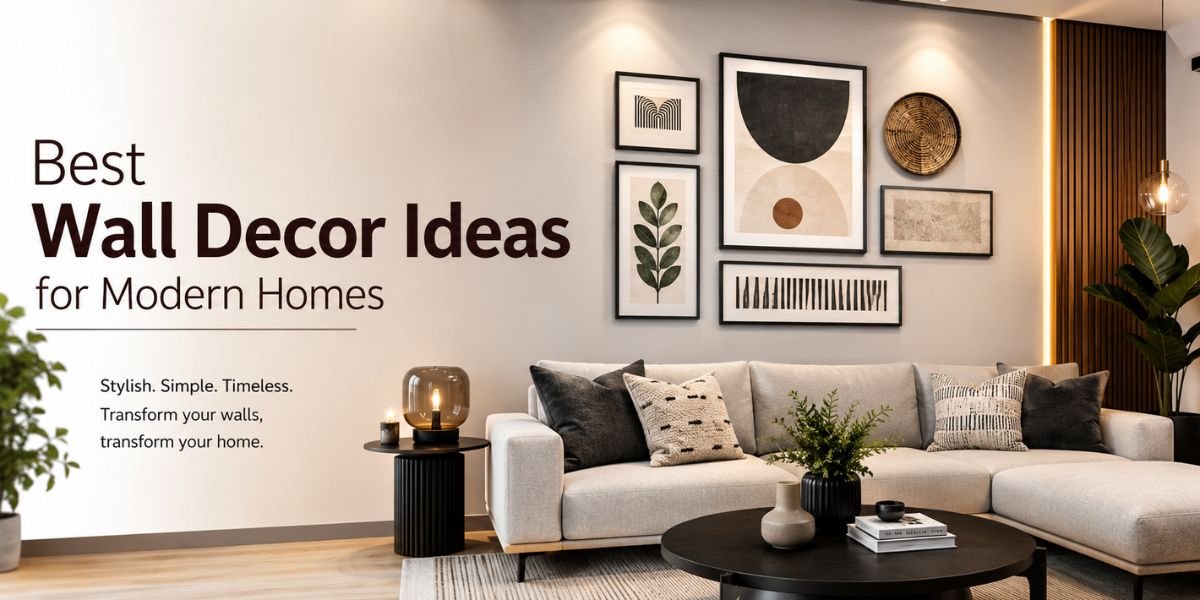
A few months back, I was walking through a client’s newly finished living room. The drywall was perfect, the paint was fresh, the recessed lighting was dialed in just right — and the whole space still felt flat. Empty walls have a way of making even a well-built room feel unfinished. That’s the moment most homeowners start searching for the best wall decor ideas for modern homes, and it’s a problem I run into constantly on renovation projects, even when every structural and mechanical detail has been handled correctly.
Wall decor isn’t just about hanging a picture frame. It’s the layer that ties your flooring, trim work, and furniture together into something that actually feels like a finished home. Done well, it adds depth, warmth, and personality without competing with clean modern lines. Done poorly, it can make a beautifully built room look cluttered or generic.
Quick Answer
For modern homes, the best wall decor options are large-scale abstract art, minimalist gallery walls, textured wood or stone panels, statement mirrors, and floating shelves with curated objects. The key is restraint — modern design favors fewer, bolder elements over busy arrangements, with attention to scale, negative space, and material contrast against your existing finishes.
What Counts as “Modern” Wall Decor
Modern wall decor leans into clean geometry, neutral or monochromatic palettes, and intentional negative space. It’s different from “contemporary,” which shifts with current trends, and different from farmhouse or traditional styles that favor ornate frames and dense arrangements. If you’ve already invested in clean baseboards, simple casing, and an open floor plan, your wall decor should reinforce that same restraint rather than fighting it.
That said, “modern” doesn’t mean cold or sterile. The best modern interiors use texture — wood grain, woven fiber, matte ceramic — to keep a room feeling warm even with a simplified color scheme.
Benefits of Investing in Quality Wall Decor
A well-decorated wall does more than fill space. It can make ceilings feel taller by drawing the eye upward, it can anchor a furniture arrangement so a room doesn’t feel like a collection of unrelated pieces, and it can hide minor wall imperfections that are common in older homes after settling or patch repairs. I’ve also seen well-chosen art and mirrors genuinely affect how a room photographs for resale — buyers respond to a space that feels intentional, even if they can’t articulate why.
Top Wall Decor Ideas for Modern Homes
1. Oversized Abstract Art
One large piece almost always reads better than several small ones in a modern space. A general rule I use on job sites: artwork over a sofa should span roughly two-thirds the width of the furniture below it. Going smaller makes the piece look like an afterthought.
2. Minimalist Gallery Walls
Unlike traditional gallery walls packed with mismatched frames, a modern version uses consistent frame colors (black, white, or natural wood) and a grid layout with even spacing. Three to five pieces, evenly matted, usually outperform a cluttered arrangement of ten.
3. Textured Wood Slat or Wood Panel Accent Walls
This is one of the most requested upgrades I see right now. Vertical wood slats mounted over a painted or even unfinished section of drywall add real dimension. It’s a relatively simple weekend project for someone comfortable with basic framing and a level, and it pairs well with fireplaces, entryways, or media walls.
4. Statement Mirrors
Large, simply framed mirrors do double duty — they reflect light to brighten a room and act as a sculptural element on their own. In smaller homes or condos, this is one of the most cost-effective ways to make a space feel larger without any structural changes.
5. Floating Shelves with Curated Objects
A few floating shelves with books, ceramics, and a single plant create visual interest without overwhelming the wall. The trick is restraint — three to five objects per shelf, varied in height, with breathing room between them.
6. 3D Wall Panels and Geometric Tile
PVC, MDF, or natural stone 3D panels have become popular for accent walls, especially in bedrooms and powder rooms. They create shadow and texture under ambient lighting that flat paint simply can’t replicate.
7. Woven Textiles and Macrame
For homeowners wanting warmth without going traditional, large woven wall hangings in neutral tones bridge modern and organic styles, often called “modern boho.”
Cost Breakdown
Costs vary significantly based on your location, the materials you choose, and whether you hire a professional installer or handle it yourself. As a general guide:
- Budget options ($50–$300): Framed prints, peel-and-stick wood panels, small curated gallery walls using existing photos or affordable prints.
- Mid-range options ($300–$1,200): Custom framed art, mid-size statement mirrors, professional-grade wood slat accent walls covering a single feature wall.
- Premium options ($1,200–$5,000+): Original art commissions, full-room textured wall paneling, natural stone accent installations, or designer lighting integrated into the wall feature.
Labor, if you hire it out, typically adds $50 to $150 per hour depending on your region, and accent wall installation involving carpentry work (like wood slats or 3D panels) often falls in the $8 to $20 per square foot range including materials. These figures can shift based on local labor rates, material sourcing, and project complexity, so it’s worth getting at least two or three local quotes before committing to a premium option.
Materials Needed for DIY Wall Decor Projects
- Level (4-foot or laser level for larger walls)
- Stud finder
- Picture hanging hardware rated for the weight of your piece
- Wood slats, MDF panels, or 3D tile (depending on project) <br>
- Construction adhesive or finish nails
- Measuring tape and painter’s tape for layout
- Wall anchors for non-stud mounting on drywall
Step-by-Step Guide: Installing a Wood Slat Accent Wall
Skill Level: Intermediate DIY Estimated Time: 1–2 days for a standard 10×10 wall Tools Required: Miter saw, level, stud finder, finish nailer or adhesive, sander
- Clean and prep the wall, repairing any drywall imperfections first since texture under the slats will telegraph through.
- Locate and mark studs using a stud finder — this matters for securing the base furring strips, even if the slats themselves are adhered.
- Install horizontal furring strips at the top and bottom of the wall to create a consistent mounting plane.
- Measure and cut your vertical slats to height, accounting for baseboards and any outlets.
- Dry-fit the layout before permanent installation to confirm even spacing.
- Attach slats using construction adhesive and finish nails into the furring strips.
- Fill nail holes, sand lightly, and apply your chosen stain or finish.
Safety Precautions: Wear eye protection when cutting, use a respirator if sanding stained or treated wood, and always check for electrical wiring behind the wall before nailing.
Common Errors: Skipping the stud/furring strip layer (leads to loose panels over time), uneven slat spacing, and not accounting for outlet or switch plate locations before cutting.
Common Mistakes Homeowners Make
The biggest mistake I see is hanging art too high — most pieces should have their center point at roughly 57 to 60 inches from the floor, which is standard eye-level height, not just “wherever looks okay above the couch.” Another common issue is mismatched scale, where small frames get lost on a large wall. And with textured accent walls, skipping proper wall prep is the number one reason projects fail early — texture and adhesive don’t bond well to dirty or uneven surfaces.
Professional vs. DIY Comparison
Simple projects like hanging art, mirrors, or floating shelves are well within DIY territory for most homeowners with basic tools. Where I recommend bringing in a professional is for larger textured accent walls, anything involving electrical integration (like backlit panels), or natural stone installations that require precise leveling and heavier-duty anchoring. A contractor will also know local building code considerations if your project involves any structural modification, such as removing a section of wall or altering load-bearing framing to create a niche.
Maintenance Tips
Dust wood and stone panels regularly with a soft brush attachment to prevent buildup in grooves. Avoid direct sunlight on framed art to prevent fading over time. For mirrors, use a streak-free glass cleaner and a microfiber cloth rather than paper towels, which can scratch the surface over repeated use.
Expert Recommendations
If you’re unsure where to start, I always tell homeowners to begin with one focal wall rather than trying to decorate the entire room at once. Pick your largest or most-viewed wall — typically the one behind a sofa or bed — and build from there. For more detailed planning on layout and spacing for accent walls, our guide on accent wall design ideas walks through additional layout templates you can apply room by room.
For broader guidance on interior design standards and material safety in residential construction, the National Association of Home Builders is a reliable resource for homeowners researching renovation best practices.
Conclusion
Modern wall decor comes down to a simple principle: fewer, more intentional choices almost always beat busy, cluttered ones. Whether you’re hanging a single oversized piece of art, building a textured accent wall, or installing a few floating shelves, the goal is to reinforce the clean lines and open feel that define modern design. Start with one focal wall, get your scale and spacing right, and the rest of the room will follow. If you’re tackling a larger textured or structural accent wall, it’s worth getting a quote from a local contractor before committing — material and labor costs vary enough by region that a quick consultation can save you from costly mistakes down the line.
FAQs
1. What height should wall art be hung at? The center of most artwork should sit between 57 and 60 inches from the floor, which aligns with average eye level for most adults.
2. Is a wood accent wall a good DIY project for beginners? It’s moderate difficulty. Beginners with basic tool experience can manage it, but precise measuring and a level base layer are essential for a clean result.
3. How much does professional accent wall installation cost? This depends on materials and labor rates in your area, but homeowners can generally expect a range from a few hundred dollars for a small DIY-assisted project up to several thousand for premium materials and full professional installation.
4. Can I hang heavy mirrors or art on drywall without hitting a stud? Yes, with the right wall anchors rated for the item’s weight, though hitting a stud is always preferable for anything over 20 to 25 pounds.
5. What’s the difference between modern and contemporary wall decor? Modern decor follows the consistent design principles of the mid-20th century movement — clean lines, minimal ornamentation — while contemporary decor shifts with current trends and can incorporate a wider mix of styles.
6. Do 3D wall panels require special wall preparation? Yes, the wall surface should be clean, dry, and reasonably flat. Heavier panels may require furring strips similar to a wood slat installation.
7. How many pieces should be in a modern gallery wall? Three to five pieces with consistent framing typically works best for a modern aesthetic, rather than the dense, mismatched arrangements common in traditional gallery walls.