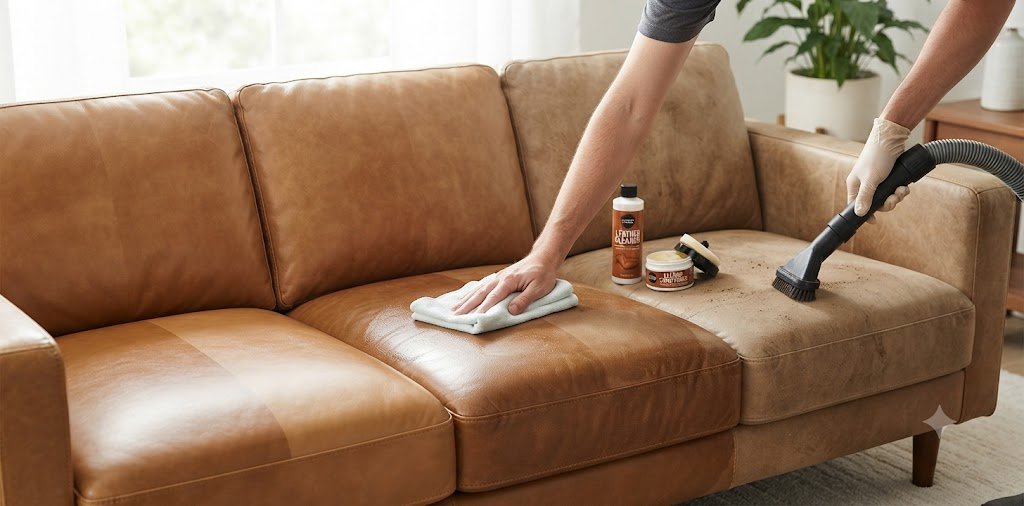
If you’ve ever looked down at your leather sofa and noticed a coffee ring, a grease smudge from movie-night popcorn, or that dull, dry look creeping across the cushions, you’re not alone. I get asked how can I clean a leather sofa more than almost any other furniture question on job walkthroughs, and it makes sense — leather is one of the biggest investments in a living room, and most homeowners are terrified of ruining it with the wrong product.
Here’s the good news: cleaning a leather sofa correctly isn’t complicated. It just requires knowing what kind of leather you have, using the right materials, and resisting the urge to reach for whatever cleaner is under the kitchen sink. I’ve refinished cabinets, restored hardwood, and repaired plenty of furniture over the years, and leather follows the same basic rule as any finished material — the wrong chemical or too much water does more damage than the stain you’re trying to remove.
Quick Answer
To clean a leather sofa: vacuum loose debris first, wipe down the surface with a cloth lightly dampened in distilled water, spot-clean stains with a pH-balanced leather cleaner, dry with a soft towel, then apply a leather conditioner every 3–6 months to prevent cracking. Avoid baby wipes, household all-purpose cleaners, ammonia-based products, and direct sunlight drying — all of these break down the finish over time.
Know Your Leather Before You Clean It
This is the step most homeowners skip, and it’s the one that causes the most damage. Not all leather is finished the same way, and the cleaning method that’s perfectly safe for one type can strip or stain another.
- Finished (protected) leather — has a topcoat sealant. This is what you’ll find on most mass-market sofas from furniture retailers. It’s the most forgiving and the easiest to clean.
- Aniline leather — dyed but not sealed, so it shows the natural grain and markings. It’s soft and premium-feeling but absorbs liquids quickly, which means stains set fast.
- Nubuck or suede-style leather — sanded for a soft, matte texture. This type requires completely different care (dry brushing, no liquid cleaners) and isn’t covered by the wet-cleaning steps below.
If you’re not sure which one you have, check the manufacturer’s tag underneath a cushion, or do a small water-drop test in a hidden spot. If the water beads up, it’s protected. If it soaks in immediately, treat it as aniline and be extra cautious with moisture.
Materials Needed
- Vacuum with soft brush attachment
- Two microfiber cloths (one for cleaning, one for drying)
- Distilled water (tap water can leave mineral spots)
- pH-balanced leather cleaner (not dish soap, not baby wipes)
- Leather conditioner (separate product from the cleaner)
- Soft-bristle brush for crevices and seams
- White vinegar (diluted, for grease spots only — protected leather)
Step-by-Step Guide: Cleaning Your Leather Sofa
Skill Level: Beginner-friendly Estimated Time: 45–90 minutes depending on sofa size and staining Tools Required: Vacuum, microfiber cloths, leather cleaner, leather conditioner
Step 1 — Vacuum First Use the soft brush attachment to remove dust, crumbs, and pet hair from seams, tufting, and crevices. Skipping this step means you’ll just be grinding grit into the leather surface once it’s wet, which causes fine scratches over time.
Step 2 — Test in a Hidden Spot Before using any cleaner on the visible surface, test it on the underside of a cushion or the back of the sofa. Wait 10 minutes and check for discoloration. This takes two extra minutes and can save you from an expensive mistake.
Step 3 — Wipe Down with Distilled Water Lightly dampen a microfiber cloth (not soaking wet) with distilled water and wipe the entire surface in circular motions. This lifts surface dust and body oils that build up from regular use.
Step 4 — Spot-Clean Stains Apply a small amount of pH-balanced leather cleaner directly to a cloth (not the sofa) and gently work it into stained areas. For grease or oil stains on protected leather, a mix of one part white vinegar to two parts distilled water on a cloth can help break down the residue — just don’t scrub hard, let the solution do the work.
Step 5 — Dry Immediately Use a dry microfiber towel to remove all moisture right after cleaning. Never let a leather sofa air-dry, and never point a fan or hair dryer at it — fast drying causes the leather to crack.
Step 6 — Condition the Leather Once fully dry, apply a leather conditioner with a soft cloth in small circular motions. This restores the oils lost during cleaning and keeps the material flexible. Let it absorb for the time listed on the product (usually 15–20 minutes), then buff off any excess with a clean cloth.
Common Mistakes Homeowners Make
- Using baby wipes. They contain alcohol and fragrance oils that dry out leather over time, even though they seem gentle.
- Skipping the conditioner. Cleaning without conditioning is like washing your hands constantly without lotion — it strips natural oils and accelerates cracking.
- Scrubbing stains aggressively. This can push the stain deeper or damage the surface finish. Blot and work gently instead.
- Placing the sofa near direct sunlight or heating vents. UV exposure and heat both dry out leather faster than normal wear.
- Using furniture polish or silicone-based sprays. These leave a residue that attracts more dust and can interfere with future conditioning treatments.
Maintenance Tips to Extend the Life of Your Sofa
- Wipe down weekly with a dry microfiber cloth to prevent oil and dust buildup.
- Rotate cushions periodically so wear is even across the sofa.
- Keep the sofa at least a few feet from radiators, fireplaces, and direct window light.
- Condition every 3–6 months, or more often in dry climates or homes with forced-air heating running constantly.
- Address spills immediately — blot, don’t rub, and clean within the hour when possible.
Professional vs DIY Cleaning Comparison
| Factor | DIY Cleaning | Professional Cleaning |
|---|---|---|
| Cost | $15–$40 for supplies | $100–$300 depending on sofa size and region |
| Best for | Routine maintenance, light stains | Deep-set stains, ink, mold, or antique/high-value leather |
| Risk | Low if you test products first | Very low, insured technicians handle repairs too |
| Time | 1–2 hours | Usually same-day service |
For everyday upkeep, DIY cleaning is more than sufficient. I’d recommend calling in a professional upholstery cleaner if you’re dealing with mold, deep ink stains, pet accidents that have soaked into the cushion foam, or a high-end aniline leather piece where a mistake would be costly to repair.
Cost Breakdown
Costs for leather sofa cleaning supplies and services can vary based on your location, the product brand, and whether you’re doing routine maintenance or restoration work. As a general guide:
- Budget option: Basic leather cleaner and conditioner kit — roughly $15–$25
- Mid-range option: Branded leather care system with cleaner, conditioner, and protectant — roughly $30–$60
- Premium option: Professional in-home upholstery cleaning service — roughly $100–$300, depending on sofa size and the extent of staining
Keep in mind labor rates and service pricing differ by region, so it’s worth getting a quote from a local upholstery cleaning company if you’re considering professional service.
Safety Considerations
- Always ventilate the room when using cleaning solutions, especially vinegar-based mixes.
- Keep leather cleaners and conditioners away from children and pets until fully absorbed and dry.
- Wear gloves if you have sensitive skin, as some leather cleaners contain mild solvents.
- Never mix cleaning chemicals (for example, vinegar and commercial cleaners) in the same application — test and use one product at a time.
Expert Recommendations
After years of walking into homes with beautiful leather furniture that’s been slowly ruined by the wrong cleaning products, my advice is simple: less is more. Leather doesn’t need to be deep-cleaned every week. A dry dusting most weeks, a gentle wipe-down monthly, and a proper clean-and-condition cycle twice a year will keep most sofas looking great for a decade or more. If your leather sofa came with a manufacturer’s care guide, follow it — warranty coverage on some higher-end pieces can be voided by using unapproved cleaning products.
If you’re also dealing with general upholstery upkeep around the house, our guide on removing common stains from fabric furniture covers techniques for the rest of your seating that isn’t leather. And for broader guidance on leather care standards, This Old House’s furniture care resources are a solid reference point many contractors point homeowners toward.
Conclusion
Cleaning a leather sofa comes down to identifying your leather type, using gentle pH-balanced products instead of harsh household cleaners, drying it properly, and — most importantly — conditioning it afterward. Skipping the conditioning step is the single biggest reason leather sofas crack and fade prematurely. Stick to a light maintenance routine every week and a deeper clean-and-condition session twice a year, and your sofa should stay in great shape for many years. If you ever run into stubborn stains, mold, or a high-value aniline leather piece, it’s worth the cost of a professional rather than risking a DIY mistake.
FAQs
Can I use dish soap to clean my leather sofa? It’s best to avoid it. Dish soap is formulated to strip oils and grease, which also strips the natural oils in leather, leading to dryness and cracking over time.
How often should I condition my leather sofa? Most manufacturers recommend conditioning every 3–6 months, though homes in dry climates or with constant HVAC use may need it slightly more often.
What’s the fastest way to remove a fresh stain from leather? Blot immediately with a dry cloth to absorb as much liquid as possible before it soaks in, then follow the cleaning steps above. Speed matters more than the specific product for fresh spills.
Is it safe to use a steam cleaner on a leather sofa? No. Steam and heat can cause the leather to warp, discolor, or lose its finish. Stick to lightly damp cloths only.
Can leather sofas get moldy? Yes, especially in humid climates or if moisture gets trapped in seams. If you notice a musty smell or visible spotting, that’s a sign to call a professional rather than attempt DIY removal.
Will cleaning remove scratches from my leather sofa? Light surface scratches often blend back in once the leather is conditioned, since the oils help the fibers relax. Deeper scratches usually need a leather repair kit or professional touch-up.
Does the type of leather affect how I should clean it? Yes. Protected/finished leather tolerates cleaning products well, while aniline and nubuck leather require gentler, often dry-only methods. Always check your care tag first.
How do I know if my leather sofa cleaner damaged the material? Watch for discoloration, stiffness, or a tacky residue after drying. This is exactly why testing any product in a hidden spot first is so important.