You walk into your living room, and it hits you. That unmistakable, gut-turning smell. Like rotting eggs mixed with garbage.
Your first thought might be panic. Is there a gas leak? Is raw sewage backing up into the walls?
Take a breath. I’ve dealt with this exact situation more times than I can count, both in my own home and while helping friends diagnose theirs. In most cases, the fix is embarrassingly simple. But sometimes, it signals a real problem that needs a professional.
Let me walk you through exactly what causes that sewage smell in your house, how to track it down, and when to stop DIY-ing and call a plumber.
Disclaimer: This guide is for diagnostic purposes. If you suspect a natural gas leak (different smell, often accompanied by hissing), leave your home immediately and call your utility company. This article covers sewer gas, not natural gas.
The “Rotten Egg” Smell vs. Sewage: Is It Gas or Sewer?
Before we dive in, let’s clear up a common source of panic.
Natural gas companies add a chemical called mercaptan to otherwise odorless gas. That mercaptan smells like rotten eggs. Sewer gas contains hydrogen sulfide, which also smells like rotten eggs.
So how do you tell the difference?
- Natural gas smell is usually consistent and strongest near gas appliances (stove, water heater, furnace). You might hear a faint hissing sound.
- Sewer gas smell tends to come and go. It might appear after a heavy rain, or when you flush a toilet, or only in certain rooms. It often has a more “dirty diaper” or “decaying organic matter” undertone, not just pure sulfur.
If you’re in doubt, call your gas company. They’ll send someone out for free to check. Nine times out of ten, it’s sewer gas. But that one time it’s not? That’s a potential explosion risk.
Top 7 Reasons Your House Smells Like Sewage (Ranked by Likelihood)
I’ve organized this list from “fix it in 30 seconds” to “call a professional tomorrow.” Start at the top and work your way down.
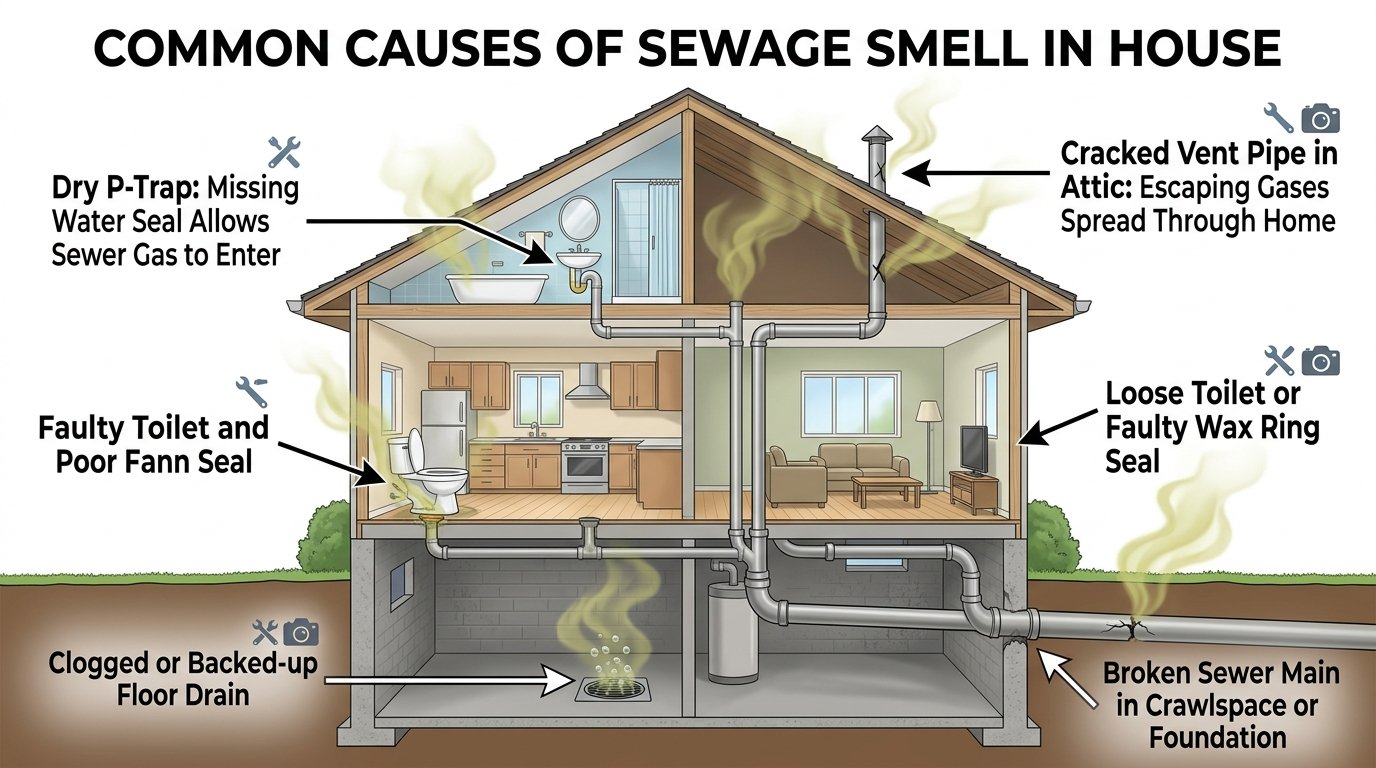
1. Dry P-Traps (The 99% Solution)
This is the culprit in the vast majority of cases. And it’s almost embarrassing how simple it is to fix.
Every sink, shower, tub, and floor drain has a U-shaped pipe underneath called a P-trap. That bend holds water at all times. That water creates a seal that blocks sewer gases from rising up through the drain and into your home.
If that water evaporates, the seal is gone. Sewer gas comes right up.
When does this happen?
- Guest bathrooms that nobody uses for months.
- Floor drains in basements or laundry rooms.
- A vacation home you just returned to.
- During dry winter months when indoor humidity is low.
The fix: Run water in every sink, shower, and tub for 30 seconds. Pour a gallon of water down any floor drain. That’s it. The smell should disappear within an hour.
I once spent two hours tearing apart my parents’ basement looking for a “sewer leak” before realizing the floor drain in the utility closet had gone dry. Two buckets of water later, problem solved.
2. Cracked or Improperly Sealed Wax Ring (Toilet)
If running water doesn’t fix the smell, check your toilets next.
Underneath every toilet is a wax ring that seals the connection between the toilet and the sewer pipe. Over time, that wax can crack, dry out, or get squished if the toilet rocks.
The telltale signs:
- The smell is strongest right around the base of the toilet.
- The toilet wobbles slightly when you sit on it.
- You see water stains or dark discoloration on the floor around the toilet.
- The smell gets worse right after someone flushes.
The fix: You need to replace the wax ring. That means pulling the toilet, scraping off the old wax, installing a new ring, and resetting the toilet. It’s a messy but manageable DIY job if you’re handy. If not, a plumber will charge 150to250.
3. Clogged or Blocked Plumbing Vent Pipe
Here’s something most homeowners don’t know. Your plumbing system has vent pipes that go up through your roof. These vents equalize pressure and let sewer gases escape safely outside.
If that vent gets blocked, pressure builds up. Sewer gas gets pushed back down through your drains and into your house.
How to spot it:
- You hear gurgling sounds from toilets or sinks when water drains.
- Drains are slow even though nothing is clogged.
- The smell is worse after flushing a toilet or running a washing machine.
- You’ve had recent storms or high winds (which can blow leaves or debris into the vent).
The fix: You need to get on the roof and look at the vent pipe. Clear out any leaves, bird nests, or animal debris. For serious blockages, a plumber can run a snake down the vent. Never try to do this yourself in wet or icy conditions.
4. Sewage Backup or Main Line Blockage
This one is more serious.
If your main sewer line has a partial blockage, wastewater can’t flow freely to the municipal sewer or your septic tank. That backup pushes sewer gas back up through the lowest drain in your house, usually a basement floor drain or ground-floor toilet.
Warning signs:
- Multiple drains are slow or gurgling, not just one.
- Water backs up into your tub or shower when you run the washing machine.
- You see wet spots in your yard near the sewer line.
- The smell is strong and persistent, not intermittent.
The fix: Call a plumber immediately. They’ll run a camera down your main line to locate the blockage, which could be tree roots, grease buildup, or a collapsed pipe. This isn’t a DIY job.
5. Biofilm in Drains (Not Actual Sewer, But Smells Like It)
Here’s a weird one. Sometimes the smell isn’t sewer gas at all. It’s bacteria growing inside your drain pipes.
Over time, organic matter like hair, soap scum, and toothpaste builds up inside drains. That sludge, called biofilm, can produce hydrogen sulfide as it decomposes. It smells exactly like sewage.
How to tell: The smell comes directly from a specific drain, not from the general area. It might get worse after running hot water, which releases the odor.
The fix: Clean your drains. Not with harsh chemicals that damage pipes. Try this instead: Pour a cup of baking soda down the drain, followed by a cup of white vinegar. Let it fizz for 15 minutes, then flush with boiling water. Do this once a month as maintenance.
6. Broken or Cracked Sewer Pipe (Under Your Foundation)
This is the worst-case scenario.
If the sewer pipe running under your concrete slab or through your crawl space cracks, sewage can leak into the soil beneath your house. That smell seeps up through the foundation and into your living space.
Red flags:
- The smell is constant and doesn’t respond to any of the fixes above.
- You notice cracks in your foundation walls or floor.
- There’s a persistent damp or humid smell even when the house is dry.
- Rodents or insects are suddenly appearing inside (they follow the moisture).
The fix: Call a plumber who specializes in trenchless sewer repair. They’ll run a camera to confirm the break. Depending on the location, they might reline the pipe or dig it up and replace it. Budget several thousand dollars for this one.
7. The Washing Machine Standpipe
This is a sneaky one that stumps a lot of homeowners.
Your washing machine drains into a vertical pipe called a standpipe. That pipe has a P-trap just like your sinks. But if the standpipe is too short or installed incorrectly, the force of the draining water can suck the water right out of the trap, breaking the seal.
How to spot it: You only smell sewage immediately after running a load of laundry.
The fix: First, check that the standpipe is at least 18 inches tall (local codes vary). Second, run water down the standpipe manually to refill the trap. Third, consider installing a special trap called an “anti-siphon trap” if this keeps happening.
How to Diagnose the Sewage Smell (A Room-by-Room Checklist)
Let me give you a practical, step-by-step method to track down the source without losing your mind.
The Sniff Test Process
- Leave the house for an hour. Seriously. Get nose-blind to the smell by going outside and breathing fresh air for a while.
- Walk back in slowly. The smell will hit you strongest near the source.
- Go room by room. Close doors between rooms to isolate the smell.
- Use the plastic wrap trick: Cover every drain in a suspicious room with plastic wrap and tape it down. Leave for a few hours. If the smell disappears, the culprit is one of those drains. Remove the wrap one drain at a time to find the specific one.
When to Call a Plumber
You’ve tried running water in every drain. You’ve cleaned the biofilm. You’ve checked the toilet. The smell is still there.
Call a professional if:
- The smell persists for more than 48 hours despite your efforts.
- You have multiple slow drains or gurgling sounds.
- You see water, wet spots, or sewage anywhere inside your home.
- Anyone in the house has unexplained headaches, nausea, or dizziness (sewer gas exposure).
How to Put a House in a Trust: A Complete Step-by-Step Guide (2026)
Frequently Asked Questions
Is breathing in sewer gas dangerous?
Yes, in high enough concentrations or over long periods. Sewer gas contains methane (which can displace oxygen), hydrogen sulfide (toxic), and ammonia. Short-term, low-level exposure usually just causes nausea or headaches. But if the smell is very strong or you feel dizzy, leave the house and call a plumber.
Will pouring bleach down the drain fix the smell?
Bleach kills some bacteria, but it won’t fix a dry P-trap or a cracked wax ring. Worse, mixing bleach with other drain cleaners can create toxic chlorine gas. Stick to baking soda and vinegar for biofilm, but understand that’s only a temporary cosmetic fix for a specific cause.
Why does my house smell like sewer only when it rains?
This is almost always a vent issue. Rain can push debris into your roof vent, or the falling water pressure can force trapped gas back into your home. Heavy rain can also raise the water table around your foundation, putting pressure on cracked pipes. Check your roof vent first.
Can a water heater cause a sewage smell?
Not directly. But if your water heater has a sacrificial anode rod made of magnesium, certain bacteria in your water supply can react with it to produce a rotten egg smell in your hot water. The difference? That smell comes out of your hot tap, not from the air generally. If only your hot water stinks, it’s the anode rod, not your sewer.
How much does it cost to fix a sewer gas leak?
A dry P-trap costs nothing but a few gallons of water. A wax ring replacement runs 150to250 if you hire a plumber. A cleared vent pipe is 200to500. A camera inspection of your sewer line is 300to600. A broken pipe under your foundation? 4,000to15,000 depending on access.
Should I buy a sewer gas detector?
For most homeowners, no. Professional plumbers use handheld combustible gas detectors, but they cost $200+. For a one-time problem, you’re better off spending that money on a plumber to diagnose it. For persistent issues in a rental property or fixer-upper, it might be worth the investment.
Final Thoughts
Smelling sewage in your house is unpleasant. It’s stressful. Your brain goes to worst-case scenarios involving jackhammers and five-figure repair bills.
But here’s the reality: more than 90% of the time, the fix is running water in a dry drain. Check your guest bathroom. Check the basement floor drain. Check that sink you never use.
Do that first. Don’t call a plumber for a dry P-trap. They’ll smile, run the water, hand you a bill for a service call, and you’ll feel silly.
If the water doesn’t fix it, work through the list methodically. The wax ring. The roof vent. The biofilm. By the time you’ve eliminated the easy stuff, you’ll either have solved the problem or know exactly what to tell the plumber when you finally pick up the phone.
One last piece of advice from someone who’s been there: if you have a vacation home or a guest bathroom that goes months without use, make it a habit to run water in every drain every two weeks. Write it on your calendar. A half-gallon of water down the drain once a month will save you from ever smelling that smell again.