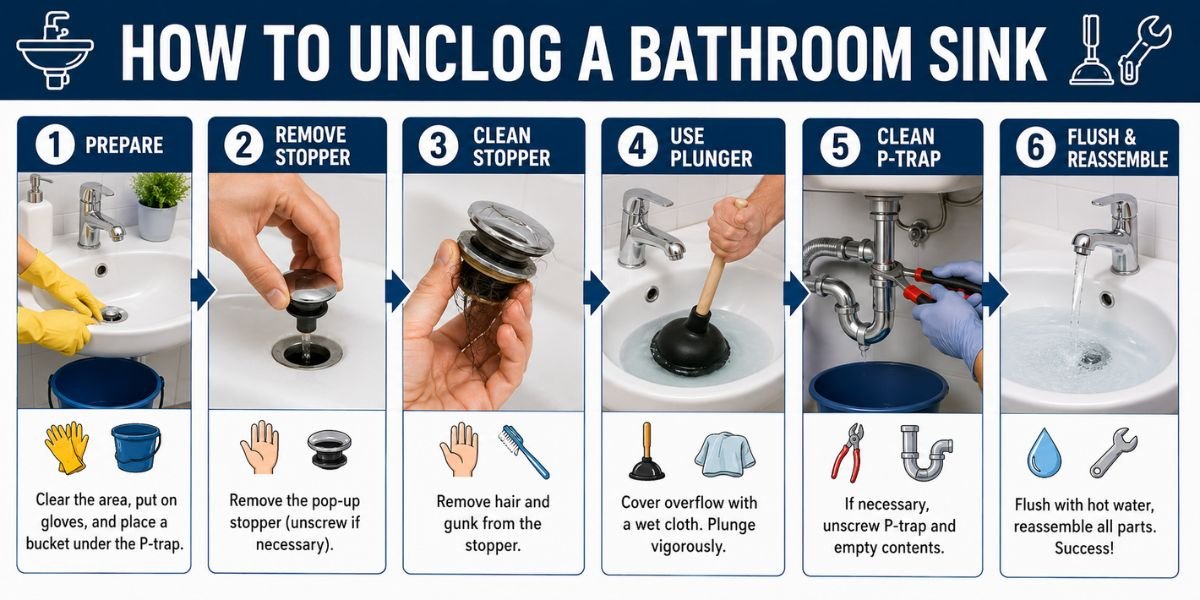
If you’ve ever stood at your bathroom sink watching water pool around the drain instead of disappearing down it, you already know how frustrating a clogged sink can be. It’s one of the most common calls I get from homeowners — right up there with running toilets and leaky faucets. The good news is that learning how to unclog a bathroom sink is one of the easiest and most rewarding home repairs you can tackle yourself, usually without spending a dime on a plumber.
In bathroom sinks specifically, clogs are almost always caused by a buildup of hair, soap scum, toothpaste residue, and skin oils that combine into a thick, sticky mass inside the pipe. That’s different from kitchen sink clogs, which are usually grease and food-based, so the removal approach is a little different too. In this guide, I’ll walk you through exactly what I do when I get called out for a slow or fully blocked bathroom drain — starting with the simplest fixes and working up to more involved repairs.
Quick Answer
For most bathroom sink clogs, start with the simplest method first: remove the pop-up stopper and pull out the hair clog by hand or with a bent wire hanger. If that doesn’t clear it, use a mixture of baking soda and vinegar followed by hot water, or better yet, a inexpensive drain snake (also called a zip tool or drain auger). Avoid chemical drain cleaners when possible — they’re hard on older pipes and don’t actually remove the physical hair clog causing most bathroom backups. If none of these work, the clog may be deeper in the P-trap or drain line, which means it’s time to open up the trap or call a licensed plumber.
What Causes a Bathroom Sink to Clog
Before you start unclogging, it helps to understand what you’re dealing with. In my experience doing repairs and renovations, bathroom sink clogs are almost always one of these:
- Hair buildup – the number one cause, especially in sinks used for shaving or hair care
- Soap scum – bar soap residue combines with hair and forms a sticky, rope-like mass
- Toothpaste and mineral buildup – hardens over time inside the drain
- Mineral deposits from hard water – narrows the pipe diameter gradually
- Foreign objects – bobby pins, small caps, jewelry, dental floss
Unlike a kitchen drain, a bathroom sink clog usually sits right at or just below the stopper, in the P-trap, or in the first few feet of drain pipe. That’s actually good news, because it means most clogs are within easy reach without any major plumbing work.
Tools Required
You don’t need a full plumber’s toolbox for this. Here’s what I’d recommend having on hand:
- Rubber gloves
- A flashlight
- Needle-nose pliers or a bent wire hanger
- A plunger (a small sink plunger, not the flanged toilet type)
- Baking soda and white vinegar
- A zip-it tool or drain stick (cheap plastic barbed tool)
- A hand-crank drain snake/auger (optional, for tougher clogs)
- A bucket and old towels
- Adjustable pliers or a wrench (if you need to remove the P-trap)
- Plumber’s tape (if reassembling the trap)
Skill Level: Beginner to intermediate Estimated Time: 15–45 minutes for most clogs; up to 1–2 hours if you need to disassemble the P-trap
Step-by-Step Guide to Unclogging a Bathroom Sink
Step 1: Remove the Pop-Up Stopper
Most bathroom sinks have a pop-up stopper connected to a pivot rod underneath the sink. Reach under the sink and locate the horizontal rod attached to the back of the stopper assembly. Loosen the retaining nut, pull the rod out, and then lift the stopper straight up out of the drain. This alone solves the clog in a surprising number of cases, because hair wraps directly around the base of the stopper.
Step 2: Pull Out Visible Debris
With the stopper removed, shine a flashlight down the drain. Use needle-nose pliers or a bent wire hanger with a small hook on the end to fish out any visible hair or gunk. A plastic zip-it tool works even better here — it has barbs designed specifically to grab hair clogs and is one of the cheapest, most effective tools in my kit.
Step 3: Try the Baking Soda and Vinegar Method
If the drain is still slow, pour about half a cup of baking soda down the drain, followed by half a cup of white vinegar. Let it fizz for 10–15 minutes, then flush with hot (not boiling, if you have PVC pipes) water. This won’t dissolve a solid hair clog, but it does a great job breaking down soap scum and light residue buildup.
Step 4: Use a Plunger
Fill the sink with a couple inches of water to create a seal. Block the overflow hole (the small opening near the top of the sink basin) with a wet rag, then plunge firmly up and down 10–15 times. The overflow hole matters more than people realize — if you skip covering it, you lose suction and the plunger won’t do much.
Step 5: Snake the Drain
If plunging doesn’t clear it, a hand-crank drain snake is your next move. Feed the cable down the drain until you feel resistance, then crank and push gently to break through or hook the clog. Slowly pull it back out — you’ll usually see the hair mass come out with it.
Step 6: Check the P-Trap
If the clog still hasn’t cleared, the problem is likely inside the P-trap — the curved pipe under the sink. Place a bucket underneath, loosen the slip nuts on both ends with adjustable pliers, and remove the trap. Clean it out over a trash can, then reassemble, making sure the washers seat correctly and the nuts are hand-tight plus a quarter turn.
Common Mistakes Homeowners Make
- Over-relying on chemical drain cleaners. They can damage older metal or PVC pipes over repeated use and don’t remove solid hair clogs.
- Using boiling water on PVC pipes. This can warp or loosen the pipe joints. Hot tap water is fine; boiling water isn’t necessary and isn’t safe for all pipe materials.
- Forgetting to cover the overflow hole when plunging, which wastes your effort.
- Over-tightening P-trap nuts, which can crack aging plastic fittings.
- Not placing a bucket under the trap before disassembling it — this is a guaranteed mess if skipped.
Professional vs. DIY: When to Call a Plumber
Most bathroom sink clogs are genuinely DIY-friendly, and I’d encourage most homeowners to try the steps above before paying for a service call. That said, call a licensed plumber if:
- The clog affects multiple fixtures at once (sink, tub, and toilet all backing up), which suggests a main line issue
- You notice water damage, mold, or a persistent sewage smell
- The clog returns repeatedly within days of clearing it
- You’re dealing with older galvanized or cast iron piping that’s prone to cracking during DIY repairs
A plumber’s service call typically runs anywhere from $150 to $350 depending on your region and the complexity of the job, though costs can vary significantly based on local labor rates and how accessible your plumbing is.
Cost Breakdown
| Option | Approximate Cost | Notes |
|---|---|---|
| Budget (DIY basics) | $5–$20 | Baking soda, vinegar, zip-it tool |
| Mid-range DIY | $15–$40 | Hand-crank drain snake, plunger |
| Professional service call | $150–$350 | Includes labor and basic snaking |
| P-trap or pipe replacement | $100–$300+ | If parts are cracked or corroded |
These are general estimates — actual costs can vary depending on your location, labor rates, and the age or condition of your plumbing.
Maintenance Tips to Prevent Future Clogs
- Install a mesh drain strainer to catch hair before it enters the pipe
- Run hot water for 20–30 seconds after each use to keep soap scum from hardening
- Do a monthly baking soda and vinegar flush as light preventive maintenance
- Avoid rinsing excessive amounts of hair or shaving debris directly down the drain
- Have your drains professionally inspected every couple of years if your home has older plumbing
Safety Considerations
- Always wear gloves when handling drain contents or chemical cleaners
- Never mix chemical drain cleaners with baking soda/vinegar treatments — the reaction can be hazardous
- Ventilate the bathroom if using any commercial drain cleaning product
- Turn off the water supply if you’re removing more than the stopper, to avoid accidental spills
Conclusion
A clogged bathroom sink is one of the most manageable home repairs out there — and in most cases, you can clear it yourself in under an hour with basic tools you probably already have. Start simple: pull the stopper, remove visible debris, then work your way up to plunging or snaking if needed. Keep an eye on prevention with a mesh strainer and regular maintenance, and you’ll cut down on how often this problem shows up in the first place. If a clog keeps coming back or you notice signs of a bigger plumbing issue, that’s your cue to bring in a licensed professional rather than risk damaging older pipes.
For more hands-on plumbing guidance, check out our related guide on Common Plumbing Problems Every Homeowner Should Know for a broader look at drain, pipe, and fixture issues around the house. For additional safety guidance on household chemical use, the U.S. EPA’s guidance on safe chemical handling is a solid outside resource worth bookmarking.
FAQs
1. Why does my bathroom sink drain slowly but not fully clog? A slow drain usually means a partial clog is forming — often hair and soap scum narrowing the pipe. It’s worth addressing early before it becomes a full blockage.
2. Is it safe to use Drano or similar chemical cleaners regularly? Occasional use is generally fine, but frequent use can corrode older pipes and isn’t effective against solid hair clogs, which are the most common cause of bathroom sink backups.
3. Can I use a toilet plunger on a bathroom sink? It’s better to use a small cup or sink-specific plunger. Toilet plungers have a flange designed for toilet bowls and won’t seal properly against a flat sink basin.
4. What if water is coming up instead of draining? This usually indicates a more significant blockage further down the line, possibly beyond the P-trap. If snaking doesn’t resolve it, it’s worth calling a plumber to inspect further.
5. How often should I clean my bathroom sink drain? A light monthly maintenance routine — hot water flush plus an occasional baking soda and vinegar treatment — helps prevent buildup between deeper cleanings.
6. Why does my bathroom sink smell bad even when it drains fine? This is often caused by residue buildup in the P-trap or a dry trap that’s let sewer gas through. A drain trap cleaning usually resolves the odor.
7. Can a clogged bathroom sink affect other plumbing fixtures? If it’s isolated to one sink, no. But if multiple fixtures are backing up simultaneously, it may point to an issue in the main drain line rather than the sink itself.
8. Do I need a permit to replace a P-trap or sink drain assembly? No, this is a minor repair that doesn’t typically require a permit. Permits generally come into play for larger plumbing work like rerouting pipes or altering a home’s main drain system.