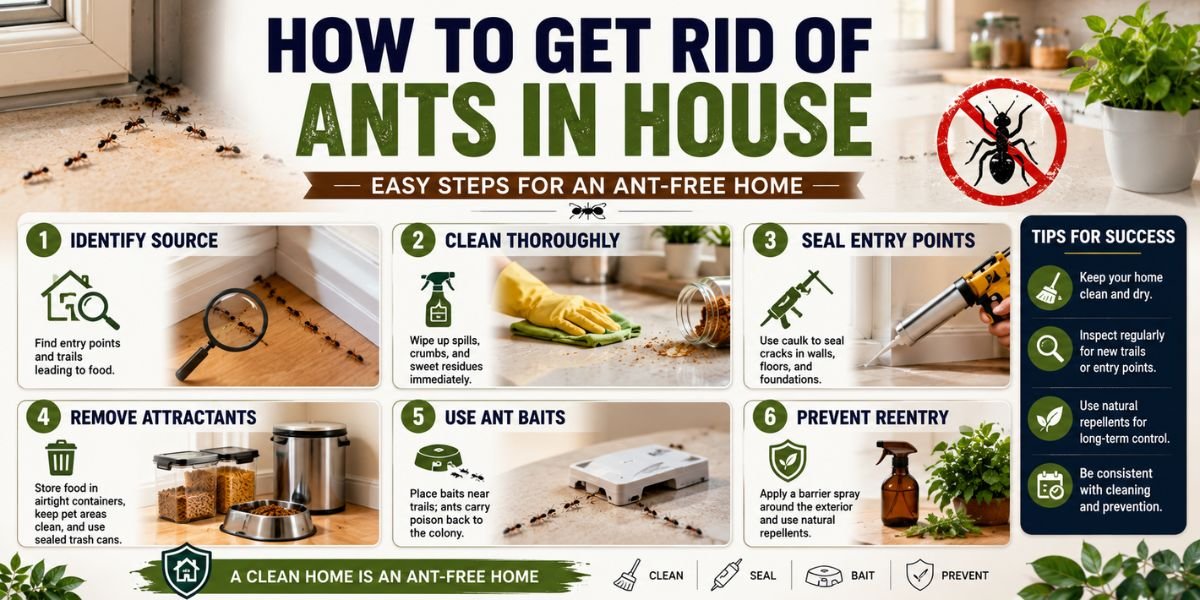
Introduction
Few household problems are as frustrating as discovering a trail of ants marching across your kitchen counter or bathroom sink. At first, you may notice only a few insects, but within days, they can turn into a full-blown infestation if left untreated.
Ants enter homes in search of food, water, and shelter. Even a few crumbs on the floor or an unsealed container of sugar can attract an entire colony. While most household ants are harmless, they contaminate food, create unsanitary conditions, and some species—such as carpenter ants—can even damage wooden structures over time.
The good news is that you don’t always need expensive pest control services. With the right combination of cleaning, natural remedies, ant baits, and preventive maintenance, you can eliminate ants and stop them from returning.
In this guide, you’ll learn why ants invade homes, the most effective DIY methods to remove them, natural solutions that actually work, and practical tips to keep your home ant-free throughout the year.
Quick Answer
If you’re wondering how to get rid of ants in house, start by locating the ant trail and removing their food source. Clean countertops, sweep away crumbs, seal cracks around doors and windows, and use ant baits or natural remedies like white vinegar or diatomaceous earth. For severe infestations, commercial bait stations or professional pest control may be necessary.
Why Are Ants Coming Into Your House?
Understanding why ants invade your home is the first step toward getting rid of them permanently.
1. Food Sources
Ants have an excellent sense of smell. Tiny crumbs, sugary drinks, pet food, or grease left on kitchen surfaces are enough to attract worker ants. Once they find food, they leave a scent trail for the rest of the colony to follow.
2. Water and Moisture
Like all living creatures, ants need water to survive. Leaking pipes, damp cabinets, clogged sinks, and standing water create ideal conditions for ants to thrive.
Bathrooms, kitchens, basements, and laundry rooms are common hotspots because they provide consistent moisture.
3. Easy Entry Points
Ants can squeeze through incredibly small openings. Cracks in walls, gaps around windows, damaged door seals, and openings around utility pipes all provide easy access into your home.
4. Seasonal Weather Changes
Heavy rain, extreme heat, or cold weather often forces ant colonies indoors where conditions are more stable.
Spring and summer are particularly active seasons when ants begin searching for food to support their growing colonies.
5. Outdoor Colonies Nearby
Sometimes the problem starts outside.
If you have ant nests in your garden, under patios, or near your home’s foundation, worker ants will eventually find their way indoors while searching for food.
Common Types of Household Ants
Different ant species require slightly different treatment methods.
Sugar Ants
These tiny ants are attracted to sweets, fruit, syrup, and sugary drinks. They are among the most common household pests.
Carpenter Ants
Unlike termites, carpenter ants don’t eat wood, but they tunnel through it to build nests. Over time, they can weaken wooden structures if ignored.
Pavement Ants
These ants usually build nests beneath sidewalks, driveways, and patios but frequently enter homes through foundation cracks.
Odorous House Ants
These ants release an unpleasant smell when crushed and are often found in kitchens searching for sweet foods.
Knowing which type of ant you’re dealing with can help you choose the most effective treatment.
12 Effective Ways to Get Rid of Ants in House
1. Follow the Ant Trail
Before spraying anything, observe where the ants are coming from.
Worker ants leave invisible pheromone trails that guide other ants to food. Following these trails often leads you directly to their entry point.
Look around:
- Window frames
- Door gaps
- Kitchen cabinets
- Plumbing pipes
- Electrical outlets
- Foundation cracks
Once you’ve identified their route, you’re ready to block their access.
2. Remove Every Food Source
Even the best ant killer won’t work if food remains easily available.
To make your home less attractive to ants:
- Wipe kitchen counters daily.
- Sweep and vacuum floors.
- Store cereal, flour, and sugar in airtight containers.
- Clean under appliances.
- Wash dirty dishes immediately.
- Keep pet food off the floor overnight.
- Empty garbage bins regularly.
Small cleaning habits often make the biggest difference.
3. Seal Every Entry Point
Once you’ve identified how ants are entering your home, seal those openings using silicone caulk or weatherproof sealant.
Pay close attention to:
- Window frames
- Door thresholds
- Utility pipe openings
- Foundation cracks
- Baseboards
Sealing these gaps not only keeps ants out but also helps improve your home’s energy efficiency.
If you’re interested in improving your home’s overall condition, don’t miss our guide on 10 DIY Home Improvement Projects for Beginners, where you’ll find simple maintenance ideas that make your home safer and more efficient.
12 Effective Ways to Get Rid of Ants in House (Continued)
4. Clean Kitchen Counters Every Day
Kitchen counters are one of the first places ants search for food. Even tiny amounts of sugar, grease, or crumbs can attract them.
To keep ants away:
- Wipe countertops with warm, soapy water after every meal.
- Clean spills immediately.
- Vacuum crumbs under appliances.
- Store fruit in the refrigerator during an infestation.
A clean kitchen removes the scent trails ants use to locate food.
5. Spray White Vinegar Solution
White vinegar is one of the most effective natural ant repellents.
How to Use
Mix:
- 1 cup white vinegar
- 1 cup water
Pour the solution into a spray bottle and spray:
- Countertops
- Windowsills
- Door frames
- Ant trails
The vinegar removes pheromone trails and discourages ants from returning.
6. Use Diatomaceous Earth
Food-grade diatomaceous earth is a natural powder that kills ants by damaging their outer protective coating.
Sprinkle a thin layer around:
- Baseboards
- Entry points
- Under sinks
- Near windows
- Garage doors
Keep the powder dry for maximum effectiveness.
7. Try Borax and Sugar Bait
Borax is one of the most reliable DIY ant treatments.
Mix:
- 1 tablespoon Borax
- 3 tablespoons sugar
- Small amount of warm water
Place the bait near ant trails.
Worker ants carry it back to the colony, helping eliminate the nest.
Keep this mixture away from children and pets.
8. Baking Soda Method
Mix equal parts:
- Baking soda
- Powdered sugar
The sugar attracts ants while the baking soda helps eliminate them.
This method works best for small infestations.
9. Lemon Juice Spray
Fresh lemon juice naturally disrupts ant scent trails.
Spray lemon juice around:
- Doors
- Windows
- Kitchen counters
- Pantry shelves
Besides repelling ants, it leaves your home smelling fresh.
10. Essential Oils
Many essential oils naturally repel ants.
Popular choices include:
- Peppermint oil
- Tea tree oil
- Clove oil
- Eucalyptus oil
- Lemon oil
Mix 10–15 drops with water in a spray bottle and apply around entry points.
11. Use Commercial Ant Baits
For guidance on choosing and using pesticides safely, refer to the U.S. Environmental Protection Agency (EPA), which offers recommendations for effective and responsible pest management.
For larger infestations, commercial ant bait stations are often more effective than sprays.
Unlike aerosol sprays that kill visible ants, bait stations allow workers to carry poison back to the colony, eliminating the queen over time.
Place bait stations:
- Behind refrigerators
- Under sinks
- Inside cabinets
- Near ant trails
Avoid spraying insecticide near bait stations, as it can prevent ants from taking the bait.
12. Call a Professional Pest Control Service
If ants continue returning despite repeated treatments, the colony may be hidden inside walls, foundations, or crawl spaces.
Professional pest control is recommended if:
- Ants keep returning every few weeks.
- Carpenter ants are damaging wood.
- You discover multiple nests.
- DIY methods fail after several weeks.
Experts can identify the species and apply targeted treatments for long-term control.
Natural Home Remedies That Really Work
For science-based advice on identifying ant species and selecting the most effective control methods, visit the University of California Integrated Pest Management (UC IPM) program.
Many homeowners prefer natural solutions before using chemicals.
Here are some proven remedies:
| Remedy | Effectiveness |
|---|---|
| White Vinegar | Excellent |
| Lemon Juice | Good |
| Cinnamon | Good |
| Peppermint Oil | Very Good |
| Diatomaceous Earth | Excellent |
| Borax Bait | Excellent |
| Coffee Grounds | Moderate |
| Baking Soda | Moderate |
Natural remedies work best when combined with proper cleaning and sealing entry points.
Best Commercial Ant Killers
If home remedies aren’t enough, consider:
- Ant bait stations
- Ant gel baits
- Outdoor ant granules
- Residual insecticide sprays
- Indoor ant traps
Always follow the manufacturer’s safety instructions and keep products away from children and pets.
How to Prevent Ants from Returning
Smart home technology can also help with household maintenance. Read our guide on What Is a Smart Home? to learn how smart sensors and monitoring devices can make home care easier.
Once you’ve removed the infestation, prevention is the key to keeping ants away.
Store Food Properly
Keep food in airtight containers and avoid leaving snacks uncovered.
Clean Regularly
Sweep floors, wipe surfaces, and empty trash bins daily.
Fix Water Leaks
Repair leaking faucets, pipes, and drains to eliminate moisture.
Seal Cracks and Gaps
Inspect your home’s exterior for openings around windows, doors, and utility lines.
Trim Outdoor Plants
Branches and shrubs touching your home act like bridges for ants.
Keep Pet Feeding Areas Clean
Remove leftover pet food and wash bowls after feeding.
Internal Link Placement (after this section):
Technology can also help you monitor and maintain your home more efficiently. Read our guide on What Is a Smart Home? to discover how smart devices can improve home maintenance.
Common Mistakes to Avoid
Many homeowners accidentally make the infestation worse.
Avoid these mistakes:
- Spraying only visible ants
- Ignoring the nest
- Leaving food uncovered
- Using too much insecticide
- Not sealing entry points
- Skipping regular cleaning
Successful ant control requires eliminating both the workers and the colony.
When Should You Call a Professional?
Contact a pest control expert if:
- You notice carpenter ants inside wooden structures.
- Ants continue returning despite several treatments.
- The infestation spreads to multiple rooms.
- You cannot locate the nest.
- There are thousands of ants appearing daily.
Professional treatment is often the fastest solution for severe infestations.
Conclusion
Knowing how to get rid of ants in house starts with understanding why they entered in the first place. Food crumbs, moisture, and easy entry points are the main reasons ants invade homes. By removing their food sources, sealing cracks, using effective bait, and keeping your home clean, you can eliminate most infestations without relying on harsh chemicals.
For stubborn or recurring infestations, combining DIY methods with commercial bait stations often delivers the best results. If the problem persists or you suspect carpenter ants are damaging your home, contacting a professional pest control service is the safest option.
The best defense against ants is consistent prevention. Regular cleaning, proper food storage, fixing leaks, and inspecting your home’s exterior can help keep your living space pest-free throughout the year.Keeping your home clean goes beyond pest control. If you’re dealing with slow drains too, our How to Unclog a Bathroom Sink guide provides simple DIY steps to restore proper drainage.
FAQs
How long does it take to get rid of ants in a house?
Small ant infestations can often be controlled within a few days using ant bait stations and proper cleaning. Larger infestations may take one to three weeks because worker ants need time to carry bait back to the colony.
What is the fastest way to get rid of ants indoors?
The quickest approach is to clean all food sources, follow the ant trail, place ant bait near active areas, and seal the entry points. Sprays may kill visible ants immediately, but bait is usually more effective at eliminating the entire colony.
Does vinegar permanently remove ants?
No. White vinegar removes the scent trails that ants use for navigation and temporarily repels them. It works best when combined with good sanitation and sealing cracks to prevent ants from returning.
Can ants damage a house?
Most household ants are simply a nuisance. However, carpenter ants can tunnel through damp or decaying wood, weakening structural components over time if the infestation is left untreated.
What smell do ants hate the most?
Many ants dislike strong scents such as:
- Peppermint oil
- Lemon
- White vinegar
- Tea tree oil
- Cinnamon
- Clove oil
- Eucalyptus oil
These natural repellents can help discourage ants but are most effective as part of a broader prevention strategy.
Why do ants keep coming back?
Ants usually return because:
- Food is still available.
- Moisture problems haven’t been fixed.
- Entry points remain open.
- The colony hasn’t been eliminated.
- Outdoor nests are close to your home.
Long-term control requires addressing all of these factors.
Are natural remedies enough to eliminate ants?
Natural remedies work well for minor infestations and prevention. For larger colonies, ant bait stations or professional pest control are generally more effective because they target the entire nest.