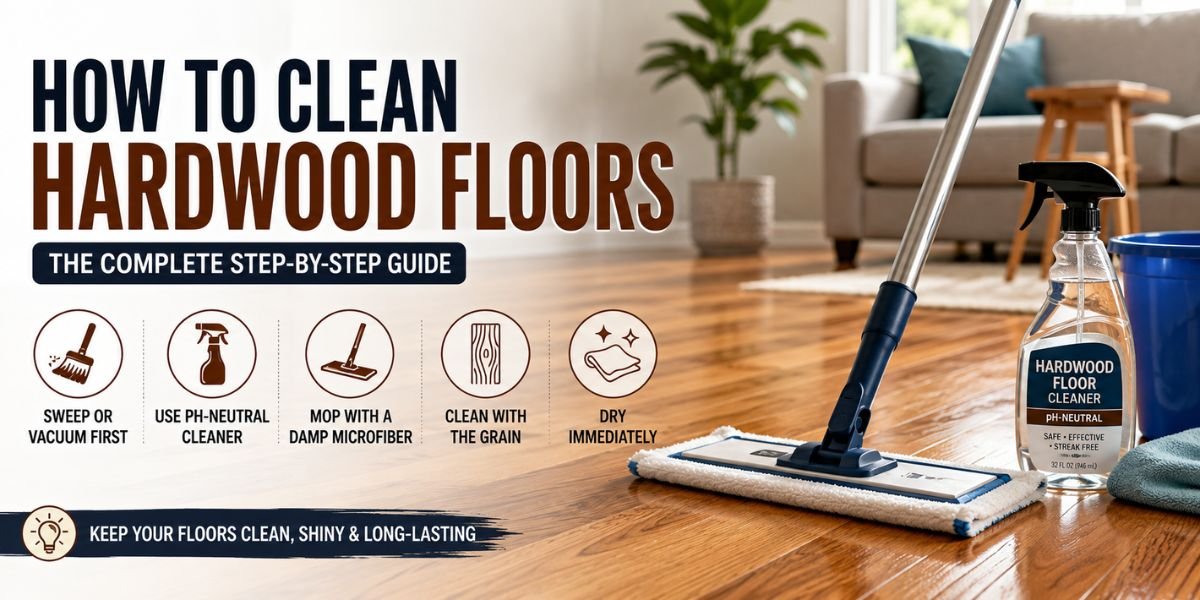
Hardwood floors are one of the most beautiful and valuable features in any home. They add warmth, elegance, and long-term value to your property. However, without proper care, hardwood flooring can quickly lose its shine due to dust, dirt, moisture, and everyday foot traffic.
The good news is that cleaning hardwood floors doesn’t have to be difficult. Using the right tools and techniques can keep your floors looking new for years while protecting the wood’s finish.
In this guide, you’ll learn how to clean hardwood floors safely, how often they should be cleaned, the best products to use, and common mistakes to avoid. We’ll also cover special cleaning methods for engineered hardwood and laminate floors.
Quick Answer
To clean hardwood floors, first remove dust and dirt using a soft broom or a vacuum designed for hardwood surfaces. Then clean the floor with a slightly damp microfiber mop and a pH-neutral hardwood floor cleaner. Never soak the floor with water, use harsh chemicals, or clean with a steam mop, as excessive moisture can damage the wood.
Why Hardwood Floors Need Special Care
According to the National Wood Flooring Association (NWFA), routine sweeping or vacuuming, prompt spill cleanup, and avoiding wet or steam mops are among the most effective ways to protect hardwood floors and extend their lifespan.
Unlike tile or vinyl flooring, hardwood is a natural material that reacts to moisture, temperature, and humidity. Too much water can seep into the wood and cause swelling, warping, or discoloration.
Dust and tiny particles may seem harmless, but they work like sandpaper under your shoes, slowly scratching the floor’s finish over time.
Proper cleaning not only improves appearance but also:
- Extends the life of your flooring
- Prevents scratches and dullness
- Protects the protective finish
- Maintains your home’s value
- Reduces allergens like dust and pet hair
Taking just a few minutes each week can save you from expensive repairs or refinishing later.
What You’ll Need
Before you begin, gather the right cleaning supplies.
Essential Tools
- Soft-bristle broom
- Vacuum with hardwood floor setting
- Microfiber dust mop
- Spray bottle
- Flat microfiber mop
- Clean microfiber cloths
Recommended Cleaning Products
Choose products specifically designed for hardwood flooring, such as:
- pH-neutral hardwood floor cleaner
- Water-based hardwood cleaner
- Ready-to-use spray hardwood cleaner
Avoid cleaners that contain:
- Bleach
- Ammonia
- Vinegar (for regular cleaning)
- Wax-based products
- Oil soaps
- Abrasive powders
Using the wrong cleaner can dull or permanently damage the floor’s protective finish.
Step-by-Step: How to Clean Hardwood Floors
Follow these professional cleaning steps to keep your hardwood floors spotless without causing damage.
Step 1: Remove Dust and Dirt
Always begin by removing loose dirt.
Use either:
- A microfiber dust mop
- A soft broom
- A vacuum made for hardwood floors
If using a vacuum, make sure the beater bar or rotating brush is turned off, as these can leave scratches on wood surfaces.
Pay extra attention to:
- Corners
- Baseboards
- Under furniture
- Entryways
- High-traffic areas
Removing dirt first prevents tiny particles from scratching the floor while mopping.
Step 2: Choose the Right Hardwood Floor Cleaner
Not every floor cleaner is safe for wood.
The best option is a pH-neutral hardwood floor cleaner that’s specifically designed for finished hardwood surfaces.
Look for cleaners that:
- Leave no sticky residue
- Dry quickly
- Are safe for polyurethane finishes
- Require no rinsing
Avoid homemade cleaning solutions unless your flooring manufacturer specifically recommends them.
Step 3: Use a Slightly Damp Microfiber Mop
Water is hardwood’s biggest enemy.
Instead of filling a bucket with water, lightly spray a small section of the floor using your hardwood cleaner.
Then:
- Mop using a microfiber flat mop
- Work in sections about 5×5 feet
- Keep the mop damp—not soaking wet
A microfiber mop traps dirt effectively while using very little moisture.
Step 4: Mop With the Wood Grain
Always clean in the direction of the wood grain.
This method:
- Removes dirt more effectively
- Prevents streaks
- Gives the floor a smoother, cleaner appearance
Move slowly and overlap each pass slightly for an even finish.
Step 5: Dry the Floor Immediately
After mopping, inspect the floor for any remaining moisture.
If any area looks wet:
- Wipe it immediately with a dry microfiber cloth.
- Never allow standing water to sit on hardwood flooring.
Quick drying helps prevent:
- Warping
- Cupping
- Swelling
- Water stains
Your floor should look clean and slightly polished—not wet.
How Often Should You Clean Hardwood Floors?
Cleaning frequency depends on how much traffic your home receives.
| Task | Recommended Frequency |
|---|---|
| Sweep or dust mop | Daily or every 2–3 days |
| Vacuum | Once a week |
| Damp mop | Every 1–2 weeks |
| Deep clean | Every 2–3 months |
| Professional refinishing (if needed) | Every 7–10 years |
Homes with pets or children may require more frequent cleaning.
Daily Hardwood Floor Maintenance Tips
Keeping hardwood floors clean doesn’t require hours of work. Small daily habits make the biggest difference.
- Wipe up spills immediately.
- Remove shoes at the door.
- Use felt pads under furniture.
- Place mats at entrances.
- Trim your pet’s nails regularly.
- Vacuum high-traffic areas more often.
- Keep indoor humidity between 35% and 55% to help reduce seasonal expansion and contraction of the wood.
These simple habits help preserve your floor’s finish and reduce long-term wear.
How to Deep Clean Hardwood Floors
Regular sweeping and mopping keep your floors looking tidy, but over time, dirt, grease, and residue can build up. A deep clean restores the floor’s natural beauty without damaging the finish.
Follow these steps for a safe and effective deep clean.
1. Remove Furniture
Move lightweight furniture, rugs, and decorative items out of the way. This allows you to clean every part of the floor, including areas that are often overlooked.
Tip: Place felt pads under furniture legs before moving them to avoid scratches.
2. Vacuum Thoroughly
Use a vacuum designed for hardwood flooring with the brush roll turned off.
Focus on:
- Corners
- Under furniture
- Along baseboards
- Between floorboards (if applicable)
Removing all loose debris first prevents scratches during mopping.
3. Clean in Small Sections
Spray a pH-neutral hardwood floor cleaner onto a small section of the floor.
Using a microfiber mop:
- Mop with the wood grain.
- Avoid soaking the surface.
- Work in manageable sections.
- Replace dirty mop pads as needed.
This method removes stubborn dirt without leaving excess moisture behind.
4. Remove Sticky Spots
If you notice sticky residue:
- Dampen a microfiber cloth with warm distilled water.
- Gently rub the affected area.
- Dry immediately using a clean towel.
Avoid scraping the floor with metal tools or abrasive scrubbers.
5. Buff for Extra Shine
After cleaning, buff the floor with a dry microfiber cloth or dry mop.
Buffing helps:
- Remove any remaining moisture.
- Eliminate streaks.
- Restore the floor’s natural shine.
How to Clean Engineered Hardwood Floors
Many homeowners ask how to clean engineered hardwood floors because they look similar to solid hardwood but have a different construction.
Engineered hardwood consists of a real wood veneer attached to multiple plywood layers. While it’s more resistant to humidity, it still requires careful cleaning.
Best Cleaning Method
- Sweep or vacuum daily.
- Use a damp microfiber mop.
- Choose a cleaner labeled safe for engineered wood.
- Dry the floor immediately.
Avoid
- Steam mops
- Excessive water
- Oil soaps
- Wax-based cleaners
- Bleach or ammonia
Although engineered hardwood handles moisture better than solid wood, standing water can still damage the surface over time.
How to Clean Laminate Hardwood Floors
Many people confuse laminate flooring with hardwood. While they may look alike, laminate has a different protective surface and should be cleaned differently.
If you’re wondering how to clean laminate hardwood floors, the process is simple.
Step 1: Sweep Daily
Remove dirt and dust with:
- A microfiber dust mop
- A soft broom
- A vacuum without a rotating brush
Step 2: Damp Mop
Lightly dampen a microfiber mop using a laminate-safe cleaner.
Never pour water directly onto laminate flooring.
Step 3: Dry Immediately
Although laminate is moisture-resistant, excess water can seep into joints and cause swelling.
Always wipe away moisture after cleaning.
Best Hardwood Floor Cleaners
Choosing the right cleaner makes a significant difference in maintaining your floor’s finish.
Here are some trusted options:
1. Bona Hardwood Floor Cleaner
A popular choice among homeowners and professionals.
Pros
- Ready to use
- Fast drying
- No residue
- pH neutral
2. Method Squirt + Mop Wood Floor Cleaner
Made with plant-based ingredients.
Best for
- Routine weekly cleaning
- Light dirt
- Homes with pets
3. Black Diamond Wood & Laminate Floor Cleaner
Suitable for:
- Hardwood
- Engineered hardwood
- Laminate flooring
Leaves a streak-free finish.
4. Rejuvenate Professional Wood Floor Cleaner
Designed for older hardwood floors that need extra shine.
Works well for:
- High-traffic areas
- Dull finishes
- Routine maintenance
Common Mistakes to Avoid
Even expensive hardwood floors can lose their beauty if cleaned incorrectly.
Avoid these common mistakes.
Using Too Much Water
Hardwood absorbs moisture quickly.
Too much water can cause:
- Warping
- Swelling
- Cupping
- Permanent damage
Always use a slightly damp microfiber mop.
Using a Steam Mop
Steam may seem like an easy cleaning solution, but it’s one of the biggest threats to hardwood flooring.
High heat and moisture can weaken the protective finish and allow water to penetrate the wood.
Cleaning with Vinegar Regularly
Although vinegar is often recommended online, repeated use can gradually dull many polyurethane finishes.
A pH-neutral hardwood cleaner is a safer choice for routine cleaning.
Using Harsh Chemicals
Avoid products containing:
- Bleach
- Ammonia
- Abrasive powders
- Strong degreasers
These can strip away the finish and discolor the wood.
Skipping Regular Sweeping
Dust, sand, and tiny stones act like sandpaper under your shoes.
Sweeping frequently prevents unnecessary scratches and helps extend the life of your floor.
Using the Wrong Vacuum
A vacuum with a spinning brush roll can scratch hardwood.
Always switch to the hardwood setting or turn the brush roll off before vacuuming.
Pro Tips for Long-Lasting Hardwood Floors
Keeping every part of your home clean is just as important as maintaining your floors. You may also like our guide on How to Clean a Mattress for practical tips on removing stains, odors, and allergens from your bed.
Professional cleaners recommend these simple habits:
- Place doormats at every entrance.
- Remove shoes indoors whenever possible.
- Use felt pads under furniture legs.
- Keep pet nails trimmed.
- Clean spills immediately.
- Maintain indoor humidity between 35% and 55%.
- Rotate rugs occasionally to ensure even exposure to sunlight and reduce uneven fading.
Hardwood Floor Maintenance Checklist
Cleaning hardwood floors is only part of the equation. A few simple maintenance habits can keep them looking beautiful for decades.
Daily
- Sweep or dust mop high-traffic areas.
- Wipe up spills immediately.
- Shake out entrance mats to prevent dirt buildup.
Weekly
- Vacuum using the hardwood floor setting.
- Damp mop with a pH-neutral hardwood floor cleaner.
- Check for scratches or stains.
Monthly
- Move lightweight furniture and clean underneath.
- Inspect felt furniture pads and replace worn ones.
- Clean corners and baseboards.
Every 2–3 Months
- Perform a deep clean.
- Inspect for dull areas or finish wear.
- Rotate rugs to prevent uneven fading from sunlight.
Final Thoughts
Knowing how to clean hardwood floors properly helps protect one of the most valuable features of your home. The right cleaning routine doesn’t require expensive equipment—just the proper tools, gentle cleaning products, and a little consistency.
Sweep regularly, mop with a slightly damp microfiber mop, choose a pH-neutral hardwood floor cleaner, and avoid excessive water or harsh chemicals. These simple habits will help preserve your floor’s beauty, protect its finish, and keep it looking its best for years to come.
Whether you have solid hardwood, engineered hardwood, or laminate flooring, following the recommendations in this guide will help you maintain clean, attractive floors with confidence.
FAQs
Can I use vinegar to clean hardwood floors?
Vinegar is acidic and may gradually dull certain hardwood finishes. For routine cleaning, a pH-neutral hardwood floor cleaner is the safer choice.
Is it safe to use a steam mop?
No. Steam forces moisture into the wood, which can lead to warping, swelling, and damage to the finish. Most flooring manufacturers do not recommend steam mops for hardwood.
What’s the best mop for hardwood floors?
A flat microfiber mop is the best option because it lifts dirt effectively while using very little moisture.
How often should hardwood floors be mopped?
For most homes, mopping every 1–2 weeks is enough. Homes with pets, children, or heavy foot traffic may need more frequent cleaning.
Can I use dish soap?
A small amount of mild dish soap mixed with water may be suitable for spot cleaning in some cases, but it shouldn’t replace a hardwood floor cleaner. Too much soap can leave behind residue.
How do I remove scuff marks?
Try rubbing the scuff gently with:
- A dry microfiber cloth
- A clean tennis ball
- A melamine sponge (used carefully on stubborn marks)
Always test any cleaning method in a hidden area first.
How do I make hardwood floors shine again?
Clean away dirt and residue using a quality hardwood floor cleaner, then buff the surface with a dry microfiber cloth. Avoid wax or polish unless your flooring manufacturer specifically recommends it.
Expert Tips
As someone who has worked on home improvement and flooring projects for years, I’ve found that prevention is always easier than repair. Most scratches and dull spots are caused by everyday habits—not major accidents.
Simple steps like using doormats, keeping furniture pads in good condition, and cleaning spills immediately can extend the life of your hardwood floors and reduce the need for costly refinishing.
Consistency is the key to keeping hardwood floors in excellent condition.