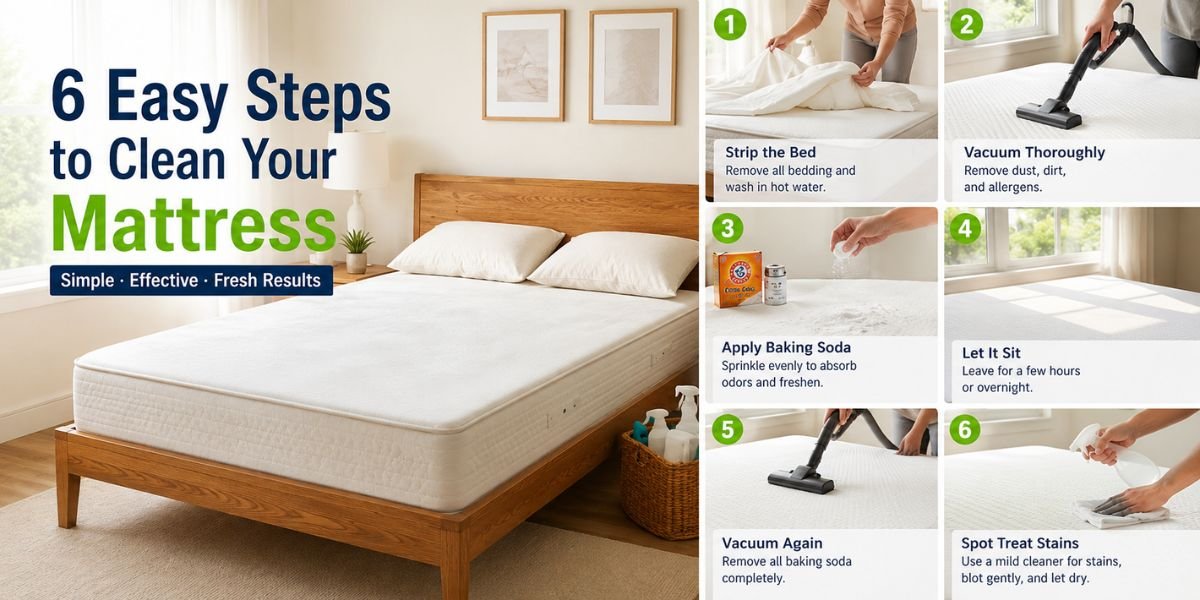
A clean mattress is essential for a healthy and comfortable night’s sleep. While many people wash their bed sheets every week, the mattress underneath is often forgotten. Over time, it collects sweat, body oils, dead skin cells, dust mites, allergens, bacteria, and even stains that can affect your sleep quality and indoor air quality.
The good news is that learning how to clean a mattress doesn’t require expensive equipment or professional cleaning services. With a few household supplies and the right techniques, you can remove stains, eliminate odors, and keep your mattress fresh for years.
In this complete guide, you’ll learn how to clean a mattress at home, remove common stains, tackle urine accidents, eliminate unpleasant odors, and maintain your mattress so it stays clean, hygienic, and comfortable.
While you’re cleaning your mattress, don’t forget about your bedding. Our guide on How to Wash Pillows explains how keeping both your mattress and pillows clean can improve sleep hygiene and create a healthier sleeping environment.
Why Cleaning Your Mattress Is Important
Your mattress may look clean on the surface, but it can hide thousands of dust mites, bacteria, allergens, and moisture deep inside its layers.
Regular cleaning offers several benefits:
- Removes dust mites and allergens
- Eliminates unpleasant odors
- Prevents mold and mildew growth
- Extends the lifespan of your mattress
- Improves indoor air quality
- Creates a healthier sleeping environment
Experts recommend cleaning your mattress every six months, while vacuuming it every month to reduce dust buildup.
What You’ll Need to Clean a Mattress
Before getting started, gather these basic cleaning supplies.
Cleaning Materials
- Vacuum cleaner with upholstery attachment
- Mild liquid detergent
- Baking soda
- White vinegar
- Spray bottle
- Clean microfiber cloths
- Soft-bristle brush
- Cold water
- Hydrogen peroxide (for stubborn stains)
- Essential oils (optional)
Most of these items are already available in the average home, making mattress cleaning both affordable and convenient.
How to Clean a Mattress Step by Step
If you’ve never cleaned a mattress before, follow these simple steps.
Step 1: Remove All Bedding
Take off:
- Bed sheets
- Pillowcases
- Mattress protector
- Blankets
- Comforter
Wash all bedding according to the care instructions before putting everything back on the bed.
Step 2: Vacuum the Entire Mattress
Using the upholstery attachment, vacuum the entire mattress carefully.
Pay extra attention to:
- Seams
- Corners
- Piping
- Tufted areas
Vacuuming removes:
- Dust
- Hair
- Dead skin cells
- Dust mites
- Crumbs
- Pet fur
This step creates a clean surface before treating stains.
Step 3: Spot Clean Visible Stains
Not every stain requires the same treatment.
Start by identifying the stain type:
- Sweat stains
- Food spills
- Drink stains
- Blood stains
- Urine stains
- Pet accidents
Mix a few drops of mild liquid detergent with cold water.
Dip a microfiber cloth into the solution and gently blot the stain.
Avoid rubbing aggressively, as this may push the stain deeper into the mattress fibers.
Never soak the mattress with water because excessive moisture can lead to mold growth.
Step 4: Deodorize with Baking Soda
One of the easiest ways to freshen a mattress is by using baking soda.
Sprinkle a generous layer across the entire mattress surface.
Leave it for:
- At least 6 hours
- Overnight for stronger odors
Baking soda naturally absorbs:
- Sweat
- Moisture
- Odors
- Oils
You can also mix a few drops of lavender or eucalyptus essential oil into the baking soda for a fresher scent.
Step 5: Vacuum Again
Once the baking soda has absorbed odors, vacuum the mattress thoroughly.
Move slowly across the surface to remove every trace of baking soda.
Your mattress should now feel cleaner, fresher, and noticeably less dusty.
How to Clean a Mattress with Baking Soda
One of the most searched questions is how to clean a mattress with baking soda because it’s simple, affordable, and effective.
Follow these steps:
- Vacuum the mattress.
- Sprinkle baking soda evenly over the surface.
- Leave it for 6–12 hours.
- Vacuum thoroughly using an upholstery attachment.
This method helps remove:
- Sweat odors
- Moisture
- Light stains
- Everyday smells
For stronger odors, lightly mist the mattress with a mixture of equal parts white vinegar and water before applying baking soda. Allow the mattress to dry completely before vacuuming.
Common Mattress Stains and How to Treat Them
Different stains require different cleaning methods. Acting quickly usually gives the best results.
| Stain Type | Best Cleaning Method |
|---|---|
| Sweat | Baking soda + mild detergent |
| Blood | Cold water + hydrogen peroxide |
| Coffee | Mild dish soap + cold water |
| Tea | White vinegar solution |
| Food | Mild detergent |
| Pet Stains | Enzyme cleaner |
| Urine | Baking soda + vinegar + hydrogen peroxide |
Avoid using bleach unless your mattress manufacturer specifically recommends it, as harsh chemicals may damage fabrics and foam layers.
Tips for Safe Mattress Cleaning
To protect your mattress while cleaning:
- Always check the manufacturer’s care label.
- Test any cleaning solution on a small hidden area first.
- Avoid excessive moisture.
- Never scrub stains aggressively.
- Allow the mattress to dry completely before making the bed.
- Use a mattress protector to reduce future stains.
Following these precautions helps keep your mattress in excellent condition for years.
How to Clean Pee Out of a Mattress
Accidents happen, especially if you have young children, pets, or someone recovering from an illness. The key is to act quickly before the urine soaks deep into the mattress.
If you’re wondering how to clean pee out of a mattress, follow these simple steps.
Step 1: Blot the Urine Immediately
Use clean paper towels or a dry microfiber cloth to absorb as much liquid as possible.
Avoid rubbing the stain, as this can push the urine deeper into the mattress.
Step 2: Prepare a Cleaning Solution
Mix the following ingredients in a spray bottle:
- 1 cup white vinegar
- 1 cup water
- A few drops of mild dish soap
Lightly spray the stained area without soaking the mattress.
Step 3: Let It Sit
Allow the solution to sit for 10–15 minutes so it can break down the stain and neutralize odors.
Step 4: Blot Again
Use a clean, dry cloth to absorb the moisture.
Repeat if necessary until the stain becomes lighter.
Step 5: Apply Baking Soda
Sprinkle a generous amount of baking soda over the area.
Leave it for 8–12 hours or overnight.
Baking soda helps absorb moisture and eliminate lingering odors.
Step 6: Vacuum Thoroughly
Once the baking soda is completely dry, vacuum the mattress using an upholstery attachment.
Your mattress should now look and smell much fresher.
How to Clean Urine from a Mattress
Many people search for how to clean urine from a mattress, especially when dealing with dried stains.
For stubborn urine stains, you’ll need a stronger cleaning solution.
Ingredients
- 1 cup hydrogen peroxide (3%)
- 3 tablespoons baking soda
- A few drops of liquid dish soap
Mix well in a spray bottle.
Instructions
- Lightly spray the stained area.
- Leave it for 30–60 minutes.
- Blot with a clean cloth.
- Sprinkle baking soda over the area.
- Let it dry completely.
- Vacuum thoroughly.
This method works well for older stains and helps reduce discoloration and odor.
Tip: Always test hydrogen peroxide on a small hidden section of the mattress first, as it may lighten certain fabrics.
How to Clean a Mattress from Pee
If the accident has already dried, don’t worry—you can still improve the appearance and remove odors.
To clean a mattress from pee, follow these steps:
- Vacuum the mattress.
- Spray a vinegar-and-water solution.
- Blot the area gently.
- Apply baking soda generously.
- Leave it overnight.
- Vacuum the mattress thoroughly the next day.
For severe or repeated accidents, consider using an enzyme cleaner, which is designed to break down urine proteins and eliminate odors at the source.
How to Clean Urine Out of a Mattress
When urine has soaked deep into the mattress, surface cleaning may not be enough.
Here’s what to do:
- Blot up any remaining moisture.
- Use an enzyme-based cleaner according to the product instructions.
- Allow the cleaner to penetrate the affected area.
- Let the mattress air dry completely in a well-ventilated room.
Avoid using excessive water, as trapped moisture can encourage mold and mildew growth.
How to Remove Mattress Odors
Even if there are no visible stains, mattresses can develop unpleasant smells over time due to sweat, humidity, and everyday use.
Natural Odor Removal
One of the simplest ways to deodorize a mattress is with baking soda.
- Sprinkle baking soda evenly across the surface.
- Leave it for several hours or overnight.
- Vacuum thoroughly.
For a fresher scent, mix a few drops of lavender or tea tree essential oil into the baking soda before applying it.
Improve Air Circulation
Open windows and allow fresh air into the room while the mattress is drying. Good ventilation helps remove moisture and stale odors.
How to Deep Clean a Mattress
A deep clean every six months helps extend the life of your mattress and improves overall hygiene.
Step 1: Vacuum Both Sides
If your mattress is double-sided, vacuum both the top and bottom.
Step 2: Treat All Stains
Remove sweat, food, drink, or urine stains using the appropriate cleaning methods described above.
Step 3: Deodorize
Apply baking soda across the entire mattress and leave it for several hours.
Step 4: Air the Mattress
If possible, leave the mattress uncovered for a few hours so fresh air can circulate.
Step 5: Rotate the Mattress
Rotating your mattress every 3–6 months helps promote even wear and can improve comfort over time.
How Often Should You Clean Your Mattress?
Regular maintenance prevents dirt, allergens, and odors from building up.
Recommended Cleaning Schedule
| Task | Frequency |
|---|---|
| Wash Bed Sheets | Every 1 week |
| Wash Mattress Protector | Every 1–2 months |
| Vacuum Mattress | Every month |
| Spot Clean Stains | As needed |
| Deep Clean Mattress | Every 6 months |
| Rotate Mattress | Every 3–6 months |
If you have allergies, asthma, pets, or young children, you may benefit from cleaning your mattress more frequently.
According to the Sleep Foundation, regular mattress cleaning and replacement help reduce allergens, improve sleep hygiene, and create a healthier sleeping environment.
Common Mattress Cleaning Mistakes
Avoid these mistakes to protect your mattress and extend its lifespan.
Using Too Much Water
Excess moisture can soak into the mattress and encourage mold growth.
Scrubbing Stains Aggressively
Blot stains gently instead of rubbing them, which can spread the stain deeper into the fabric.
Skipping the Vacuum
Vacuuming removes dust, dirt, and allergens before you begin stain treatment.
Using Harsh Chemicals
Bleach and strong cleaning products may damage the mattress fabric and internal materials.
Not Letting the Mattress Dry
Always allow the mattress to dry completely before replacing bedding to prevent mildew and unpleasant odors.
Expert Tips to Keep Your Mattress Cleaner for Longer
- Use a waterproof mattress protector.
- Wash bed sheets every week.
- Vacuum your mattress once a month.
- Rotate the mattress every 3–6 months.
- Avoid eating or drinking in bed.
- Address spills and stains immediately.
- Let your mattress air out occasionally by removing bedding for a few hours.
These simple habits can significantly extend the life of your mattress and help maintain a cleaner, healthier sleeping environment.
Conclusion
Keeping your mattress clean is one of the simplest ways to improve sleep quality, reduce allergens, and extend the life of your bedding. By following the steps in this guide, you can safely remove dust, stains, odors, and even urine accidents using common household products.
Regular vacuuming, prompt stain treatment, and deep cleaning every six months will help keep your mattress fresh, hygienic, and comfortable. Pair these habits with a quality mattress protector and clean bedding, and you’ll enjoy a healthier sleeping environment for years to come.
A healthy home doesn’t stop with your bed. Keeping upholstered furniture clean is just as important for reducing dust and allergens. Check out our guide on How to Clean a Couch for practical tips on maintaining sofas and other fabric furniture.
FAQs
How do you clean a mattress at home?
The easiest way to clean a mattress at home is to remove the bedding, vacuum the entire surface, spot-clean stains with a mild detergent solution, sprinkle baking soda over the mattress to absorb odors, and vacuum again after several hours.
How often should you clean your mattress?
Experts recommend vacuuming your mattress once a month and giving it a deep clean every six months. If you have allergies, pets, or young children, you may need to clean it more frequently.
Can baking soda clean a mattress?
Yes. Baking soda is one of the safest and most effective natural cleaners for mattresses. It helps absorb moisture, neutralize odors, and freshen the fabric without using harsh chemicals.
How do you clean pee out of a mattress?
Blot the urine immediately, spray a mixture of white vinegar and water, blot again, sprinkle baking soda over the area, let it sit overnight, and vacuum thoroughly. For stubborn stains, use a hydrogen peroxide solution or an enzyme cleaner.
Can urine stains be removed from a mattress?
Yes. Fresh urine stains are usually easy to remove with vinegar and baking soda. Older stains may require hydrogen peroxide or an enzyme-based cleaner to break down the stain and eliminate odors.
How long should baking soda stay on a mattress?
Leave baking soda on the mattress for at least 6–8 hours. For stronger odors or deep cleaning, leaving it overnight provides the best results.
When should you replace a mattress?
Most mattresses should be replaced every 7–10 years, depending on their quality and condition. If your mattress is sagging, causing discomfort, or no longer provides proper support, it’s time to consider a replacement.