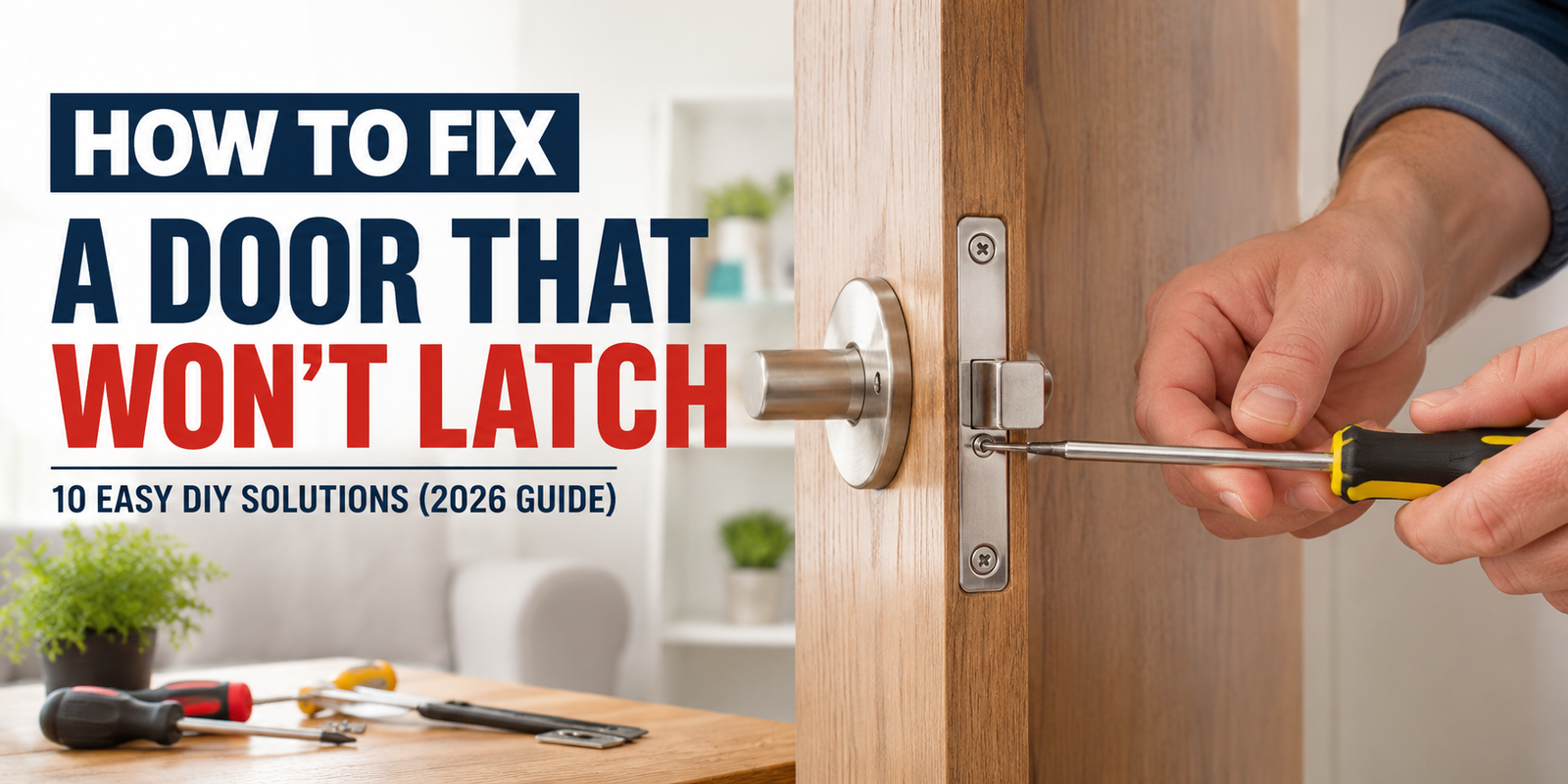
Introduction
Few household problems are more frustrating than a door that refuses to stay closed. Whether it’s your bedroom door popping open, your bathroom door refusing to lock, or your front door requiring a hard slam every time you leave the house, a faulty latch is more than just an inconvenience. It can affect your home’s security, privacy, and energy efficiency.
The good news is that most latching problems are surprisingly easy to fix. In many cases, you won’t need to replace the entire door or hire a carpenter. A few simple adjustments using basic household tools are often enough to solve the issue.
This guide explains the most common reasons a door won’t latch, how to diagnose the problem, and the safest DIY fixes that homeowners can complete in under an hour.
Why Your Door Won’t Latch
Before reaching for your toolbox, it’s important to understand what causes the problem.
Common reasons include:
- Loose door hinges causing the door to sag
- Strike plate no longer lining up with the latch
- Wood expanding during humid weather
- House foundation settling over time
- Loose screws in the hinges
- Worn or damaged latch mechanism
- Paint buildup around the latch or strike plate
- Warped wooden door
Most of these issues develop gradually, which is why the door may have worked perfectly for years before suddenly refusing to close properly.
Signs Your Door Needs Adjustment
You may notice one or more of these symptoms:
- The latch hits above or below the strike plate.
- You must slam the door to close it.
- The door springs back open.
- The handle feels loose.
- The latch sticks inside the door.
- The door rubs against the frame.
- Locking the door has become difficult.
These symptoms usually point to an alignment issue rather than a broken lock.
Tools You’ll Need
Most repairs require only basic DIY tools:
- Phillips screwdriver
- Flat-head screwdriver
- Drill (optional)
- Longer wood screws (3-inch)
- Wood filler (if screw holes are stripped)
- Sandpaper
- Chisel (for strike plate adjustments)
- Pencil
- Tape measure
- Lubricating spray (silicone or graphite)
You likely already have most of these tools at home.
Step 1: Tighten the Door Hinges
The first thing to check is the hinges.
Over time, hinge screws can loosen, causing the door to sag just enough for the latch to miss the strike plate.
Here’s how:
- Open the door.
- Inspect every hinge screw.
- Tighten all screws firmly.
- Test the door after each hinge.
- If screws keep spinning, replace one screw in each top hinge with a 3-inch wood screw. This pulls the frame back into alignment and often fixes the problem immediately.
This simple repair solves a large percentage of door latch issues.
Step 2: Check Strike Plate Alignment
Close the door slowly and watch where the latch touches the strike plate.
You may notice:
- The latch hits too high.
- The latch hits too low.
- The latch misses the opening completely.
- The latch barely catches.
Mark the contact point with a pencil. This makes it easier to see how much adjustment is needed.
Step 3: Adjust the Strike Plate
If tightening the hinges doesn’t solve the problem, your door may have dropped out of alignment over time. In that case, follow our detailed guide on How to Fix a Sagging Door to restore proper alignment before adjusting the latch.
The strike plate is the metal plate attached to the door frame where the latch clicks into place. Even a small shift of 1–2 mm can stop the door from latching properly.
How to Adjust It
- Remove the two screws holding the strike plate.
- Check where the latch is making contact.
- Move the strike plate slightly up, down, left, or right as needed.
- Tighten the screws and test the door.
- Repeat until the latch clicks smoothly.
Pro Tip: Mark the correct position with a pencil before drilling new holes.
If adjusting the strike plate doesn’t fully solve the issue, you can explore additional expert repair techniques from This Old House, which offers practical guidance for diagnosing and fixing common door alignment problems.
Step 4: Enlarge the Strike Plate Opening
Sometimes the strike plate is in the correct position, but the opening is simply too small.
Instead of moving the entire plate, you can enlarge the opening.
You’ll Need
- Metal file
- Rotary tool (optional)
- Safety glasses
Instructions
- Remove the strike plate.
- Carefully file the edge where the latch is hitting.
- Remove only a small amount of metal.
- Reinstall and test the door.
This quick adjustment often solves minor alignment issues without changing the door frame.
Step 5: Replace Worn Hinge Screws
Loose screws are one of the biggest causes of sagging doors.
If the screw holes have become stripped, tightening the screws won’t help.
Fix It
- Remove the loose screw.
- Fill the hole with wood glue and wooden toothpicks or a wood dowel.
- Let the glue dry.
- Trim the excess wood.
- Install a new 3-inch screw.
The longer screw anchors into the wall framing, making the door much more stable.
Step 6: Lubricate the Latch
A latch that sticks inside the door may simply need lubrication.
Best Lubricants
- Silicone spray
- Dry graphite lubricant
Avoid using cooking oil or heavy grease because they attract dust and dirt.
Steps
- Spray lubricant into the latch mechanism.
- Operate the handle several times.
- Wipe away any excess lubricant.
- Test the door again.
If the latch still sticks, it may be damaged and need replacement.
Step 7: Sand the Door Edge
Wooden doors naturally expand during humid weather.
If the door rubs against the frame, the latch may no longer align correctly.
How to Sand It
- Identify the rubbing area.
- Remove the door if necessary.
- Lightly sand the edge using medium-grit sandpaper.
- Repaint or seal the exposed wood to protect it from moisture.
Only remove a small amount of material and test the fit frequently.
Step 8: Replace a Damaged Door Latch
If none of the previous fixes work, the latch mechanism itself may have failed.
Signs of a Bad Latch
- Latch won’t retract.
- Handle feels loose.
- Spring doesn’t return the latch.
- Lock sticks frequently.
- Visible rust or damage.
Replacement Steps
- Remove the door handles.
- Unscrew the latch from the edge of the door.
- Pull out the old latch.
- Insert the new latch.
- Reattach the handles.
- Test the operation.
Choose a replacement latch that matches the backset and size of your existing hardware.
Common Mistakes to Avoid
Many homeowners accidentally make the problem worse.
Avoid these mistakes:
- Overtightening screws until they strip.
- Filing away too much metal from the strike plate.
- Ignoring loose hinges.
- Using oil-based lubricants that collect dirt.
- Forcing the door shut repeatedly.
- Removing too much wood while sanding.
Taking your time will produce a cleaner and longer-lasting repair.
When Should You Call a Professional?
DIY repairs work for most latch problems, but professional help may be needed if:
- The door frame is badly warped.
- The foundation has shifted significantly.
- The door has severe structural damage.
- Exterior security doors require major realignment.
- Fire-rated doors need repair.
These situations often require specialized tools or carpentry experience.
Preventive Maintenance Tips
A little maintenance can keep your doors working smoothly for years.
- Tighten hinge screws every six months.
- Lubricate latches once or twice a year.
- Check strike plate alignment annually.
- Seal wooden doors to reduce moisture damage.
- Avoid slamming doors.
- Replace worn hardware before it fails completely.
Following these simple habits helps prevent future latch problems and extends the life of your door hardware.Proper door maintenance isn’t just about smooth operation—it can also improve your home’s energy efficiency. According to the U.S. Department of Energy, sealing gaps around doors helps reduce air leaks, lower energy costs, and keep indoor temperatures more comfortable throughout the year.
Final Thoughts
A door that won’t latch may seem like a small annoyance, but it can affect your home’s security, privacy, and energy efficiency. Fortunately, most problems have straightforward DIY solutions.
Start by tightening the hinges, checking the strike plate, and lubricating the latch. If the issue persists, inspect the door for seasonal movement or worn hardware before considering a full replacement.Home maintenance often involves tackling several small repairs around the house. If you’re working through your DIY to-do list, don’t miss our guide on How to Fix a Leaky Faucet, where you’ll learn simple steps to stop leaks, reduce water waste, and avoid costly plumbing repairs.
With a few basic tools and the step-by-step methods in this guide, you can usually restore a smooth, secure latch in less than an hour.
FAQs
Why won’t my door latch unless I slam it?
This usually happens because the latch and strike plate are no longer aligned. Loose hinges, seasonal wood movement, or house settling can all cause the latch to miss the strike plate. Tightening the hinges or adjusting the strike plate often solves the problem.
Can humidity cause a door not to latch?
Yes. Wooden doors absorb moisture during humid weather, causing them to expand slightly. Even a small amount of swelling can prevent the latch from lining up correctly. Sanding the rubbing edge and sealing the wood can help prevent this issue.
Should I replace the latch or the entire door?
In most cases, only the latch or strike plate needs adjustment or replacement. Replacing the entire door is only necessary if the door or frame is severely warped, cracked, or damaged.
How much does it cost to fix a door that won’t latch?
If you do the repair yourself, the cost is usually between $0 and $30, depending on whether you need new screws, a strike plate, or a replacement latch. Hiring a professional can cost $75–$250, depending on the repair.
Can I fix a door that won’t latch without replacing anything?
Absolutely. Most door latch problems are caused by loose hinges or a misaligned strike plate. These can often be fixed using only a screwdriver and a few minutes of work.
Why does my front door only fail to latch in winter?
Cold weather and seasonal movement can cause the frame and door to shift slightly. Temperature changes may also cause weatherstripping to press against the door, making it harder for the latch to engage.
Expert Tips from Ryan Brooks
After years of working with residential doors and home repairs, I’ve found that many homeowners assume a faulty latch means they need a new lock. In reality, the latch is often perfectly fine—the real problem is that the door has shifted over time.
Before spending money on new hardware:
- Always tighten the hinges first.
- Check latch alignment before replacing parts.
- Use 3-inch screws in the top hinge for better long-term support.
- Lubricate moving parts at least once a year.
- Avoid slamming doors, as repeated impact can loosen hinges and throw the door out of alignment.
These simple habits can extend the life of your doors and save you from unnecessary repair costs.