When you hear the word receptacle, you might think of a container used to hold something. In electrical work, however, a receptacle has a much more specific meaning.
An electrical receptacle is the device installed in a wall that accepts an electrical plug and provides a connection to a building’s electrical system. In everyday conversation, people often call it an outlet or wall outlet.
Receptacles are found throughout homes and are used for everything from phone chargers and lamps to refrigerators, power tools, televisions, and other appliances.
But are a receptacle and an outlet actually the same thing? What are the different types of receptacles, and when do you need a GFCI receptacle?
Let’s break it down.
What Is a Receptacle?
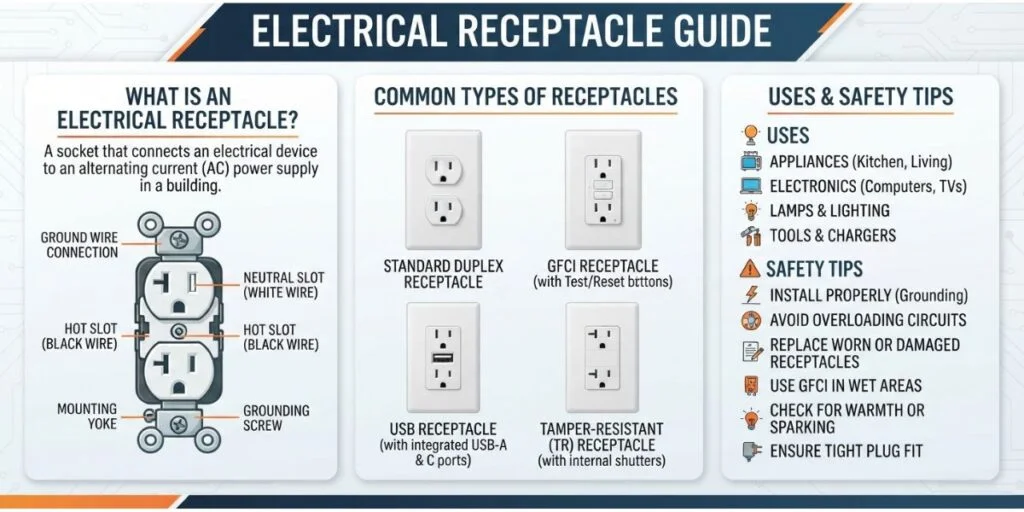
A receptacle is an electrical contact device designed to receive the blades or pins of an attachment plug.
In simple terms, it is the part of an electrical system where you plug in a device.
For example, when you plug a lamp into the wall, the lamp’s plug connects with the receptacle. The receptacle then provides a path for electricity to reach the appliance.
A typical household receptacle has two vertical openings for the plug blades and may also include a grounding opening.
Although “receptacle” is the technical term commonly used by electricians and electrical codes, homeowners usually say “outlet.”
Receptacle vs. Outlet: What’s the Difference?
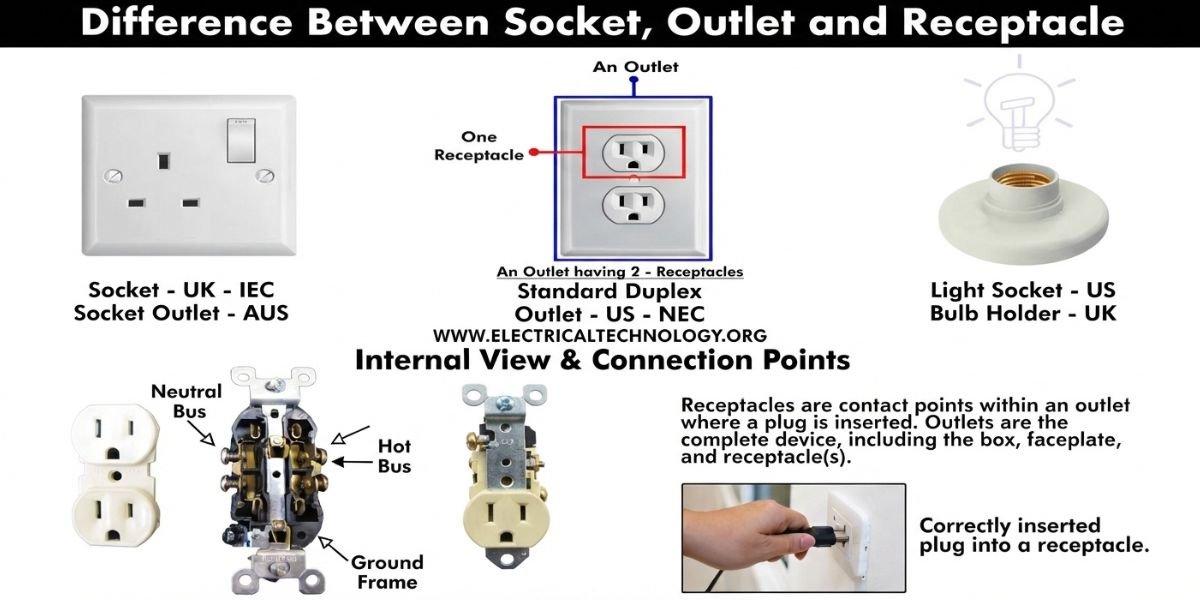
The words receptacle and outlet are often used interchangeably, but they aren’t technically identical.
A receptacle is a specific electrical device that accepts a plug.
An outlet, on the other hand, can refer more broadly to a point in an electrical wiring system where power is supplied to equipment.
That’s why an electrical professional may refer to the device on your wall as a receptacle, while a homeowner may simply call it an outlet.
For everyday home improvement conversations, you’ll often hear both terms.
How Does an Electrical Receptacle Work?
An electrical receptacle provides a connection between an appliance and the home’s electrical wiring.
Inside a typical receptacle are conductive components that make contact with the plug when it is inserted.
The basic process is:
- Electricity travels through the home’s wiring.
- The wiring connects to the receptacle.
- A plug is inserted into the receptacle.
- The plug’s contacts connect with the receptacle’s contacts.
- Electricity flows to the connected device.
The receptacle is installed inside an electrical box, which helps protect the wiring and provides a secure mounting point.
Because receptacles are connected to the electrical system, installation and repairs should be performed safely and according to applicable electrical requirements.
Common Types of Electrical Receptacles
Not every receptacle in a home is designed for exactly the same purpose.
Different receptacles are available for different electrical loads, locations, and safety requirements.
1. Standard Receptacles
Standard receptacles are the familiar wall devices found throughout bedrooms, living rooms, offices, and other areas of a home.
They are commonly used for everyday electrical devices such as:
- Lamps
- Phone chargers
- Computers
- Televisions
- Small appliances
The exact receptacle required depends on the circuit, voltage, amperage, grounding, and applicable electrical requirements.
2. GFCI Receptacles
A GFCI receptacle is designed to provide additional protection against electric shock.
GFCI stands for Ground-Fault Circuit Interrupter.
These receptacles are particularly important in locations where electricity may come into contact with water, such as:
- Bathrooms
- Kitchens
- Garages
- Laundry areas
- Outdoor locations
A GFCI receptacle can quickly interrupt power when it detects a ground-fault condition.
Many GFCI receptacles have TEST and RESET buttons on their face, making them easy to identify.
3. AFCI-Protected Receptacles
AFCI, or Arc-Fault Circuit Interrupter, technology is designed to help reduce fire risks associated with certain electrical arcing conditions.
AFCI protection is different from GFCI protection.
GFCI protection primarily addresses shock hazards from ground faults, while AFCI protection is intended to detect certain dangerous arcing conditions.
Whether AFCI protection is required depends on the location, circuit and applicable electrical code.
4. 15-Amp Receptacles
A 15-amp receptacle is commonly found on residential branch circuits designed for 15 amps.
These are frequently used for general household electrical loads.
However, the receptacle must always be appropriate for the circuit and wiring serving it.
5. 20-Amp Receptacles
A 20-amp receptacle is designed for circuits rated for 20 amps and may be identified by a distinctive T-shaped slot.
These receptacles can be used for equipment requiring a higher current rating, provided the entire circuit is designed for that load.
Never assume that simply installing a higher-rated receptacle makes a circuit capable of handling more electricity.
What Is a Grounded Receptacle?
A grounded receptacle provides a grounding connection in addition to the current-carrying conductors.
The grounding path provides an important safety function by helping fault current travel along an intended path so protective devices can operate.
Modern residential electrical systems commonly use grounded receptacles.
If you’re dealing with an older home, however, you may encounter ungrounded receptacles.
What Are Tamper-Resistant Receptacles?
A tamper-resistant receptacle includes internal shutters designed to help prevent objects from being inserted into only one contact opening.
This feature is especially useful in homes with young children.
The shutters generally open when a proper plug applies pressure to both openings simultaneously.
Tamper-resistant receptacles are widely used in modern residential construction and may be required in certain locations depending on the applicable electrical code.
What Are Weather-Resistant Receptacles?
Outdoor electrical receptacles need to deal with environmental exposure that indoor devices don’t face.
Weather-resistant receptacles are designed for locations where they may be exposed to moisture or other outdoor conditions.
Outdoor receptacles are commonly found near:
- Patios
- Decks
- Garages
- Gardens
- Exterior walls
Outdoor electrical installations also require appropriate covers and protection. The specific requirements depend on the installation location and applicable code.
Where Are Receptacles Used in a Home?
You can find electrical receptacles in almost every part of a modern house.
Living Room
Receptacles provide power for:
- TVs
- Lamps
- Chargers
- Computers
- Entertainment equipment
Kitchen
Kitchens typically require numerous receptacles because they contain several electrical appliances.
Examples include:
- Coffee makers
- Toasters
- Blenders
- Microwaves
- Refrigerators
Certain kitchen locations also require GFCI protection.
Bathroom
Bathrooms are particularly important from an electrical safety perspective because water and electricity can create serious hazards.
GFCI protection is commonly required in bathroom locations.
Garage
Garages may have receptacles for:
- Power tools
- Vacuum cleaners
- Battery chargers
- Lawn equipment
The location and use determine what type of protection is appropriate.
Outdoor Areas
Outdoor receptacles can be useful for garden equipment, lighting, pressure washers and other equipment.
They need suitable weather protection and electrical safety measures.
Why Do Receptacles Have Different Shapes?
You may have noticed that some electrical receptacles look slightly different from others.
The shape of a receptacle helps indicate what type of plug it is designed to accept.
For example, a standard household receptacle may have two vertical slots and a grounding opening, while some higher-rated receptacles use different configurations.
This prevents incompatible plugs from being connected to certain circuits.
The shape of the receptacle is therefore not simply a design choice—it can communicate electrical characteristics and compatibility.
Can You Replace a Receptacle Yourself?
Replacing a receptacle may look like a simple DIY project, but it involves working with the home’s electrical wiring.
Before working on any receptacle, the circuit should be de-energized and verified with appropriate testing equipment.
If you are unfamiliar with electrical wiring, see damaged wiring, encounter an unusual installation, or aren’t sure whether the circuit is properly grounded, it is safer to use a qualified electrician.
Electrical mistakes can cause electric shock, equipment damage, or fire.
Signs an Electrical Receptacle May Need Attention
A receptacle should not normally feel excessively hot, smell burnt, spark during ordinary use, or show visible damage.
Pay attention to warning signs such as:
- Cracked receptacle face
- Loose plugs
- Burn marks
- Discoloration
- Buzzing or crackling
- Burning smells
- Sparks
- A receptacle that feels unusually warm
- Repeated tripping of protective devices
If you notice any of these problems, stop using the receptacle and have the electrical system inspected by a qualified professional.
Why Do Plugs Fall Out of a Receptacle?
A loose plug can be more than an annoyance.
When a plug no longer fits securely, the receptacle’s internal contacts may be worn.
Poor contact can create resistance and heat, potentially creating a safety concern.
Rather than trying to bend the plug or force it to stay in place, replacing a worn receptacle is generally the appropriate solution.
If you’re unsure how to do it safely, contact an electrician.
Receptacle Safety Tips for Homeowners
A few simple habits can help keep electrical receptacles safer:
Don’t Overload Receptacles
Avoid plugging too many high-power appliances into one circuit through power strips or adapters.
Keep Electrical Devices Away From Water
Water and electricity are a dangerous combination.
Use appropriate GFCI protection where required.
Don’t Use Damaged Receptacles
Cracked, burned or loose receptacles should be inspected and replaced when necessary.
Don’t Force a Plug
A plug should fit the receptacle correctly. Never force an incompatible plug into an outlet.
Use Child-Safe Protection Where Appropriate
Tamper-resistant receptacles can provide additional protection in homes where young children may be present.
Get Professional Help When Necessary
Electrical work isn’t the place to guess.
If you don’t understand the wiring or encounter unexpected conditions, stop and call a qualified electrician.
Receptacle vs. GFCI Receptacle
One common source of confusion is thinking that a GFCI receptacle is completely different from a normal receptacle.
A GFCI receptacle is still a receptacle—it simply includes additional ground-fault protection.
In other words:
Receptacle = the device that accepts the plug.
GFCI receptacle = a receptacle with ground-fault protection.
This distinction makes the terminology much easier to understand.
Frequently Asked Questions
Is a receptacle the same as an outlet?
In everyday conversation, people commonly use the words interchangeably. Technically, a receptacle is the specific device that accepts an electrical plug, while “outlet” can have a broader electrical meaning.
What is the purpose of a receptacle?
The primary purpose of an electrical receptacle is to provide a connection point between an appliance or electrical device and the building’s electrical system.
What is a GFCI receptacle?
A GFCI receptacle provides ground-fault protection designed to help reduce the risk of electric shock under certain fault conditions.
Why does my receptacle feel warm?
A receptacle that becomes noticeably warm can indicate an electrical problem, especially if it is unusually hot, discolored, smells burnt, or shows other warning signs. Stop using it and have it inspected.
Can I use a 20-amp receptacle on any circuit?
No. The receptacle must be compatible with the circuit and its wiring. Installing a higher-rated receptacle does not automatically increase the capacity of an existing circuit.
Final Thoughts
So, what is a receptacle?
In electrical terminology, a receptacle is the device that accepts an electrical plug and provides a connection to a building’s electrical system.
Although most homeowners simply call it an outlet, understanding the term “receptacle” makes electrical terminology much easier to follow.
From standard wall receptacles to GFCI, tamper-resistant and weather-resistant designs, different receptacles are made for different applications.
The important thing is to use the correct device for the circuit and location—and to treat electrical problems seriously. When a receptacle is damaged, loose, hot, sparking or behaving unusually, professional inspection is the safest approach.