Introduction
A homeowner I consulted with last spring came to me with a common problem: she’d been quoted anywhere from $18,000 to $85,000 for what she described as “basically the same kitchen remodel.” She was frustrated, confused, and honestly a little afraid to pull the trigger on anything.
That’s the reality of kitchen renovation pricing in 2026 — it’s one of the most variable projects in residential construction. The cost of a kitchen remodel depends on your cabinet choices, countertop materials, appliance upgrades, layout changes, and whether any structural, plumbing, or electrical work is involved. Get one of those wrong and your budget can spiral fast.
This guide breaks down exactly what you can expect to pay, what drives those costs up or down, and how to make smart decisions before the first contractor ever sets foot in your home.
Quick Answer: Kitchen Remodel Cost in 2026
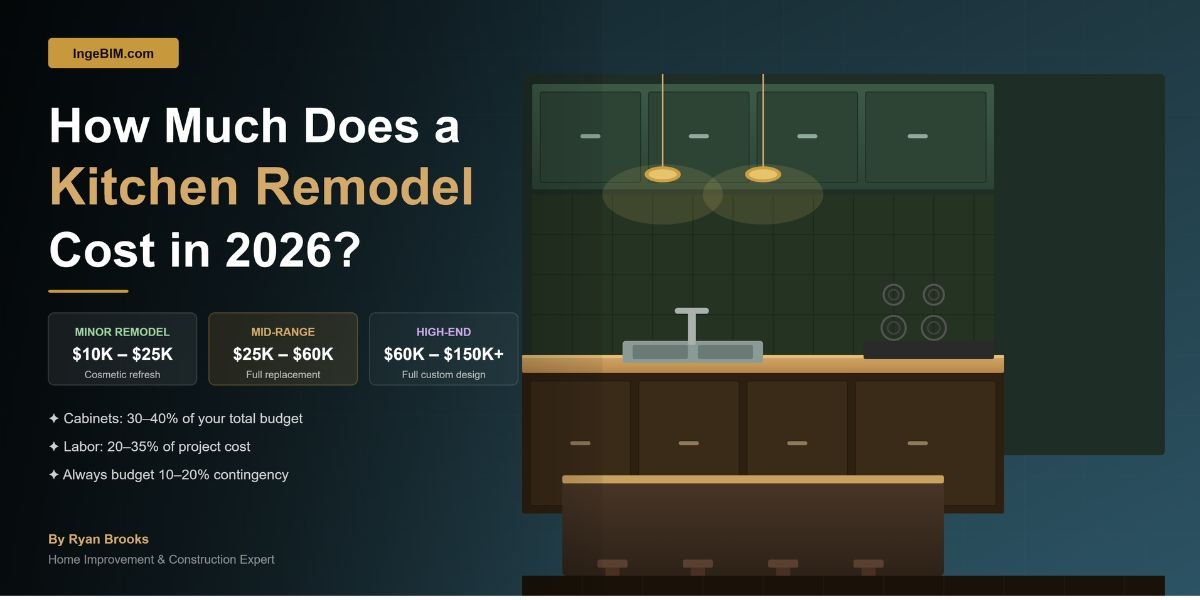
Here’s a realistic snapshot of kitchen remodel costs in 2026:
- Minor/cosmetic remodel: $10,000 – $25,000
- Mid-range remodel: $25,000 – $60,000
- Major/high-end remodel: $60,000 – $150,000+
The national average for a full kitchen remodel sits around $35,000 – $45,000. But that number means very little on its own — a lot depends on your kitchen’s square footage, your location, the materials you choose, and whether the layout stays the same or gets redesigned.
What Affects the Cost of a Kitchen Remodel?
Before we dive into the numbers, it helps to understand what actually moves the needle on pricing. In my experience, these five factors account for the biggest swings in project cost.
1. Kitchen Size
More square footage means more cabinets, more countertop, more flooring, and more labor. A galley kitchen at 70 square feet and an open-concept kitchen at 300 square feet are completely different budget conversations.
2. Layout Changes
Keeping your existing layout — where the sink, stove, and refrigerator already sit — is the most budget-friendly approach. The moment you start moving plumbing lines, relocating electrical panels, or knocking out a load-bearing wall to open up the space, costs jump significantly. Moving a sink alone can add $1,000 – $3,000 to a project. Removing a load-bearing wall can add $3,000 – $10,000 depending on the structural support required.
3. Cabinet Choice
Cabinets typically represent 30–40% of the total kitchen remodel budget. There’s a massive range here:
- Stock cabinets (pre-made, limited sizes): $60 – $200 per linear foot installed
- Semi-custom cabinets (more size options, some customization): $100 – $650 per linear foot installed
- Custom cabinets (built to spec, any wood, any finish): $500 – $1,500+ per linear foot installed
For a typical 10×10 kitchen, cabinet costs alone can range from $5,000 to $30,000+ depending on what you choose.
4. Countertops
Your countertop material makes an enormous difference. Here’s a realistic breakdown per square foot installed:
- Laminate: $20 – $60
- Ceramic tile: $30 – $75
- Butcher block: $40 – $100
- Granite: $50 – $150
- Quartz: $60 – $150
- Marble: $75 – $250
- Quartzite / exotic stone: $100 – $300+
A typical kitchen has 30–40 square feet of countertop space. That means the difference between laminate and quartz alone could be $1,200 to $6,000 just in countertop costs.
5. Appliances
Appliances are often the most visible line item — and the easiest place to either save or overspend. A basic appliance package (refrigerator, range, dishwasher, microwave) starts around $3,000 – $5,000 for mid-grade models. High-end appliance suites from brands like Sub-Zero, Wolf, or Miele can run $15,000 – $40,000 or more.
Kitchen Remodel Cost Breakdown by Scope
Minor Kitchen Remodel: $10,000 – $25,000
This is a cosmetic refresh. You’re keeping the layout, replacing cabinet doors and hardware instead of full cabinet boxes, installing new countertops, upgrading light fixtures, and maybe adding a new backsplash. The bones stay the same. This is a great option if your existing cabinets are structurally sound and your plumbing and electrical are already up to code.
Typical work included:
- Cabinet refacing or painting
- New countertops (laminate to mid-grade granite or quartz)
- New sink and faucet
- Backsplash tile
- New flooring
- Updated light fixtures
- New appliances (mid-grade)
Mid-Range Kitchen Remodel: $25,000 – $60,000
This is the most common remodel scope for homeowners who want a genuinely transformed kitchen without going fully custom. You’re replacing cabinets entirely (usually semi-custom), installing stone or quartz countertops, updating plumbing fixtures, and possibly reconfiguring the island or peninsula layout slightly.
Typical work included:
- Semi-custom cabinet replacement
- Quartz or granite countertops
- New tile backsplash
- Updated plumbing (new sink location may be included)
- Hardwood or LVP flooring
- Recessed lighting and under-cabinet lighting
- Mid-to-upper-range appliances
- Possible minor layout adjustment
High-End Kitchen Remodel: $60,000 – $150,000+
This is a full transformation — often including layout redesign, custom cabinetry, premium countertops, high-end appliances, and structural modifications. If you’re moving walls, adding a kitchen island from scratch, or converting an enclosed kitchen to open-concept, you’re in this tier.
Typical work included:
- Custom cabinetry
- Marble, quartzite, or high-end quartz countertops
- Layout reconfiguration (potentially removing a load-bearing wall)
- New plumbing and electrical runs
- Luxury appliances
- Custom tile work or specialty backsplash
- In-floor radiant heating
- Custom lighting plan
- High-end flooring (wide-plank hardwood, designer tile)
Labor Costs: What Are You Paying Contractors?
Labor typically accounts for 20–35% of a kitchen remodel budget. In 2026, here’s what you can expect to pay for skilled trades:
- General contractor: 10–20% of total project cost (for project management)
- Cabinet installer: $50 – $100 per hour
- Plumber: $75 – $150 per hour
- Electrician: $75 – $150 per hour
- Tile setter: $50 – $120 per hour
- Countertop fabricator/installer: Usually priced per project or per square foot
Labor rates vary significantly by region. Urban markets like New York City, San Francisco, and Chicago will run 30–50% higher than the national average. Rural areas tend to come in below it.
Permits and Inspections
Don’t overlook permits. Any kitchen remodel involving electrical, plumbing, or structural changes typically requires building permits. Costs vary by municipality but generally run:
- Electrical permit: $50 – $300
- Plumbing permit: $50 – $300
- Building/structural permit: $100 – $1,000+
Skipping permits is a mistake I’ve seen homeowners regret. It can create serious problems when you go to sell the home, and unpermitted work that gets discovered can mean having to tear it out and redo it at your own expense.
DIY vs. Hiring a Contractor
Some kitchen tasks are genuinely DIY-friendly. Others absolutely aren’t.
DIY-appropriate tasks:
- Painting cabinets or walls
- Installing a tile backsplash (with some skill)
- Replacing hardware and fixtures
- Installing light fixtures (if comfortable with basic electrical)
- Flooring installation (LVP, tile — moderate skill required)
Leave this to the pros:
- Moving or modifying plumbing lines
- Electrical panel work or running new circuits
- Removing load-bearing walls (requires a structural engineer and permit)
- Custom cabinet installation (mistakes are expensive)
- Countertop fabrication and installation
Taking on the right DIY tasks can save you $3,000 – $8,000 depending on scope. But attempting work outside your skill level on a kitchen remodel can result in costly mistakes, failed inspections, and rework that costs more than hiring a pro in the first place.
Common Mistakes That Blow Kitchen Remodel Budgets
After working on dozens of kitchen renovations, these are the mistakes I see most often:
Not budgeting for hidden work. Old homes frequently have surprises behind the walls — outdated knob-and-tube wiring, galvanized plumbing, water damage, mold, or subfloor rot. Always carry a contingency budget of 10–20% for unexpected finds.
Changing your mind mid-project. Every change order costs money. Lock down your cabinet style, countertop material, and appliance selections before demolition begins. Mid-project decisions are the single fastest way to exceed a budget.
Underestimating appliance lead times. In 2026, certain appliances and custom cabinets still carry 8–16 week lead times. Order early, or your project could sit idle waiting for materials.
Ignoring the triangle. The kitchen work triangle — the relationship between your sink, stove, and refrigerator — is fundamental to how well a kitchen functions. Remodeling without considering it often leads to a kitchen that looks great but works poorly.
Hiring the cheapest contractor. The lowest bid is sometimes the best value. Often it isn’t. Ask for references, verify licensing and insurance, and review past work before committing.
Expert Recommendations: Getting the Most Value from Your Remodel
Maximize ROI by focusing on cabinets, countertops, and appliances. These are the three elements buyers notice most and that have the biggest impact on both function and resale value.
Consider cabinet refacing instead of replacement. If your cabinet boxes are structurally sound, refacing the doors and drawer fronts and adding new hardware can completely transform the look for 30–50% of the cost of replacement.
Choose quartz over marble for countertops if you have an active household. Quartz is non-porous, extremely durable, and requires almost no maintenance. Marble is beautiful but stains easily and requires regular sealing.
Don’t forget lighting. Under-cabinet lighting, recessed lighting on dimmers, and a statement pendant over an island are relatively low-cost additions that dramatically elevate a kitchen’s feel. Budget $1,500 – $4,000 for a solid lighting plan.
Keep plumbing where it is if at all possible. Moving a sink or dishwasher even a few feet can add significant cost. Unless the current layout is genuinely unworkable, keeping plumbing in place is one of the easiest ways to control the budget.
Kitchen Remodel Cost: Summary Table
| Remodel Scope | Estimated Cost Range | Best For |
|---|---|---|
| Minor/Cosmetic | $10,000 – $25,000 | Refreshing a functional kitchen |
| Mid-Range | $25,000 – $60,000 | Full replacement with quality materials |
| High-End/Custom | $60,000 – $150,000+ | Full redesign, luxury finishes |
Conclusion
A kitchen remodel is one of the most impactful investments you can make in your home — both for your daily quality of life and for long-term resale value. But it’s also one of the easiest projects to underbudget if you don’t go in with a clear understanding of where the costs actually come from.
The key takeaways:
- Minor refreshes start around $10,000; full custom remodels can exceed $150,000
- Cabinets, countertops, and appliances are your three biggest cost drivers
- Labor runs 20–35% of total project cost and varies heavily by region
- Always carry a 10–20% contingency for hidden conditions
- Avoid layout changes if budget is a concern — moving plumbing and walls adds up fast
- Get at least three contractor quotes and verify licensing, insurance, and references
Before you do anything else, define your scope clearly, set a realistic budget, and identify which elements matter most to you. Once those decisions are made, everything else follows.
Frequently Asked Questions
How long does a kitchen remodel take? A minor cosmetic remodel can take 2–4 weeks. A full mid-range remodel typically runs 6–10 weeks. High-end remodels with custom cabinetry, structural changes, or major plumbing work can take 3–6 months or longer.
Does a kitchen remodel increase home value? Yes, generally. A mid-range kitchen remodel typically returns 60–80% of its cost at resale according to industry data, and a minor kitchen update can return even more as a percentage. It’s one of the most cited renovations by real estate agents as influencing buyer decisions.
What is the most expensive part of a kitchen remodel? Cabinets are typically the single largest expense, often accounting for 30–40% of the total budget. Custom cabinetry in a large kitchen can easily exceed $30,000 – $50,000 on its own.
Can I remodel my kitchen for under $10,000? Yes, but it’s limited to cosmetic work — repainting cabinets, replacing hardware, adding a backsplash, and installing a new faucet. You won’t be replacing cabinets or countertops at that budget unless you’re doing significant DIY labor yourself.
Do I need a permit for a kitchen remodel? It depends on the scope. Purely cosmetic work (painting, hardware, countertops) typically doesn’t require permits. Any work involving electrical circuits, plumbing modifications, or structural changes generally does. Always check with your local building department before starting.
Should I move out during a kitchen remodel? For a minor cosmetic refresh, it’s usually manageable to stay. For a full remodel where the kitchen will be out of service for several weeks, many families choose to stay elsewhere temporarily or set up a temporary kitchen with a microwave and mini-fridge in another room.
How do I find a reliable kitchen remodel contractor? Get at least three quotes from licensed, insured contractors. Ask for references from similar projects and actually call them. Check reviews on Google and the Better Business Bureau. Never pay more than 10–20% upfront as a deposit, and get everything — scope, materials, timeline, and payment schedule — in writing before work begins.
What kitchen remodel upgrades have the best ROI? Cabinet refacing, new countertops (quartz or granite), stainless steel appliances, and updated lighting consistently offer strong returns. Overly personalized choices — bold colors, unusual materials, niche layouts — tend to appeal to fewer buyers and offer lower resale ROI.
Read More: How Much Does It Cost to Paint a 1500 Sq Ft House Interior? (2026 Pricing Guide)