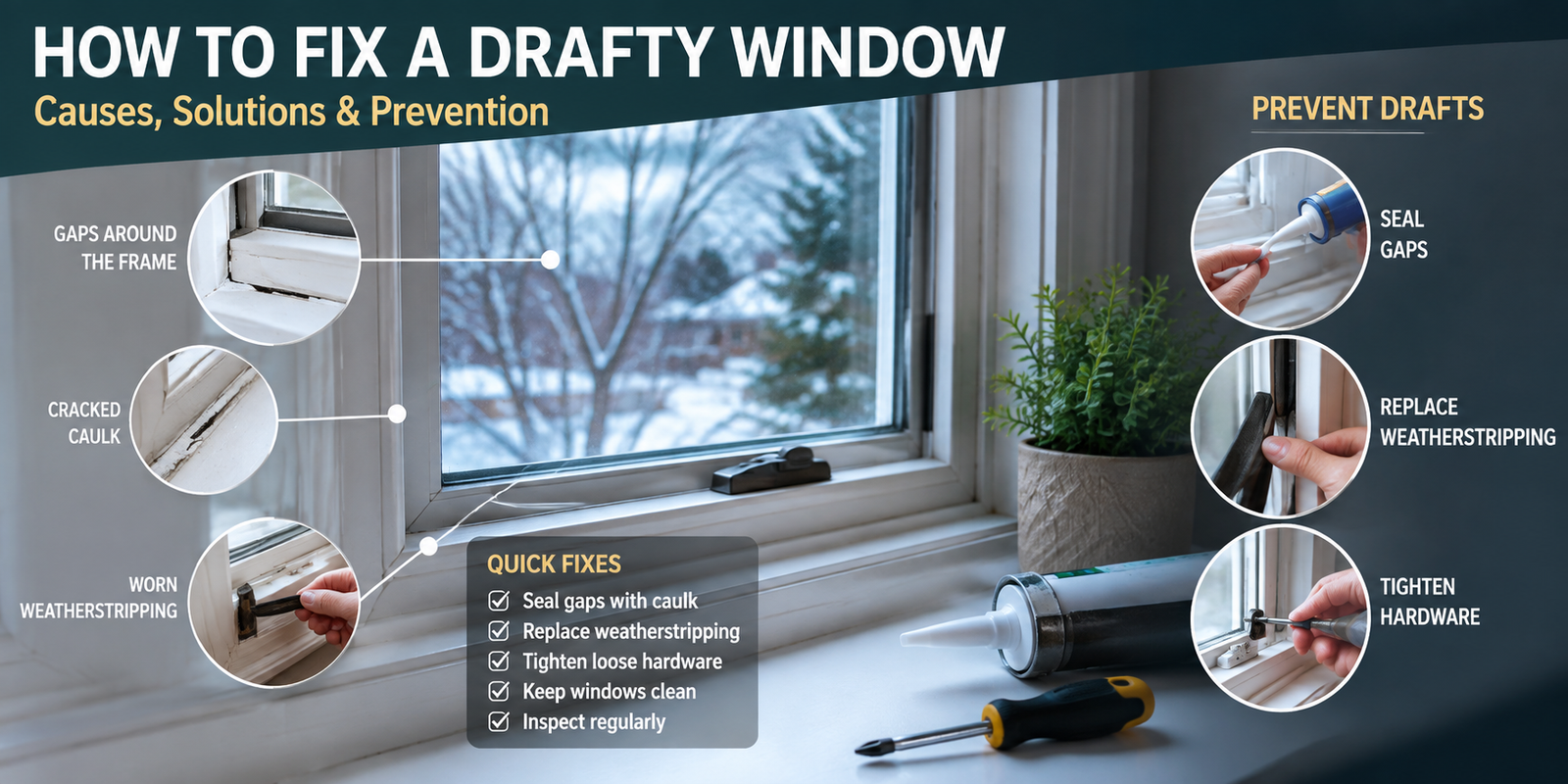
A drafty window can make an otherwise comfortable room feel cold, increase heating costs, and leave you wondering where all that chilly air is coming from. In many cases, the problem is not the glass itself. Small gaps around the frame, worn weatherstripping, cracked caulk, or poor window alignment can allow outside air to enter.
The good news is that many window drafts are relatively easy to diagnose and fix. You do not always need to replace the entire window.
In this guide, I’ll explain how to find the source of a window draft, the most effective DIY fixes, when replacement makes more sense, and how to prevent the problem from coming back.
Quick Answer
To fix a drafty window, first identify where outside air is entering. Check the window frame, sash, seals, caulk, and surrounding wall for gaps. Small gaps can usually be sealed with caulk or weatherstripping, while damaged seals or poorly fitting windows may require replacement parts. If the frame is badly damaged or the window has failed seals, professional repair or replacement may be the better option.
What Causes a Drafty Window?
Before fixing the problem, it helps to understand what is causing it.
Common causes include:
- Worn or damaged weatherstripping
- Cracked or missing caulk
- Gaps around the window frame
- Loose window sashes
- Poorly fitted windows
- Damaged seals
- Warped frames
- Gaps between the frame and surrounding wall
- Old single-pane windows
- Incorrect window installation
A draft can come from several areas, so don’t automatically assume the glass is the problem.
How to Check If Your Window Is Drafty
You can usually locate a window draft without specialised equipment.
1. Feel Around the Frame
On a windy or cold day, slowly move your hand around the edges of the window.
Pay particular attention to:
- Corners
- Sash edges
- Locking points
- Bottom rail
- Areas where the frame meets the wall
If you feel noticeably colder air in one particular location, you’ve probably found the source.
2. Check the Caulk
Look closely at the caulk surrounding the window.
Cracks, gaps, peeling sections, or missing caulk can create an easy path for outside air.
Old caulk should be removed and replaced rather than simply covered with a new layer.
3. Inspect the Weatherstripping
Open the window and inspect the weatherstripping around the sash.
If it is:
- Cracked
- Flattened
- Brittle
- Torn
- Missing
it may no longer create a proper seal.
4. Try the Tissue Test
Hold a thin piece of tissue paper near the suspected gap.
If the tissue moves noticeably when the wind is blowing, air is probably entering through that area.
This is a simple way to identify smaller leaks that are difficult to feel with your hand.
How to Fix a Drafty Window
The U.S. Department of Energy recommends caulking around stationary window frames and using weatherstripping around movable window parts to reduce air leakage and improve home comfort. U.S. Department of Energy — Air Sealing Essentials
Once you’ve found the source, choose the repair that matches the problem.
1. Replace Damaged Weatherstripping
Weatherstripping is one of the simplest solutions for a drafty opening window.
Remove the old material carefully and clean the surface before installing the replacement.
Make sure the new weatherstripping fits properly without preventing the window from closing.
This repair is particularly useful when the draft comes directly through the gap between the sash and frame.
2. Replace Cracked Caulk
If the draft is coming from around the stationary frame, damaged caulk may be responsible.
Start by removing loose or cracked caulk.
Clean and dry the area, then apply a suitable exterior-grade sealant around the affected joint.
Allow it to cure according to the manufacturer’s instructions before exposing it to weather.
3. Seal Gaps Around the Window Frame
Sometimes the actual problem is not between the moving parts of the window but between the window frame and the surrounding wall.
Small gaps can often be sealed with appropriate caulk.
Larger gaps may require a suitable insulating material before the joint is sealed.
Do not simply cover a large structural gap with a thin bead of caulk.
4. Tighten the Window Hardware
A window that does not close tightly can allow air to pass through the seal.
Check the locks, screws, handles, and other visible hardware.
Loose hardware can sometimes be tightened with a screwdriver.
If the window still does not pull tightly against the frame after adjustment, the problem may involve alignment or worn components.
5. Check the Window Alignment
A sash that sits unevenly inside the frame may leave gaps around one side.
Look at the window when it is closed.
Check whether:
- One corner sits higher than the other
- The gap around the sash looks uneven
- The lock does not line up correctly
- The sash moves excessively
Minor alignment problems may be adjustable, but severely warped frames may require professional attention.
6. Add Temporary Window Insulation
If you need a quick seasonal solution, removable window insulation film can reduce air movement around older windows.
It can be particularly useful during cold weather while you plan a permanent repair.
However, treat this as a temporary measure rather than a replacement for repairing damaged seals or frames.
7. Inspect the Interior Trim
Don’t forget to check the area around the interior window trim.
If cold air is entering around the trim, the problem may be deeper than the visible caulk line.
Carefully inspect for:
- Cracks
- Gaps
- Loose trim
- Signs of moisture
- Damaged insulation
If you find water damage or significant gaps inside the wall, investigate the underlying problem before simply sealing the surface.
How to Seal Windows for Winter
If winter is approaching, inspect your windows before the weather becomes extremely cold.
A simple maintenance routine can include:
- Clean the window frame.
- Inspect the weatherstripping.
- Replace damaged seals.
- Check the exterior caulk.
- Seal obvious small gaps.
- Check that locks close properly.
- Inspect the surrounding trim.
- Test the window for air movement.
Doing these checks early can prevent a small draft from becoming a bigger comfort problem.
Should You Use Caulk or Weatherstripping?
This is a common point of confusion.
Use weatherstripping when:
- The window opens and closes.
- The gap is between moving parts.
- The existing seal is worn.
- The sash does not seal tightly.
Use caulk when:
- The gap is around a stationary frame.
- Exterior joints have cracked.
- There are small gaps between trim and frame.
- The seal around the window has deteriorated.
Using the wrong material can make future repairs more difficult, so identify whether the joint moves before applying anything.
Can Window Insulation Film Stop Drafts?
Window insulation film can help reduce air movement and improve comfort around older windows.
It is most useful when:
- The window is old.
- The glass is cold.
- The frame has minor air leakage.
- You need a temporary winter solution.
However, film cannot repair a damaged frame, broken seal, or significant structural gap.
Think of it as an additional insulation measure rather than a permanent repair.
When Should You Replace a Drafty Window?
Not every drafty window needs replacement.
Repair may be enough when:
- The frame is in good condition.
- The draft comes from worn weatherstripping.
- Caulk is damaged.
- Hardware is loose.
- The sash is only slightly misaligned.
Replacement becomes more reasonable when:
- The frame is badly warped.
- Wood is extensively rotten.
- Seals have failed repeatedly.
- The window cannot close properly.
- There is persistent moisture between panes.
- Repairs no longer restore a proper seal.
- The window is severely damaged.
If you have an older window that requires repeated repairs, compare the long-term cost of continued maintenance with replacing it.
Common Mistakes When Fixing Drafty Windows
Sealing Everything With Caulk
Caulk is not a universal solution.
Applying it to moving joints can prevent the window from operating correctly.
Ignoring the Source of the Draft
Sealing one visible gap does not help if air is entering through another location.
Always test the entire window.
Blocking Drainage Paths
Some windows are designed with drainage openings to allow water to escape.
Never seal or block these intentionally designed paths.
Applying New Caulk Over Damaged Caulk
Old loose material should be removed first.
A new layer applied over failing caulk may not bond properly.
Using Too Much Expanding Foam
Expanding foam can exert pressure as it cures.
Using an inappropriate product or too much material around a window can cause problems with the frame or operation.
Follow the product instructions carefully.
How to Prevent Window Drafts
Regular maintenance is the easiest way to prevent small air leaks from becoming larger problems.
Keeping your windows and frames clean also makes it easier to spot damaged seals, cracks, and small gaps. For a deeper cleaning routine, see our guide to Window Cleaning Services.
At least once a year:
- Inspect window seals.
- Check exterior caulk.
- Clean the tracks.
- Test the locks.
- Check for loose hardware.
- Look for damaged weatherstripping.
- Inspect the frame for moisture damage.
- Test windows for air leakage.
It’s especially useful to perform this inspection before winter.
When to Call a Professional
DIY repairs are suitable for many small drafts, but some problems require professional assessment.
Consider getting professional help if:
- The frame is badly damaged.
- You suspect structural movement.
- Water is entering around the window.
- The wall around the window shows moisture damage.
- The window cannot be opened or closed safely.
- A replacement window needs to be fitted.
- You cannot identify the source of the draft.
A professional can determine whether the problem is limited to the window or connected to the surrounding wall and installation.
Contractor’s Tip
When diagnosing a drafty window, don’t immediately reach for a tube of caulk.
I always recommend finding the exact entry point first. A five-minute inspection around the sash, frame, hardware, and surrounding trim can save you from sealing the wrong area and having to redo the repair later.
Final Thoughts
A drafty window doesn’t automatically mean you need a new window.
In many homes, the problem can be traced to worn weatherstripping, cracked caulk, loose hardware, or small gaps around the frame. Finding the source first makes the repair much easier and helps you choose the right solution.
Start with the simplest fix, test the window again, and only consider replacement when the frame, seals, or overall condition make repair impractical.