A window that won’t close properly is more than an annoying inconvenience. A small gap can let in cold air, rain, dust, and outdoor noise, while a window that cannot latch properly may also create a security concern.
Fortunately, many window-closing problems are caused by simple issues such as dirt in the track, loose hardware, damaged weatherstripping, paint buildup, or a misaligned sash. These problems can often be diagnosed and fixed without replacing the entire window.
If the window is leaving an obvious gap and creating a draft, first see our guide on How to Fix a Drafty Window to understand how to identify the source of the air leak.
This guide explains why a window won’t close, how to diagnose the problem, and the practical DIY fixes you can try before calling a professional.
Quick Answer
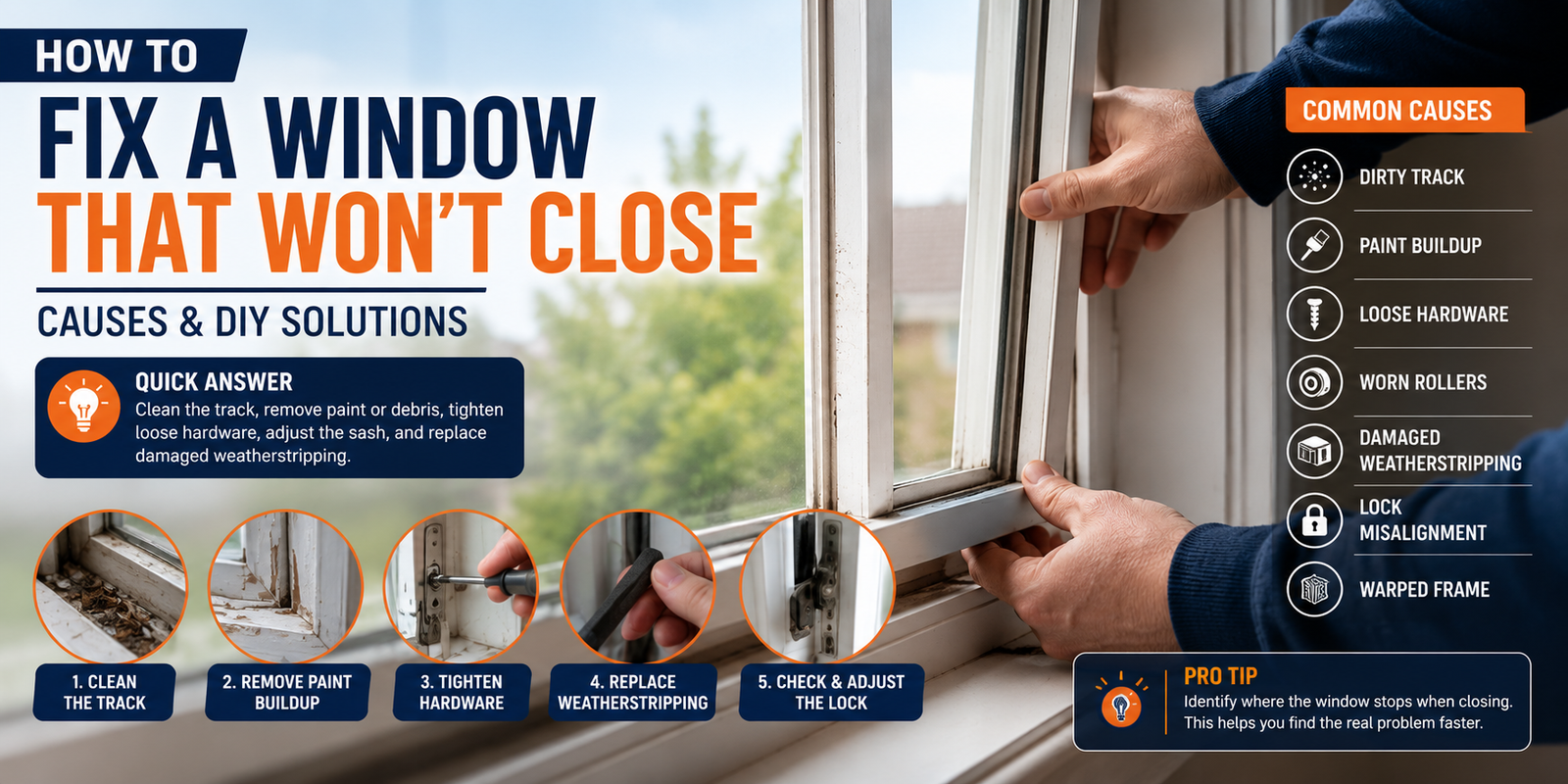
If a window won’t close, first inspect the track, sash, hinges or rollers, lock, weatherstripping, and frame for dirt, damage, or misalignment. Clean the track, remove paint or debris, tighten loose hardware, adjust the sash if possible, and replace damaged weatherstripping.
If the frame is warped, severely damaged, or the glass is broken, professional repair or replacement may be necessary.
Why Won’t My Window Close?
There are several reasons a window may refuse to close completely.
The most common include:
- Dirt or debris in the window track
- Loose screws or hardware
- A misaligned sash
- Damaged rollers
- Worn weatherstripping
- Paint buildup
- A damaged lock
- A warped frame
- Swollen wooden components
- Broken hinges or balances
- Objects blocking the track
The right repair depends on the type of window and exactly where the closing movement stops.
How to Diagnose a Window That Won’t Close
Before grabbing a screwdriver, spend a few minutes identifying the problem.
1. Check Where the Window Stops
Slowly try to close the window and observe where it stops.
Does it:
- Stop halfway?
- Close on one side but not the other?
- Reach the frame but fail to latch?
- Leave a gap at the top?
- Leave a gap at the bottom?
The location of the gap can provide an important clue.
2. Inspect the Track
Open the window and examine the track.
Look for:
- Dirt
- Dust
- Hair
- Small stones
- Paint flakes
- Old lubricant
- Damaged sections
Even a small amount of debris can interfere with rollers or prevent the sash from sitting correctly.
3. Check the Frame
Look closely at the frame for swelling, cracks, warping, or damage.
Wooden windows can expand when exposed to moisture, which may make an otherwise functional window difficult to close.
4. Test the Lock
If the window reaches the closed position but doesn’t latch, the problem may be with the lock rather than the window itself.
Check whether the lock lines up with its receiving point.
Never force the lock into position because doing so can damage the hardware.
8 Ways to Fix a Window That Won’t Close
1. Clean the Window Track
A dirty track is one of the easiest problems to fix.
Start by removing loose dirt and debris with a vacuum or soft brush.
Then wipe the track with a suitable household cleaner and allow it to dry.
For sliding windows, make sure the rollers can move freely after cleaning.
If you’re working on a window that has become difficult to operate because of accumulated dirt, regular track maintenance can prevent the problem from returning.
2. Remove Paint Buildup
Older painted windows can sometimes become stuck because several layers of paint have built up around the sash.
Inspect the edges carefully.
If paint is preventing movement, carefully remove only the excess buildup using an appropriate scraper.
Take care not to damage the frame or glass.
If the paint may contain lead because the property is older, don’t sand or scrape it casually. Follow appropriate lead-safe practices and consider professional assistance.
3. Tighten Loose Hardware
Loose screws can allow a window component to move out of alignment.
Check visible:
- Screws
- Handles
- Locks
- Hinges
- Brackets
- Roller hardware
Tighten loose screws carefully.
Avoid overtightening because it can strip the material around the screw or damage the frame.
4. Adjust the Window Sash
A sash that has shifted out of alignment may prevent the window from closing evenly.
Look at the gaps around the sash.
If one side has a much larger gap than the other, alignment may be the problem.
Some modern window systems include adjustment points that allow the sash or rollers to be repositioned.
Only make small adjustments and test the window after each change.
5. Inspect and Replace Damaged Rollers
Sliding windows often rely on rollers to move smoothly.
If a roller is worn, damaged, or stuck, the sash may not travel correctly.
Signs of a roller problem include:
- Grinding sounds
- Uneven movement
- A window that tilts while sliding
- One side sitting higher than the other
- The sash becoming increasingly difficult to move
If the roller is accessible and replaceable, use a compatible replacement part.
6. Replace Worn Weatherstripping
Weatherstripping does more than stop drafts. If it has become swollen, loose, damaged, or improperly installed, it can also interfere with the window closing.
Check for:
- Torn material
- Flattened seals
- Loose sections
- Missing sections
- Excessive thickness
Replace damaged weatherstripping with a suitable product designed for your window.
For more information about preventing air leakage, see our guide on How to Seal Windows for Winter.
The U.S. Department of Energy recommends weatherstripping around movable window components as part of an effective air-sealing strategy. U.S. Department of Energy
7. Adjust or Replace the Window Lock
If the window reaches the frame but won’t latch, inspect the locking mechanism.
Check whether the lock and receiving point line up.
A small alignment problem may be adjustable.
If the lock is broken, badly worn, or corroded, replacement may be the better solution.
Don’t force a damaged lock because it can cause further damage to the frame.
8. Check for a Warped or Swollen Frame
If you’ve cleaned the track, adjusted the hardware, and replaced damaged seals but the window still won’t close, inspect the frame.
Look for:
- Bowing
- Warping
- Swollen wood
- Rot
- Cracks
- Water damage
A severely distorted frame is unlikely to be fixed with simple adjustments.
What If the Window Closes but Won’t Lock?
This is a slightly different problem.
If the window physically reaches the closed position but the lock doesn’t engage, check:
- Whether the sash is correctly aligned.
- Whether the lock is loose.
- Whether the receiving point has shifted.
- Whether debris is preventing full closure.
- Whether the locking mechanism is damaged.
Sometimes adjusting the sash is enough to bring the lock back into alignment.
If the hardware is broken, replacing the lock may be necessary.
What If Only One Side of the Window Closes?
A window that closes on one side but remains open on the other is usually showing an alignment, roller, hinge, or frame problem.
Start by checking whether the sash is sitting evenly.
Then inspect:
- Rollers
- Hinges
- Tracks
- Screws
- Frame condition
Don’t force the window shut because excessive pressure can crack glass or damage the frame.
How to Prevent Windows From Getting Stuck
Regular maintenance can prevent many closing problems.
Every few months:
- Clean the tracks.
- Remove dirt and debris.
- Check visible hardware.
- Inspect weatherstripping.
- Test the locks.
- Look for moisture damage.
- Check the frame for swelling.
- Make sure the sash moves smoothly.
Keeping the window and surrounding frame clean also makes it easier to spot early problems. For broader window-care advice, see our Window Cleaning Services guide.
Common Mistakes to Avoid
Don’t Force the Window
If it won’t close, forcing it can break the glass, rollers, hinges, or lock.
Don’t Add Excessive Lubricant
Too much lubricant can attract dust and create a sticky buildup in the track.
Don’t Permanently Seal a Moving Joint
Caulk is designed for stationary gaps. Don’t use it to permanently seal a part of the window that needs to move.
Don’t Ignore Water Damage
A swollen or warped frame may be a symptom of a moisture problem.
Find and address the source of the water before repairing the window.
Don’t Replace the Entire Window Too Quickly
A window that won’t close may only need cleaning, adjustment, new hardware, or weatherstripping.
Diagnose the problem first.
When Should You Call a Professional?
DIY repair is reasonable for minor problems, but professional help is recommended when:
- The frame is severely warped.
- The glass is broken.
- There is extensive wood rot.
- Water is entering around the window.
- The window cannot be safely removed or adjusted.
- Major hardware has failed.
- The window remains stuck after basic repairs.
- You suspect a structural problem around the opening.
A professional can determine whether the problem is with the window itself or the surrounding structure.
Contractor’s Tip
When a window won’t close, don’t start by replacing parts.
First determine where the movement stops.
If it stops in the track, investigate dirt, rollers, or alignment. If it reaches the frame but won’t lock, inspect the hardware. If the frame itself is distorted, look for moisture or structural damage.
That simple diagnosis can save homeowners time and unnecessary replacement costs.
Final Thoughts
A window that won’t close doesn’t always mean you need a new window.
Start with the basics: clean the track, inspect the frame, check the hardware, look for alignment problems, and examine the weatherstripping. Many minor issues can be corrected with simple DIY repairs.
If the window still won’t close after these steps, don’t force it. A warped frame, damaged hardware, or moisture problem may require professional attention.
Keeping your windows properly maintained will also help prevent drafts and improve overall comfort.
For the next step in this Window Repair Hub, we’ll cover How to Fix a Window That Won’t Open, another common problem that often involves tracks, paint buildup, hardware, or alignment.
FAQs
Why won’t my window close all the way?
Common causes include dirt in the track, misalignment, damaged rollers, worn weatherstripping, loose hardware, paint buildup, or a warped frame.
How do I fix a window that is hard to close?
Start by cleaning the track and checking for obstructions. Then inspect the sash alignment, hardware, rollers, and weatherstripping.
Why does my window close but not lock?
The lock may be misaligned, loose, damaged, or unable to reach its receiving point because the sash isn’t sitting correctly.
Can weatherstripping stop a window from closing?
Yes. If the weatherstripping is too thick, damaged, swollen, or incorrectly installed, it can interfere with closure.
Should I force a stuck window closed?
No. Forcing it can damage the glass, frame, rollers, hinges, or locking mechanism.
Can a warped window frame be repaired?
Minor alignment problems may be adjustable, but severe warping, rot, or structural damage may require professional repair or window replacement.
How often should I clean window tracks?
Inspect them regularly and clean them whenever you notice dirt or debris affecting window movement. Homes with pets, children, or dusty environments may need more frequent cleaning.
Can I fix a window that won’t close myself?
Many minor problems can be handled as DIY repairs, including cleaning tracks, tightening hardware, replacing weatherstripping, and making certain manufacturer-approved adjustments. More serious frame, glass, or structural problems should be professionally assessed.