Window condensation is one of those problems that can look harmless at first. You may notice a few drops of water on the glass in the morning, but if moisture keeps appearing day after day, it can eventually damage window frames, paint, trim, and surrounding materials.
The good news is that condensation is often caused by something you can control, such as high indoor humidity, poor ventilation, or very cold window surfaces.
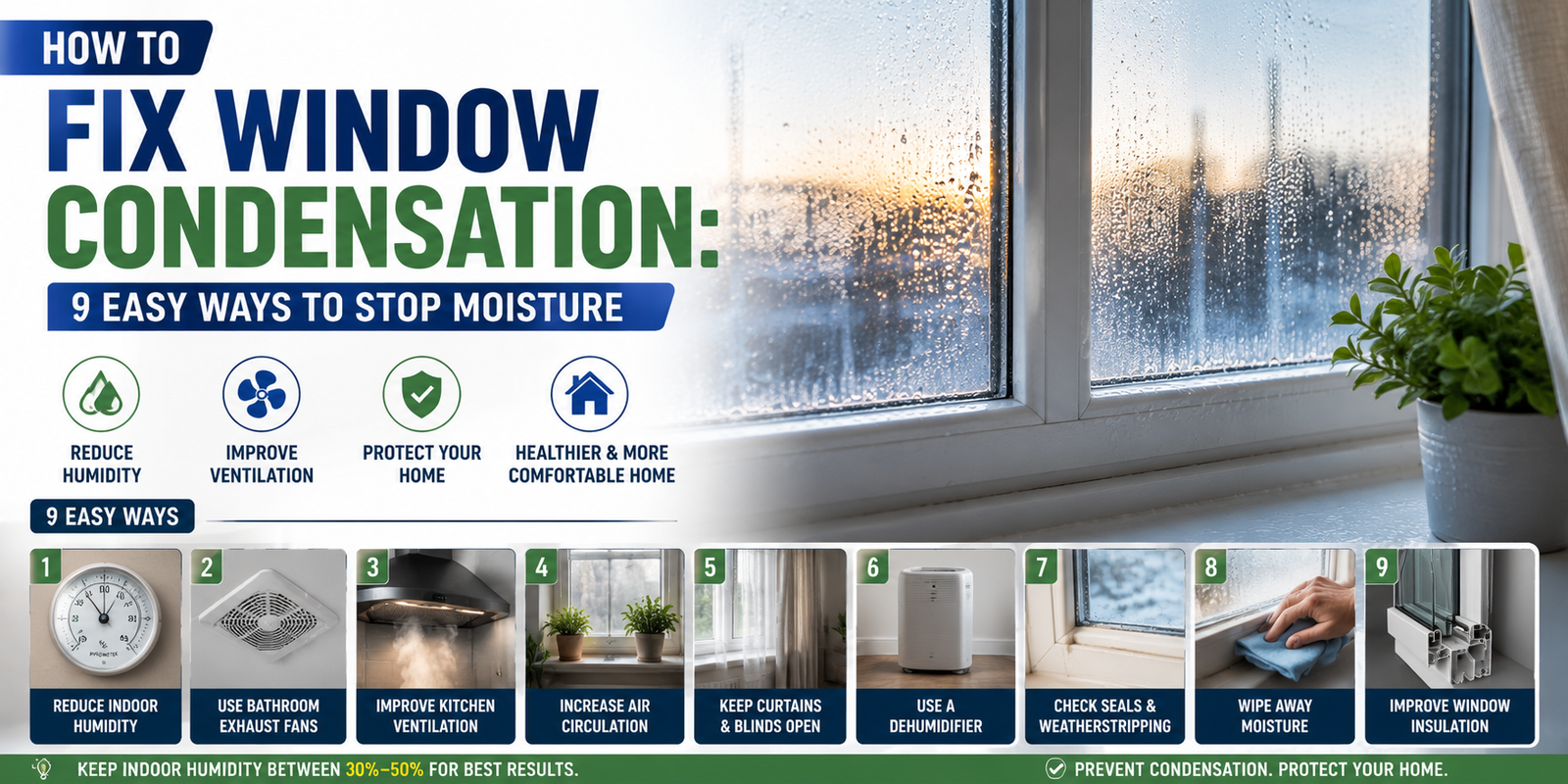
In this guide, we’ll explain why condensation forms and show you nine practical ways to reduce or stop moisture on your windows.
Quick Answer
To reduce window condensation, lower excessive indoor humidity, improve ventilation, use bathroom and kitchen exhaust fans, keep air circulating around windows, and make sure the window is properly sealed.
If condensation continues despite reasonable humidity levels, inspect the window for poor insulation, damaged seals, cold spots, or a larger moisture problem.
The EPA recommends keeping indoor relative humidity below 60%, with 30–50% being an ideal range for many homes.
What Causes Condensation on Windows?
Condensation happens when warm, moisture-filled air comes into contact with a colder surface.
Windows are particularly vulnerable because glass can become much colder than the surrounding indoor air, especially during cold weather.
Common causes include:
- High indoor humidity
- Cold outdoor temperatures
- Poor ventilation
- Cooking
- Hot showers
- Drying clothes indoors
- Humidifiers
- Poorly insulated windows
- Blocked airflow
- Damaged window seals
- Older single-pane glass
The EPA explains that when air temperature falls, the air can hold less moisture, allowing water vapor to condense on cold surfaces such as windows.
9 Easy Ways to Fix Window Condensation
1. Reduce Indoor Humidity
The first thing to check is your home’s humidity level.
Use a digital hygrometer or humidity meter to measure relative humidity.
As a general target, try to keep indoor humidity around 30–50%, while avoiding levels above 60%.
If humidity is consistently high, look for the source.
Common moisture sources include:
- Showers
- Cooking
- Boiling water
- Indoor laundry
- Humidifiers
- Drying clothes indoors
- Poorly ventilated rooms
Reducing the moisture in the air can make a noticeable difference.
2. Use Bathroom Exhaust Fans
Bathrooms can add a surprising amount of moisture to indoor air.
Whenever you shower or take a bath, run the bathroom exhaust fan to remove humid air.
Make sure the fan actually vents outdoors rather than simply moving moisture into another part of the house.
The EPA specifically recommends using bathroom exhaust fans or opening windows during showers to reduce indoor moisture.
If your bathroom doesn’t have adequate ventilation, improving airflow can help reduce condensation throughout nearby rooms.
3. Improve Kitchen Ventilation
Cooking can also increase indoor humidity.
Steam from:
- Boiling water
- Cooking pasta
- Kettles
- Dishwashers
- Slow cookers
- Frying
- Baking
can add moisture to the air.
Use your kitchen extractor or exhaust fan when cooking.
If possible, make sure it vents outside.
Opening a window briefly can also help when outdoor conditions are suitable.
4. Increase Air Circulation Around Windows
Even if your home’s humidity isn’t extremely high, stagnant air around cold glass can encourage condensation.
Improve circulation by:
- Opening interior doors
- Using ceiling fans
- Moving furniture away from windows
- Keeping curtains slightly open
- Avoiding heavy coverings over radiators
- Allowing warm air to reach the glass
The EPA recommends increasing ventilation and air movement to help prevent condensation.
Don’t completely block a radiator or heating vent beneath a window.
Warm air moving across the glass can help keep its interior surface warmer.
5. Keep Curtains and Blinds From Blocking Warm Air
Heavy curtains can sometimes trap cold air against the glass.
This is especially noticeable overnight.
If you regularly wake up to wet windows, try leaving curtains or blinds slightly open to allow room air to circulate.
You don’t necessarily need to remove them.
Simply creating enough space for warm air to reach the glass may help.
6. Use a Dehumidifier
If humidity remains high despite ventilation, a dehumidifier can help remove excess moisture from the indoor air.
This can be particularly useful in:
- Basements
- Bathrooms
- Laundry rooms
- Bedrooms
- Poorly ventilated rooms
Check the humidity with a hygrometer rather than running the dehumidifier continuously without knowing the actual humidity level.
The EPA lists dehumidifiers and air conditioners among the options for reducing indoor moisture when needed.
7. Check Window Seals and Weatherstripping
If condensation appears around the edges of the window or you notice drafts, inspect the seals and weatherstripping.
Look for:
- Cracked sealant
- Gaps
- Loose weatherstripping
- Damaged rubber seals
- Air leaks
- Deteriorated caulk
A poorly sealed window can allow cold air to reach the interior frame and surrounding areas.
If your window isn’t closing correctly, fix that problem first. Our guide on How to Fix a Window That Is Hard to Open can help with difficult window operation.
Later in this Window Repair Hub, we’ll also cover how to replace window weatherstripping.
8. Wipe Away Condensation Quickly
If water is already collecting on the glass, don’t simply leave it there.
Use:
- Microfiber cloth
- Squeegee
- Absorbent towel
to remove excess moisture.
Pay particular attention to:
- Window corners
- Sills
- Wooden frames
- Trim
- Areas around the glass
The EPA recommends acting promptly when condensation or moisture collects on windows and reducing the moisture source.
Regular window maintenance can also help you spot problems early. See our Window Cleaning Services guide for broader window-care tips.
9. Improve Window Insulation
If your indoor humidity is reasonable but condensation continues, the window itself may be unusually cold.
This can happen with:
- Single-pane windows
- Older glazing
- Poorly insulated frames
- Damaged sealed glass units
- Cold bridges around the window
Improving the window’s thermal performance can help raise the interior surface temperature and reduce condensation.
Options may include:
- Storm windows
- Secondary glazing
- Better insulated glazing
- Proper frame insulation
- Professional window replacement
The EPA notes that storm windows and insulating improvements can help raise the temperature of cold surfaces and reduce condensation.
Why Is My Window Condensation Worse in Winter?
Winter is one of the most common times to notice condensation.
The outside temperature drops, making the glass colder.
Meanwhile, indoor activities such as showering, cooking and drying clothes add moisture to the air.
When that warm, humid indoor air touches the cold glass, water vapor can turn into liquid water.
This is why condensation often appears overnight when windows become particularly cold.
How to Stop Condensation on Windows Overnight
If your windows are wet every morning, try this routine:
Before Bed
- Reduce indoor humidity.
- Run the bathroom exhaust fan after showering.
- Use the kitchen extractor after cooking.
- Don’t dry wet laundry near the windows.
- Keep curtains slightly open.
- Allow warm air to circulate around the glass.
- Check that vents and radiators aren’t blocked.
In the Morning
Wipe away any remaining moisture.
Don’t allow water to sit on wooden sills or frames for long periods.
Why Is There Condensation Between Double-Glazed Windows?
This is different from ordinary condensation on the room-facing surface.
If you see moisture inside the sealed space between two panes of glass, the insulated glass unit may have lost its seal.
Signs can include:
- Foggy appearance
- Permanent moisture between panes
- Water droplets inside the glazing
- Reduced visibility
- Condensation that doesn’t wipe away
You generally can’t solve this by wiping the glass from inside the room.
The sealed glass unit may need professional assessment or replacement.
Is Condensation on the Outside of a Window Bad?
Not necessarily.
Exterior condensation can occur when the outside surface of the glass becomes cooler than the surrounding humid outdoor air.
This can actually happen with efficient modern glazing because the exterior pane may remain relatively cool.
The important distinction is where the condensation is occurring.
Inside the room
Usually related to indoor humidity, cold glass, ventilation, or insulation.
Between panes
May indicate a failed glazing seal.
Outside
Can occur because of outdoor temperature and humidity conditions.
Is Condensation on the Inside of Windows a Problem?
Occasional light condensation isn’t necessarily a major issue.
However, frequent or heavy condensation deserves attention.
Repeated moisture can contribute to:
- Damp window frames
- Peeling paint
- Damaged trim
- Wood deterioration
- Musty areas
- Moisture-related problems
The EPA notes that persistent moisture can contribute to mold growth and recommends controlling indoor humidity and addressing moisture promptly.
Can Condensation Damage Wooden Window Frames?
Yes.
Wood absorbs moisture.
If water repeatedly collects on a wooden window sill or frame, prolonged exposure can contribute to swelling, deterioration, or other moisture damage.
That’s why simply wiping the water away isn’t always enough.
You should also identify why the condensation keeps returning.
What Humidity Should My Home Be?
For many homes, keeping indoor relative humidity around 30–50% is a useful target.
The EPA recommends keeping indoor humidity below 60%, with 30–50% being ideal where possible.
However, the appropriate humidity level can vary with outdoor temperature, building design, climate, and ventilation.
A hygrometer is an inexpensive way to monitor the actual humidity instead of guessing.
Common Mistakes That Make Window Condensation Worse
Using a Humidifier Too Much
If your windows are already wet, adding more moisture to the air can make the problem worse.
Drying Clothes Indoors Without Ventilation
Wet laundry releases moisture into the room.
Keeping Bathroom Doors Open After Showering
This allows humid air to spread into colder rooms.
Blocking Window Airflow
Heavy curtains or furniture can prevent warm air from reaching the glass.
Ignoring Water Around the Frame
If condensation is frequent, repeatedly wiping it away without fixing the cause isn’t a long-term solution.
Assuming Every Water Droplet Is Condensation
Rainwater leaks, failed seals, and plumbing problems can also cause moisture around windows.
When Is Window Condensation a Sign of a Bigger Problem?
Consider investigating further if:
- Condensation appears every day.
- Water pools on the sill.
- The frame is becoming soft or damaged.
- Paint is peeling.
- Mold-like growth appears.
- Moisture occurs between double panes.
- The window has obvious air leaks.
- Condensation remains despite reasonable humidity.
- You notice water after rainfall.
If moisture appears only after rain, don’t automatically assume it is condensation. A leaking seal, flashing problem, or damaged exterior may be responsible.
What If Water Is Leaking Around the Window?
If the moisture is coming from outside rather than forming on the glass, you’re dealing with a different problem.
Look for:
- Water stains
- Damp trim
- Peeling paint
- Wet drywall
- Cracked exterior caulk
- Gaps around the frame
Our upcoming Window Repair Hub topic will cover How to Fix Water Leaking Around a Window in detail.
Don’t ignore repeated water intrusion because it can cause damage beyond the window itself.
Contractor’s Tip
Don’t start by replacing the window. Start by measuring the humidity.
If your indoor humidity is high, a new window may not completely solve the condensation problem.
First determine whether the moisture is coming from indoor activities, poor ventilation, a cold glass surface, a failed seal, or an actual water leak.
Finding the cause first can save you a lot of unnecessary expense.
Final Thoughts
Window condensation is usually a moisture and temperature problem rather than a simple window-cleaning issue.
Start by checking your indoor humidity and improving ventilation in moisture-producing rooms. Use bathroom and kitchen exhaust fans, keep air circulating around the glass, and wipe away accumulated water.
If condensation continues despite reasonable humidity levels, inspect the window’s seals, insulation, glazing, and surrounding frame.
And remember: condensation between double-glazed panes is different from condensation on the room-facing glass and may indicate a failed sealed unit.
FAQs
How do I stop condensation on my windows?
Reduce indoor humidity, improve ventilation, use exhaust fans, keep warm air circulating around the glass, and check window seals.
What causes condensation on the inside of windows?
High indoor humidity combined with cold glass is one of the most common causes. Cooking, showers, laundry, and poor ventilation can increase indoor moisture.
What humidity level prevents window condensation?
There isn’t one humidity level that guarantees no condensation because outdoor temperature and window temperature also matter. However, the EPA recommends keeping indoor relative humidity below 60%, ideally around 30–50%.
Should I wipe condensation off windows?
Yes. If water is collecting on the glass or sill, wipe it away and investigate the moisture source.
Why do my windows get wet overnight?
Windows can become colder overnight while moisture from showers, cooking, breathing, laundry, and other activities remains in the indoor air.
Does a dehumidifier help window condensation?
It can help when excessive indoor humidity is contributing to the problem. Use a hygrometer to monitor humidity rather than guessing.
Why is there condensation between my double-glazed windows?
Moisture between panes can indicate that the sealed glazing unit has lost its seal and may require professional assessment.
Is outside window condensation normal?
It can be. Exterior condensation can occur when the outside glass surface is cooler than humid outdoor air.
Can condensation damage window frames?
Repeated moisture can damage susceptible materials, particularly wood, and can contribute to other moisture-related problems if it is not controlled.