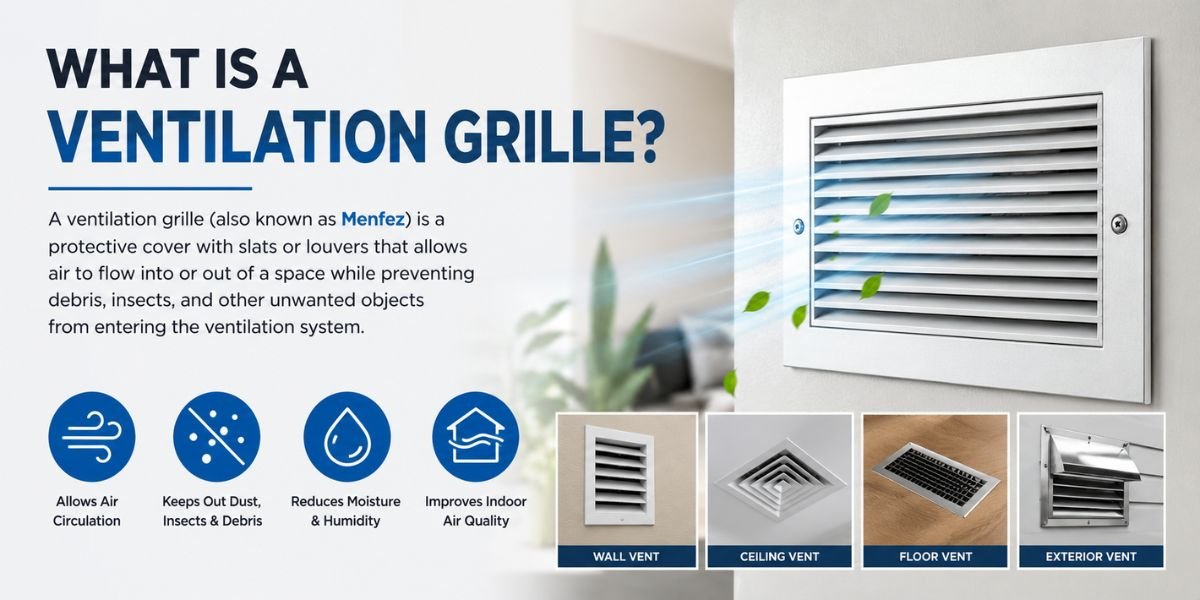
Poor indoor ventilation can lead to stale air, excess moisture, unpleasant odors, and even mold growth. Whether you’re renovating your home or building a new one, choosing the right ventilation system is essential for maintaining a healthy and comfortable indoor environment.
One small but important component of any ventilation system is the ventilation grille, commonly called Menfez (and sometimes misspelled as Merfez) in Turkey. It plays a vital role in allowing fresh air to enter, stale air to exit, and HVAC systems to operate efficiently
In this guide, you’ll learn what a ventilation grille is, how it works, the different types available, where they are used, and how to choose the right one for your home.
Quick Answer
A ventilation grille is a protective vent cover with fixed or adjustable slats that allows air to flow between indoor and outdoor spaces or throughout a building while preventing debris, insects, and large objects from entering the ventilation system. Ventilation grilles are commonly installed in bathrooms, kitchens, bedrooms, offices, and HVAC systems to improve indoor air quality and maintain proper airflow.
What Is a Ventilation Grille?
A ventilation grille, often called Menfez in Turkish (and occasionally searched online as Merfez), is a specially designed opening covered by slats or louvers that allows air to pass through while protecting the ventilation system. These grilles are commonly used in homes, offices, hospitals, factories, and commercial buildings.
Unlike a plain hole in the wall, a ventilation grille controls airflow, improves the appearance of ventilation openings, and prevents dust, insects, birds, and other unwanted objects from entering air ducts.
Ventilation grilles may be connected to:
- HVAC systems
- Exhaust fans
- Fresh air intake systems
- Natural ventilation openings
- Air conditioning systems
They are available in many shapes, sizes, and materials to suit different building designs.
How Does a Ventilation Grille Work?
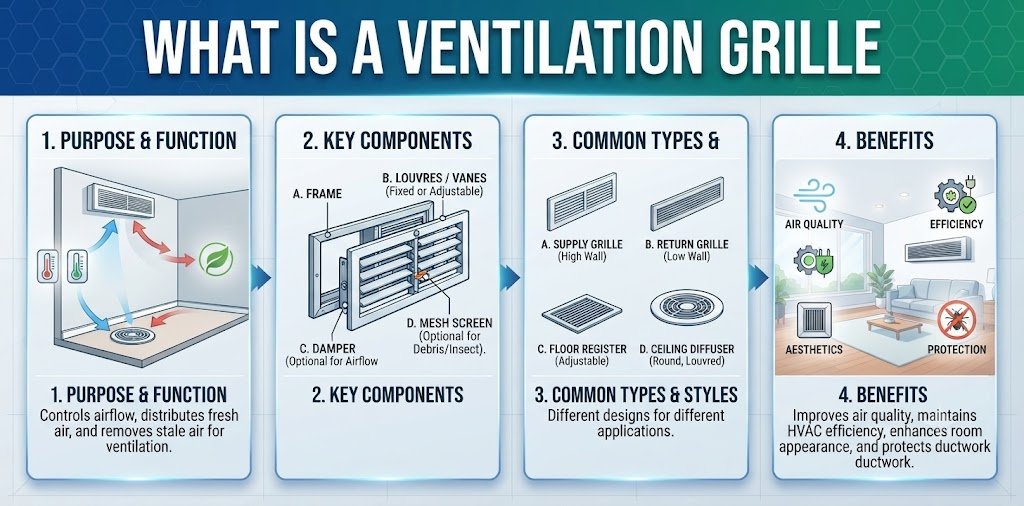
A ventilation grille works by allowing air to move freely through specially designed openings.
Depending on the ventilation system, air may either:
- Enter the building as fresh outdoor air.
- Leave the building through exhaust vents.
- Circulate between rooms.
- Return to the HVAC system for heating or cooling.
The slats (louvers) direct airflow while reducing the amount of debris entering the ventilation system.
For example:
- A bathroom ventilation grille helps humid air escape after a shower.
- A kitchen ventilation grille removes cooking odors, smoke, and excess heat.
- A return air grille sends indoor air back to the HVAC unit for recirculation.
Without proper ventilation grilles, airflow becomes restricted, reducing HVAC efficiency and indoor comfort.
Main Parts of a Ventilation Grille
Although designs vary, most ventilation grilles include the following components:
1. Frame
The frame holds the grille securely against the wall, ceiling, floor, or duct opening.
2. Louvers (Slats)
These angled blades control the direction of airflow.
Louvers may be:
- Fixed
- Adjustable
- Curved
- Linear
Adjustable louvers allow homeowners to direct airflow where it’s needed most.
3. Mesh Screen
Some outdoor ventilation grilles include a fine mesh that blocks:
- Insects
- Leaves
- Birds
- Small animals
This helps keep ventilation ducts clean and functional.
4. Mounting Holes
These allow installers to securely fasten the grille using screws or clips.
Why Ventilation Grilles Are Important
Many homeowners underestimate the importance of ventilation grilles, but they contribute significantly to a home’s overall comfort and energy efficiency.
Improve Indoor Air Quality
Explains how ventilation integrates with modern smart homes.
Fresh air replaces stale indoor air, reducing pollutants, allergens, and odors.
This creates a healthier indoor environment for families.
Prevent Moisture Build-Up
Bathrooms and kitchens produce large amounts of humidity.
Without proper ventilation, moisture can cause:
- Mold growth
- Mildew
- Peeling paint
- Damaged drywall
- Wood rot
Proper ventilation grilles help remove humid air before these problems develop.
Increase HVAC Efficiency
When air moves freely through supply and return vents, HVAC systems don’t have to work as hard.
Benefits include:
- Lower energy bills
- Better heating
- Better cooling
- Longer HVAC lifespan
Efficient airflow also improves overall home comfort.
Reduce Odors
Cooking smells, pet odors, and bathroom odors leave the home more quickly when ventilation is properly designed.
This keeps indoor spaces fresher throughout the day.
Improve Comfort
Balanced airflow helps maintain consistent temperatures in every room.
Instead of having hot and cold spots, properly ventilated homes enjoy more even heating and cooling.
Types of Ventilation Grilles
Ventilation grilles come in many designs, each serving a different purpose. Choosing the right type improves airflow, enhances HVAC efficiency, and complements your home’s interior or exterior.
1. Wall Ventilation Grilles
Wall grilles are among the most common types used in residential and commercial buildings. They are installed on interior or exterior walls to allow fresh air in or remove stale air.
Best for:
- Living rooms
- Bedrooms
- Hallways
- Home offices
- Garages
Advantages
- Easy to install
- Available in many sizes
- Suitable for natural and mechanical ventilation
- Low maintenance
2. Ceiling Ventilation Grilles
Ceiling grilles distribute conditioned air evenly throughout a room. They are commonly connected to HVAC ducts.
You’ll often find them in:
- Offices
- Apartments
- Hotels
- Modern homes
- Commercial buildings
Benefits
- Better air distribution
- Cleaner room appearance
- Ideal for central air conditioning systems
3. Floor Ventilation Grilles
Floor grilles are installed directly into the floor, allowing heated or cooled air to rise naturally into the room.
They’re popular in homes with:
- Wooden flooring
- Raised floors
- Central heating systems
Floor grilles are typically made from durable materials such as aluminum, steel, or cast iron to withstand foot traffic.
4. Exterior Ventilation Grilles
Exterior grilles protect outdoor ventilation openings from rain, birds, insects, and debris while maintaining proper airflow.
These are commonly installed on:
- Exterior walls
- Crawl spaces
- Utility rooms
- HVAC exhaust outlets
- Dryer vents
Many exterior models include built-in mesh screens and weather-resistant coatings for long-lasting performance.
5. Return Air Grilles
Unlike supply vents that deliver conditioned air, return air grilles draw indoor air back into the HVAC system.
This allows the air to be:
- Filtered
- Heated
- Cooled
- Recirculated
Without return air grilles, an HVAC system cannot operate efficiently.
6. Supply Air Grilles
Supply grilles deliver heated or cooled air from the HVAC system into each room.
Many feature adjustable louvers, allowing homeowners to direct airflow where it’s needed most.
These are commonly found in:
- Bedrooms
- Living rooms
- Dining rooms
- Offices
7. Adjustable Ventilation Grilles
Adjustable grilles allow users to control airflow direction and intensity.
Benefits include:
- Better temperature control
- Improved comfort
- Reduced drafts
- Greater energy efficiency
These are especially useful in multi-room homes where airflow needs vary.
8. Decorative Ventilation Grilles
Modern homeowners increasingly choose decorative grilles that blend seamlessly with interior design.
Available finishes include:
- Matte black
- White powder-coated
- Brushed aluminum
- Brass
- Bronze
- Wood finishes
Decorative grilles combine functionality with style, making them popular in luxury homes.
Common Materials Used in Ventilation Grilles
The material affects durability, maintenance, and appearance.
Plastic Ventilation Grilles
Plastic models are affordable, lightweight, and resistant to rust.
Pros
- Budget-friendly
- Easy to clean
- Corrosion-resistant
- Suitable for bathrooms
Cons
- Less durable than metal
- May discolor over time
Aluminum Ventilation Grilles
Aluminum is one of the most popular materials due to its excellent balance of strength and weight.
Advantages
- Rust-resistant
- Lightweight
- Modern appearance
- Long lifespan
Perfect for both indoor and outdoor installations.
Stainless Steel Ventilation Grilles
Stainless steel offers maximum durability and corrosion resistance.
Ideal for:
- Coastal homes
- Commercial kitchens
- Industrial facilities
- Hospitals
Although more expensive, stainless steel grilles require minimal maintenance and last for many years.
Wooden Ventilation Grilles
Wooden grilles are mainly used for decorative purposes in luxury interiors.
They complement:
- Traditional homes
- Farmhouses
- Custom cabinetry
- High-end furniture
However, they should be protected from excessive moisture to prevent warping.
Where Are Ventilation Grilles Commonly Used?
Almost every modern building relies on ventilation grilles to maintain healthy airflow.
Bathrooms
Bathrooms generate high humidity, making ventilation essential.
A properly installed grille helps:
- Remove steam
- Prevent mold growth
- Reduce condensation
- Protect painted surfaces
Kitchens
Kitchen ventilation grilles remove:
- Smoke
- Cooking odors
- Heat
- Grease-laden air
Homes with gas appliances especially benefit from proper ventilation to improve indoor air quality.
Bedrooms
Fresh airflow in bedrooms helps create a more comfortable sleeping environment by reducing stuffiness and balancing indoor temperatures.
Living Rooms
Ventilation grilles support efficient heating and cooling, helping maintain a comfortable temperature throughout larger living spaces.
Laundry Rooms
Dryers release heat and moisture. Proper ventilation helps reduce humidity and protects nearby walls and cabinetry.
Garages
Garage ventilation removes fumes, excess heat, and stale air, especially in attached garages where airflow can affect indoor air quality.
Offices
Commercial offices rely on ventilation grilles to improve employee comfort and maintain fresh indoor air.
Bathroom vs. Kitchen Ventilation Grilles
| Feature | Bathroom Grille | Kitchen Grille |
|---|---|---|
| Removes Humidity | Excellent | Moderate |
| Removes Smoke | No | Excellent |
| Controls Odors | Good | Excellent |
| Handles Grease | No | Yes |
| Typical Location | Ceiling or Wall | Wall or Range Hood Area |
Decorative vs. Functional Ventilation Grilles
| Decorative Grilles | Functional Grilles |
|---|---|
| Focus on appearance | Focus on airflow |
| Premium finishes | Practical design |
| Interior applications | Indoor & outdoor use |
| Modern home décor | HVAC performance |
| Often custom-made | Standard sizes available |
Both types can be effective, but the best choice depends on your priorities—design, airflow, or a balance of both.
How to Choose the Right Ventilation Grille
Selecting the right ventilation grille isn’t just about appearance. The correct size, material, and design help improve airflow, reduce energy costs, and extend the life of your HVAC system.
Before buying a ventilation grille, consider the following factors.
1. Measure the Vent Opening
The first step is to measure the duct opening, not the outside dimensions of the existing grille.
Measure:
- Width
- Height
- Duct depth (if applicable)
Choosing the wrong size can restrict airflow and reduce ventilation efficiency.
2. Choose the Right Material
Different materials work best in different environments.
| Material | Best For |
|---|---|
| Plastic | Bathrooms, laundry rooms |
| Aluminum | Most residential applications |
| Stainless Steel | Outdoor and coastal areas |
| Wood | Decorative interior spaces |
For humid areas like bathrooms or kitchens, corrosion-resistant materials such as aluminum or stainless steel are ideal.
3. Consider Airflow Requirements
Larger rooms require greater airflow. If you’re replacing an existing grille, try to match the original airflow capacity recommended by your HVAC system.
A grille that is too small can:
- Restrict airflow
- Increase energy consumption
- Make rooms uncomfortable
- Put extra strain on HVAC equipment
4. Indoor or Outdoor Use
Indoor and outdoor ventilation grilles are designed differently.
Outdoor models typically include:
- Rain protection
- Bird screens
- Insect mesh
- UV-resistant finishes
Always choose a grille designed for its intended environment.
5. Adjustable or Fixed Louvers
Adjustable grilles allow you to direct airflow toward specific areas, making them ideal for living rooms and bedrooms.
Fixed grilles provide consistent airflow and are commonly used for return air vents and exterior openings.
How to Install a Ventilation Grille
Many ventilation grilles can be installed as a simple DIY project if you’re replacing an existing unit.
Step 1: Remove the Old Grille
Unscrew the old grille carefully.
Clean away dust and debris around the opening before installing the new one.
Step 2: Measure Again
Double-check all measurements before fitting the replacement grille.
Even small measurement errors can affect airflow.
Step 3: Position the New Grille
Align the grille with the duct opening.
Ensure the louvers face the correct direction according to the manufacturer’s instructions.
Step 4: Secure the Grille
Use the supplied screws or clips to fasten the grille securely.
Avoid overtightening, especially with plastic models, as this may crack the frame.
Step 5: Test Airflow
Turn on your HVAC or exhaust fan.
Check that:
- Air flows freely
- There are no unusual noises
- The grille sits flush against the wall or ceiling
Maintenance Tips
Routine maintenance keeps ventilation grilles looking clean and working efficiently.
Clean Every Few Months
Dust and debris can accumulate quickly.
Use:
- Vacuum cleaner
- Soft brush
- Damp microfiber cloth
Cleaning every 3–6 months is sufficient for most homes.
Inspect for Damage
Look for:
- Bent louvers
- Rust
- Loose screws
- Cracked plastic
- Blocked openings
Replace damaged grilles promptly to maintain proper airflow.
Keep Outdoor Grilles Clear
Remove:
- Leaves
- Bird nests
- Spider webs
- Dirt buildup
Blocked exterior vents reduce ventilation efficiency and may cause moisture problems.
Repaint When Necessary
Metal grilles may eventually show signs of wear.
Use rust-resistant paint to refresh older grilles and protect them from corrosion.
Common Mistakes to Avoid
Many homeowners unknowingly reduce their home’s ventilation efficiency by making simple mistakes.
Blocking Air Vents
Never place:
- Sofas
- Cabinets
- Curtains
- Storage boxes
directly in front of ventilation grilles.
Restricted airflow forces HVAC systems to work harder.
Choosing the Wrong Size
A grille that doesn’t match the duct opening can reduce airflow and create unnecessary noise.
Always measure carefully before purchasing.
Ignoring Regular Cleaning
Dust-covered grilles reduce airflow and negatively affect indoor air quality.
Simple cleaning can significantly improve ventilation performance.
Using Indoor Grilles Outdoors
Indoor grilles are not designed to withstand rain, sunlight, or harsh weather.
Always use weather-resistant exterior models outdoors.
Final Thoughts
Although ventilation grilles may seem like a small detail, they play a crucial role in maintaining a healthy, energy-efficient, and comfortable home. By ensuring proper airflow, controlling moisture, and supporting your HVAC system, the right ventilation grille can improve indoor air quality while protecting your property from common issues such as mold and condensation.
Whether you’re upgrading your bathroom, renovating your kitchen, or improving your home’s ventilation system, choosing the correct grille size, material, and design is a worthwhile investment. With regular maintenance and proper installation, a quality ventilation grille can provide reliable performance for many years.
FAQs
What is a ventilation grille used for?
A ventilation grille allows fresh air to enter or stale air to exit a building while protecting the ventilation system from dust, insects, and debris.
Is a ventilation grille the same as a vent?
Not exactly. A vent refers to the entire air passage or opening, while a ventilation grille is the protective cover installed over that opening.
Can I install a ventilation grille myself?
Yes. Replacing an existing ventilation grille is usually a straightforward DIY task using basic tools. However, installing new ductwork or modifying an HVAC system may require a qualified professional.
Which material is best?
For most homes, aluminum offers the best combination of durability, appearance, and corrosion resistance.
How often should ventilation grilles be cleaned?
Clean indoor grilles every 3–6 months. Outdoor grilles may require more frequent cleaning depending on weather conditions and debris.
Do ventilation grilles improve indoor air quality?
Yes. Properly installed and maintained ventilation grilles support healthy airflow, helping reduce humidity, stale air, and airborne pollutants.