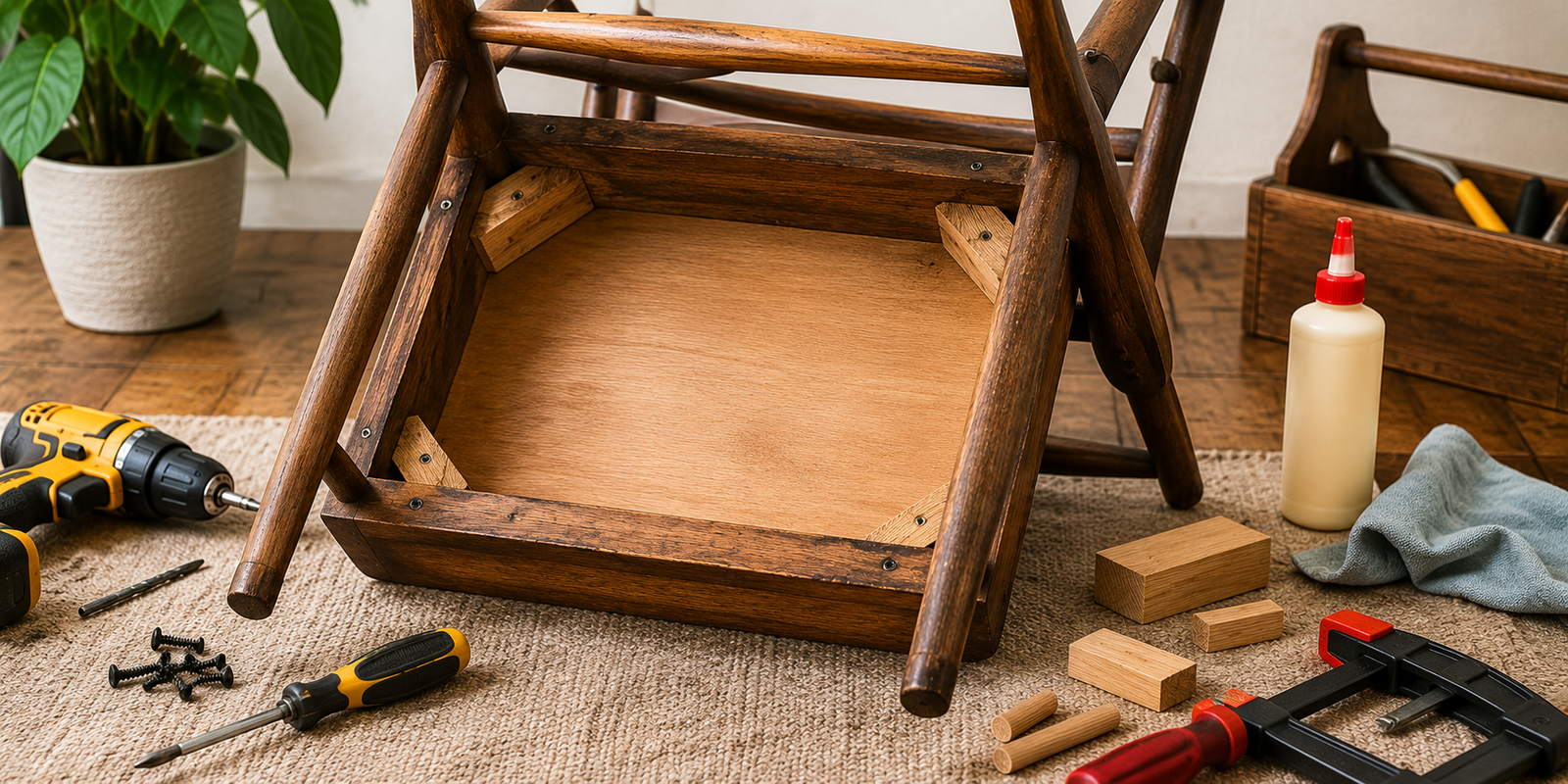
A loose chair seat can make an otherwise good chair feel unstable, noisy, and uncomfortable. You may notice the seat shifting when you sit down, hear a squeak underneath it, or see a small gap between the seat and the frame.
Fortunately, many loose chair seats can be repaired at home with basic tools. The right method depends on how the seat is attached and whether the problem comes from loose screws, failed joints, worn hardware, or damaged wood.
Before starting, place the chair on a flat surface and check whether the movement is limited to the seat. If the entire chair moves or rocks, see How to Fix a Wobbly Chair for help identifying the underlying problem.
Quick Answer: To fix a loose chair seat, first remove the seat if possible, inspect the fasteners and frame connections, tighten or replace damaged hardware, repair loose wooden joints, and reinforce weak areas when necessary. Don’t simply screw the seat tighter if the surrounding wood or frame is damaged.
Why Does a Chair Seat Become Loose?
Chair seats can loosen after years of regular use.
Every time someone sits down, gets up, shifts position, or moves the chair, the seat and frame experience repeated stress. Eventually, screws can loosen, wooden joints can wear, or the seat mounting points can become damaged.
Common causes include:
- Loose screws
- Worn screw holes
- Failed wood glue
- Loose wooden joints
- Broken dowels
- Cracked seat frames
- Damaged mounting blocks
- Missing fasteners
- Repeated heavy use
- Dragging the chair across the floor
A loose seat can also be a symptom of a larger structural problem. If the chair has several loose areas, don’t repair only the visible seat movement without checking the rest of the frame.
Signs Your Chair Seat Needs Repair
A loose chair seat can show several warning signs.
Look for:
- The seat moves from side to side.
- The seat lifts slightly when you stand up.
- Screws keep becoming loose.
- You hear squeaking underneath.
- There are visible gaps around the seat frame.
- The seat feels uneven.
- The frame moves when pressure is applied.
- Cracks are visible around mounting points.
If you notice significant movement together with cracks or broken wood, stop using the chair until the damage has been assessed.
Tools and Materials You’ll Need
Depending on the repair, you may need:
- Screwdriver
- Drill
- Drill bits
- Wood glue
- Clamps
- Replacement screws
- Wooden dowels
- Wood shims
- Wood filler
- Sandpaper
- Clean cloth
- Measuring tape
- Safety glasses
You won’t need every item for every repair.
7 Ways to Fix a Loose Chair Seat
1. Tighten the Seat Screws
The easiest repair is to check the screws holding the seat to the frame.
Turn the chair upside down and inspect the underside.
Look for:
- Loose screws
- Missing screws
- Bent screws
- Damaged mounting brackets
- Cracked wood around screw holes
Tighten loose screws carefully.
Don’t overtighten them. Excessive force can strip the hole or crush the surrounding wood.
What If the Screw Won’t Tighten?
If a screw keeps spinning, the hole may have become too large.
In that case, simply turning the screwdriver harder won’t fix the problem.
The hole may need to be repaired using a suitable wood-repair method before reinstalling the screw.
2. Replace Damaged Seat Hardware
Sometimes the problem isn’t the screw hole—it’s the hardware itself.
Inspect the fasteners and mounting points.
Replace:
- Bent screws
- Broken brackets
- Missing washers
- Damaged bolts
- Worn mounting hardware
Use hardware that is appropriate for the chair’s construction.
Avoid installing excessively long screws because they may penetrate through the seat or damage another component.
3. Repair a Loose Wooden Joint
If the seat frame itself is moving, tightening the seat screws may not solve the problem.
The frame may have a loose wooden joint.
Check the connections between:
- Front and side rails
- Rear and side rails
- Corner blocks
- Legs and seat frame
- Seat supports
If the frame has visible gaps or movement, the joint may need to be repaired before the seat is reattached.
For a more detailed process, see How to Fix a Loose Wooden Chair Joint.
A proper joint repair generally involves getting rid of loose old adhesive and ensuring the parts fit correctly before applying fresh adhesive and clamping them.
4. Repair a Worn Screw Hole
A worn screw hole is a common reason a chair seat refuses to stay tight.
The screw may tighten initially but become loose again after the chair is used.
One simple approach is to repair the damaged wood around the hole with suitable wood material, then allow the repair to cure and create a new pilot hole before reinstalling the screw.
For some furniture repairs, WOOD Magazine describes using small pieces of wood to help restore oversized screw holes before reinstalling hardware.
Don’t Just Use a Bigger Screw
Installing a much larger screw isn’t always the best solution.
It can split the surrounding wood, especially when the mounting area is already weak.
5. Reinforce the Seat Frame With Corner Blocks
If the seat frame is weak, wooden corner blocks can provide additional support.
A corner block is usually installed underneath the seat where two frame components meet.
Basic Process
- Identify the weak corner.
- Make sure the surrounding wood is solid.
- Prepare a suitably sized wooden block.
- Test-fit the block.
- Apply appropriate adhesive if suitable.
- Secure it with suitable fasteners when the construction allows.
- Allow the adhesive to cure completely.
Corner blocks are particularly useful when the reinforcement can remain hidden underneath the seat.
If the entire chair feels weak rather than only the seat, see How to Reinforce a Weak Chair for additional strengthening options.
6. Repair a Cracked Seat or Frame
A loose seat may sometimes be caused by cracked wood.
Inspect the underside carefully.
Look for cracks around:
- Screw holes
- Corners
- Seat rails
- Mounting points
- Joints
- Legs
A small cosmetic crack isn’t necessarily the same as a structural crack.
If the crack is deep, spreading, or located in a load-bearing frame component, don’t rely on wood filler alone.
For more information on repairing suitable wooden cracks, see How to Repair a Cracked Wooden Chair.
7. Rebuild or Replace a Severely Damaged Seat Frame
Sometimes the seat frame is too damaged for a simple adjustment.
Replacement or rebuilding may be necessary when:
- The frame is badly cracked.
- Large pieces of wood are missing.
- The mounting points are destroyed.
- The frame has severe rot.
- Previous repairs have repeatedly failed.
Don’t try to force a badly damaged seat back into position with extra screws.
A strong repair needs sound material to hold the fasteners and support the load.
How to Fix a Chair Seat That Moves Side to Side
Side-to-side movement can come from either the seat attachment or the underlying frame.
Start by turning the chair upside down.
Hold the seat and gently move it while watching the connections.
If the seat moves but the frame stays still, inspect the mounting hardware.
If the entire frame moves, investigate the joints and legs.
This distinction is important because tightening seat screws won’t fix a loose leg or failed frame joint.
How to Fix a Wooden Chair Seat That Lifts Up
If the seat lifts slightly when you stand up, check the screws or fasteners underneath.
A loose mounting point can allow the seat to separate slightly from the frame.
Remove the seat if the design allows it and inspect the attachment points.
If the frame underneath is cracked or loose, repair that problem before reinstalling the seat.
How to Fix a Dining Chair With a Loose Seat
Dining chairs receive frequent daily use, so loose seats are particularly common.
Turn the chair upside down and inspect the underside.
Check:
- Seat screws
- Mounting blocks
- Frame rails
- Corner joints
- Cracks
- Legs
- Backrest connections
If the chair has other problems besides the loose seat, our How to Repair a Dining Chair guide covers additional repairs for legs, joints, cracks, squeaks, and weak frame connections.
How to Fix a Chair Seat That Keeps Squeaking
If the loose seat also squeaks, don’t assume the sound is coming directly from the seat.
The noise may come from:
- Seat screws
- Frame joints
- Corner blocks
- Wooden rails
- Loose legs
- Backrest connections
Press different areas of the seat while listening carefully.
If the noise continues after tightening the seat, inspect the frame.
You can also read How to Fix a Chair That Keeps Squeaking for a detailed troubleshooting approach.
Should You Glue a Loose Chair Seat?
It depends on the construction.
If the seat is designed to be removable with screws, you generally shouldn’t permanently glue the seat to the frame unless the original construction calls for it.
Glue may make future repairs unnecessarily difficult.
If the problem is a wooden structural joint, however, suitable adhesive may be an appropriate part of the repair.
The right adhesive also depends on the joint and the amount of movement. This Old House notes that polyurethane glue can be useful for loose furniture joints because it can expand into gaps as it cures, while other adhesives are better suited to different applications.
Always follow the adhesive manufacturer’s instructions.
How to Reinforce a Chair Seat Without Changing Its Appearance
Most homeowners don’t want visible brackets or screws on an otherwise attractive chair.
Fortunately, many reinforcements can be hidden underneath.
Use the Underside
Install corner blocks beneath the seat frame where possible.
Match the Existing Wood
For visible repairs, use compatible wood where practical.
Keep Fasteners Discreet
Position screws where they won’t interfere with the finished appearance.
Refinish After Repair
If the repair leaves visible marks, sanding and appropriate refinishing can help blend the area.
How Long Should a Glued Chair Seat Cure?
Follow the instructions provided by the adhesive manufacturer.
Drying and curing aren’t necessarily the same thing.
A surface may feel dry while the adhesive is still developing its final strength.
Keep the chair unloaded for the recommended curing period.
Don’t test a newly repaired structural joint by immediately sitting on it.
How to Test the Repaired Seat
After the repair has completely cured, inspect the chair carefully.
Step 1: Check the Fasteners
Make sure screws and other hardware are secure.
Step 2: Check the Frame
Look for gaps or movement.
Step 3: Press the Seat
Apply gentle pressure to different areas.
Step 4: Check for Noise
Listen for new squeaking or cracking.
Step 5: Test the Chair Gradually
Sit down carefully rather than dropping your full weight onto the chair.
If the seat remains firmly attached and the frame stays stable, the repair is likely addressing the original problem.
Common Mistakes to Avoid
Overtightening Screws
This can strip or damage the wood.
Using Bigger Screws Without Checking the Wood
A larger fastener can split a weakened frame.
Gluing a Removable Seat Permanently
This can make future maintenance difficult.
Ignoring a Cracked Frame
A cracked structural component needs more than a cosmetic fix.
Adding Reinforcement to Rotten Wood
Brackets and screws need sound material to hold securely.
Testing the Repair Too Soon
Give adhesives enough time to cure.
How to Prevent a Chair Seat From Becoming Loose Again
Once you’ve repaired the seat, a little maintenance can help extend the repair.
Check Screws Periodically
Loose hardware is easier to fix before it damages the surrounding wood.
Avoid Dragging the Chair
Lift it when moving it whenever practical.
Don’t Rock Back on Two Legs
This places additional stress on the frame.
Avoid Excessive Loads
Use the chair for its intended purpose.
Inspect the Underside
Every few months, quickly check the mounting points and joints.
When Should You Replace the Chair?
A loose seat doesn’t automatically mean the chair is beyond repair.
Replacement may be more appropriate when:
- The frame has extensive rot.
- Several structural parts are broken.
- The seat mounting points are destroyed.
- Major components are missing.
- The chair remains unstable after multiple repairs.
- Repair costs exceed the value of the chair.
For antique or valuable furniture, professional restoration may be preferable.
Final Thoughts
A loose chair seat is usually a manageable furniture repair when the underlying frame is still sound.
Start by identifying whether the movement comes from the seat hardware, screw holes, wooden joints, or the frame itself. Tighten appropriate fasteners, repair damaged joints, reinforce weak corners, and replace severely damaged components when necessary.
Don’t simply add more screws or glue without understanding why the seat became loose in the first place.
A proper repair should restore both the stability of the seat and the strength of the chair frame.
FAQs
Why is my chair seat loose?
A chair seat can become loose because of worn screws, damaged mounting points, failed wooden joints, cracked frame components, or repeated use.
How do I tighten a loose chair seat?
Turn the chair upside down, inspect the mounting screws and hardware, and tighten them carefully. If the screws won’t hold, inspect the holes and surrounding wood for damage.
Can I glue a loose chair seat?
Sometimes, but it depends on the chair’s construction. A removable seat shouldn’t normally be permanently glued to the frame. Loose structural wooden joints may require appropriate adhesive.
Why does my chair seat keep coming loose?
The underlying screw hole, frame joint, or mounting block may be damaged. Simply tightening the fastener won’t permanently solve the problem if the wood can’t hold it securely.
Can I use bigger screws to fix a loose chair seat?
Not automatically. Larger screws can split weakened wood. Repair the mounting hole or damaged wood first when necessary.
How do I stop a loose chair seat from squeaking?
First secure the seat and inspect the frame. If the noise comes from a loose wooden joint, repair the joint instead of relying on lubricant.
Should I replace a loose chair seat?
Not necessarily. If the seat and frame are structurally sound, repairing the mounting hardware or frame connection is often enough.
How can I make a chair seat stronger?
Repair loose joints and damaged mounting points first, then consider hidden corner blocks or other suitable reinforcement where the chair’s construction allows it.