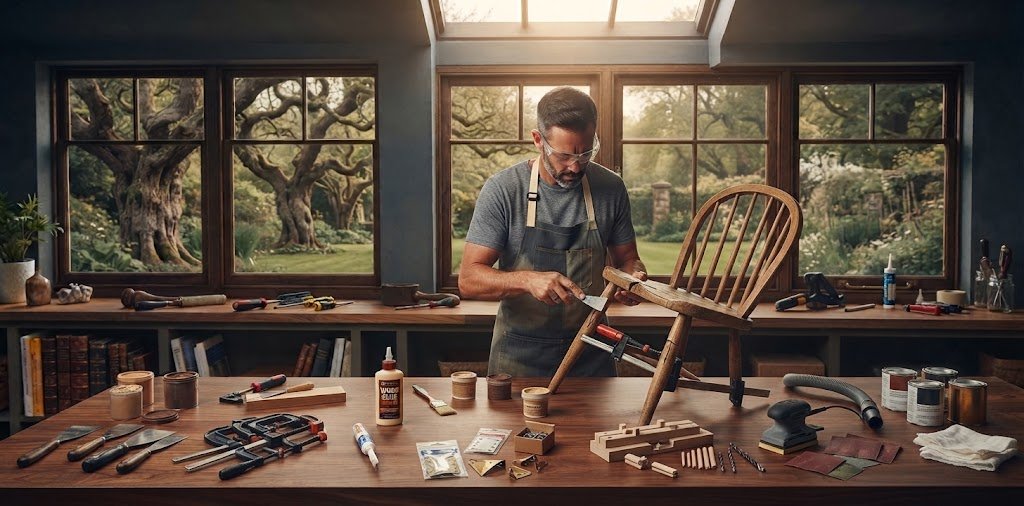
A cracked wooden chair can quickly become unstable, especially when the crack appears near a leg, joint, seat frame, or backrest. What looks like a small split may continue to spread as the chair is used.
The good news is that many minor wooden chair cracks can be repaired at home when the surrounding wood is still strong. The right repair depends on the crack’s location, depth, direction, and how much structural stress the damaged area receives.
If the crack has already made the chair unstable, first check our How to Fix a Wobbly Chair guide to identify whether the crack is actually causing the movement.
Quick Answer: To repair a cracked wooden chair, first clean and inspect the crack, determine whether the wood is structurally sound, apply suitable wood adhesive where appropriate, close and clamp the crack, and reinforce the area if necessary. Large structural cracks may require replacement parts or professional restoration.
Is a Cracked Wooden Chair Safe to Use?
Don’t continue using a chair with a serious structural crack until you’ve inspected it.
A crack in decorative trim may be mostly cosmetic, while a crack running through a chair leg or major frame joint can affect the chair’s strength.
Pay particular attention to cracks around:
- Chair legs
- Seat rails
- Backrest supports
- Corner joints
- Dowel connections
- Screw holes
- Load-bearing frame sections
If the chair moves, creaks loudly, or the crack opens when pressure is applied, stop using it until you’ve completed the repair.
What Causes Wooden Chairs to Crack?
Wooden chairs can crack for several reasons.
Common causes include:
- Excessive weight
- Repeated movement
- Chair rocking
- Impact damage
- Dry indoor conditions
- Changes in humidity
- Loose joints
- Over-tightened screws
- Poor previous repairs
- Natural aging
- Weak grain direction
Wood naturally exchanges moisture with the surrounding environment. As its moisture content changes, the wood can expand or contract, which may contribute to movement and cracking over time.
How to Tell How Serious the Crack Is
Before repairing the chair, inspect the crack carefully.
Small Surface Crack
A shallow crack that doesn’t move when you gently apply pressure may be primarily cosmetic.
Deep Crack
A crack that extends deeply into the wood requires more attention.
Structural Crack
A crack running through a leg, rail, or major joint can compromise the chair’s strength.
Moving Crack
If the two sides of the crack move apart when pressure is applied, don’t treat it as a simple cosmetic repair.
The deeper and more structural the crack, the more important proper reinforcement becomes.
Tools and Materials You’ll Need
Depending on the repair, you may need:
- Wood adhesive
- Clamps
- Sandpaper
- Clean cloth
- Small brush
- Wood filler
- Wooden dowels
- Drill
- Drill bits
- Appropriate screws
- Wood shims
- Putty knife
- Safety glasses
You won’t need everything for every repair.
A small surface crack may require only filler and sanding, while a structural crack may need adhesive and mechanical reinforcement.
7 Ways to Repair a Cracked Wooden Chair
1. Clean the Crack Before Repairing It
Start by removing dust, dirt, loose wood fibers, and old adhesive around the damaged area.
Use a soft brush or clean cloth.
If the crack is accessible, inspect its entire length.
Don’t aggressively widen the crack just to clean it.
The goal is to remove loose material while preserving as much sound wood as possible.
2. Apply Wood Glue to a Suitable Crack
For a crack where the wood pieces still fit together properly, an appropriate wood adhesive may provide a strong repair.
First test the fit without adhesive.
If the pieces close correctly:
- Apply suitable wood glue into the crack.
- Bring the wood back into its original position.
- Wipe away excess adhesive.
- Clamp the damaged area.
- Check the alignment.
- Allow the adhesive to cure according to the manufacturer’s instructions.
Don’t put the chair back into normal use before the adhesive has fully cured.
3. Clamp the Crack Correctly
Clamping helps keep the cracked pieces in their original position while the adhesive cures.
Place the clamp so it applies pressure across the damaged area without crushing the wood.
Use padding between the clamp and finished surfaces when necessary.
Don’t Over-Clamp
Extreme pressure isn’t automatically better.
Too much pressure can damage the wood or squeeze excessive adhesive out of the joint.
The objective is to hold the crack closed and properly aligned.
4. Reinforce a Structural Crack With a Dowel
A deeper crack in an appropriate wooden component may require additional reinforcement.
A wooden dowel can sometimes strengthen a repaired area when the chair’s construction allows it.
The basic process involves:
- Marking the reinforcement location.
- Drilling a correctly aligned hole.
- Preparing the dowel.
- Applying suitable adhesive.
- Installing the dowel.
- Allowing the repair to cure.
- Trimming and sanding the repaired area.
This requires careful drilling.
If the hole is misaligned, the chair component can become distorted.
Don’t use a dowel simply because a crack exists. The reinforcement needs to suit the location and direction of the damage.
5. Add Suitable Mechanical Reinforcement
Some cracked chair components may benefit from additional reinforcement.
Depending on the construction, this could include:
- Corner blocks
- Suitable brackets
- Screws
- Bolts
- Reinforcement plates
- Wooden splines
The reinforcement should connect sound wood on both sides of the damaged area.
Avoid installing a screw directly into an already weakened crack unless the repair has been properly planned.
An incorrectly positioned fastener can make the damage worse.
6. Use Wood Filler for Minor Cosmetic Cracks
Wood filler can be useful when the crack is shallow and primarily cosmetic.
Clean the area first, then apply the filler according to the manufacturer’s instructions.
After it dries:
- Sand the surface gently.
- Remove the dust.
- Apply matching stain or finish if appropriate.
Remember that filler is mainly a cosmetic solution.
It should not be relied upon to restore the structural strength of a cracked chair leg or major frame member.
7. Replace a Severely Cracked Component
Sometimes repairing the original wood isn’t the safest option.
Replacement may be more appropriate when:
- A chair leg is badly cracked.
- Large pieces of wood are missing.
- The crack has caused major distortion.
- The wood is rotten.
- Several structural cracks are present.
- Previous repairs have failed.
- If the damaged part is a chair leg that has actually broken or separated, see our How to Repair a Broken Chair Leg guide for more specific repair options.
How to Repair a Crack Near a Chair Joint
Cracks around joints deserve extra attention because the joint carries repeated loads.
First determine whether the joint itself is loose.
If the wood moves around the connection, the problem may involve both the crack and the joint.
In that situation, our How to Fix a Loose Wooden Chair Joint guide can help you address the underlying joint problem.
Don’t simply fill the visible crack while leaving a loose connection underneath.
How to Repair a Cracked Chair Leg
A cracked chair leg is more serious than a small surface crack because the leg supports the chair and its occupant.
Turn the chair upside down and inspect the crack.
Look for:
- Crack length
- Crack depth
- Splintering
- Movement
- Separation
- Damage around the joint
If the crack opens when you apply gentle pressure, avoid using the chair until the structural repair is completed.
For a badly damaged or completely broken leg, replacement may be safer than a simple glue repair.
How to Repair a Cracked Chair Seat
A crack in the solid wooden seat can sometimes be repaired if the surrounding material remains strong.
Start by checking whether the seat flexes excessively.
For a suitable crack:
- Clean the damaged area.
- Check whether the crack closes naturally.
- Apply appropriate adhesive if suitable.
- Clamp carefully.
- Allow it to cure completely.
- Sand and refinish if necessary.
If the seat has extensive splitting or significant structural damage, replacement may be more appropriate.
How to Repair a Cracked Chair Back
A crack in a chair back can range from cosmetic to structural.
Inspect the connection between the backrest and the main frame.
If the crack is around a joint, repair the underlying joint rather than simply covering the visible line.
If the backrest component is severely split, it may need reinforcement or replacement.
How Long Should a Repaired Crack Dry?
The answer depends on the adhesive or repair material.
Always follow the manufacturer’s curing instructions.
Don’t judge readiness simply because the surface feels dry.
The inside of a repaired joint may still require additional time to develop adequate strength.
Keep the chair unused during the recommended curing period.
How to Test the Repair
Once the repair has completely cured, inspect the area carefully.
First, Check the Crack
Look for:
- New gaps
- Movement
- Adhesive failure
- Splintering
- Misalignment
Then Check the Chair
Place the chair on a level floor.
Gently push it from different directions.
Listen for:
- Cracking
- Clicking
- Excessive squeaking
- Movement around the repaired area
If the chair remains unstable, stop using it and investigate further.
Common Mistakes to Avoid
Don’t Use Only Wood Filler on a Structural Crack
Filler can improve appearance but shouldn’t replace structural wood.
Don’t Ignore a Crack That Keeps Growing
A spreading crack may indicate an underlying structural problem.
Don’t Overtighten Screws
Excessive tightening can split already weakened wood.
Don’t Skip Alignment
A repair can be strong but still leave the chair unstable if the components aren’t aligned correctly.
Don’t Test the Chair Too Early
Give adhesives and other repair materials enough time to cure.
Don’t Hide the Damage
Paint or filler can conceal a problem without actually repairing it.
How to Prevent Wooden Chair Cracks
Good maintenance can reduce unnecessary stress on wooden furniture.
Avoid Rocking on Chairs
Rocking places additional force on legs and joints.
Lift Chairs Instead of Dragging Them
Dragging can stress frame connections.
Don’t Exceed the Chair’s Intended Use
Avoid excessive loads or unusual uses.
Keep Moisture Under Control
Don’t leave wooden furniture exposed to prolonged moisture.
Check Loose Joints Early
A loose joint can eventually contribute to cracking.
Inspect Older Furniture
Regular inspections can help you find small problems before they become major structural failures.
When Should You Call a Professional?
DIY repair isn’t always the right choice.
Consider professional furniture repair or restoration when:
- The chair is antique or valuable.
- A major load-bearing component is badly cracked.
- Multiple structural components are damaged.
- Wood is rotten.
- The chair remains unstable after repair.
- You aren’t confident about the structural repair.
- The damage affects a complicated joint.
A professional can determine whether the component should be repaired, reinforced, or replaced.
Final Thoughts
A cracked wooden chair doesn’t automatically mean it’s ready for the rubbish pile.
Small and moderate cracks can sometimes be repaired with careful cleaning, suitable adhesive, proper clamping, and appropriate reinforcement.
However, structural cracks need more caution. A crack through a chair leg, major frame rail, or important joint can affect the chair’s ability to support weight.
Inspect the damage first, choose a repair method that matches the problem, and don’t return the chair to normal use until the repair has fully cured and the chair feels stable
FAQs
Can a cracked wooden chair be repaired?
Yes. Minor and some moderate cracks can be repaired when the surrounding wood remains structurally sound. Severe structural damage may require replacement.
Is wood glue enough to repair a cracked chair?
It can be suitable for some properly fitted wooden cracks and joints, but major structural cracks may require additional reinforcement.
Can wood filler repair a cracked chair leg?
Wood filler is generally better suited to cosmetic imperfections. It shouldn’t be relied upon as the main structural repair for a cracked load-bearing leg.
How do I know if a chair crack is serious?
A crack is more concerning when it is deep, spreading, located in a load-bearing component, or accompanied by movement or instability.
Can I use screws to repair a cracked wooden chair?
Screws can provide reinforcement in some designs, but they must be correctly positioned and sized. Poorly installed screws can make a crack worse.
Should I replace a cracked chair leg?
If the leg is severely split, missing material, rotten, or repeatedly failing after repair, replacement may be safer than attempting another repair.
How long should I wait before using a repaired chair?
Follow the curing instructions for the adhesive or repair material you used. Don’t rely solely on how hard the surface feels.