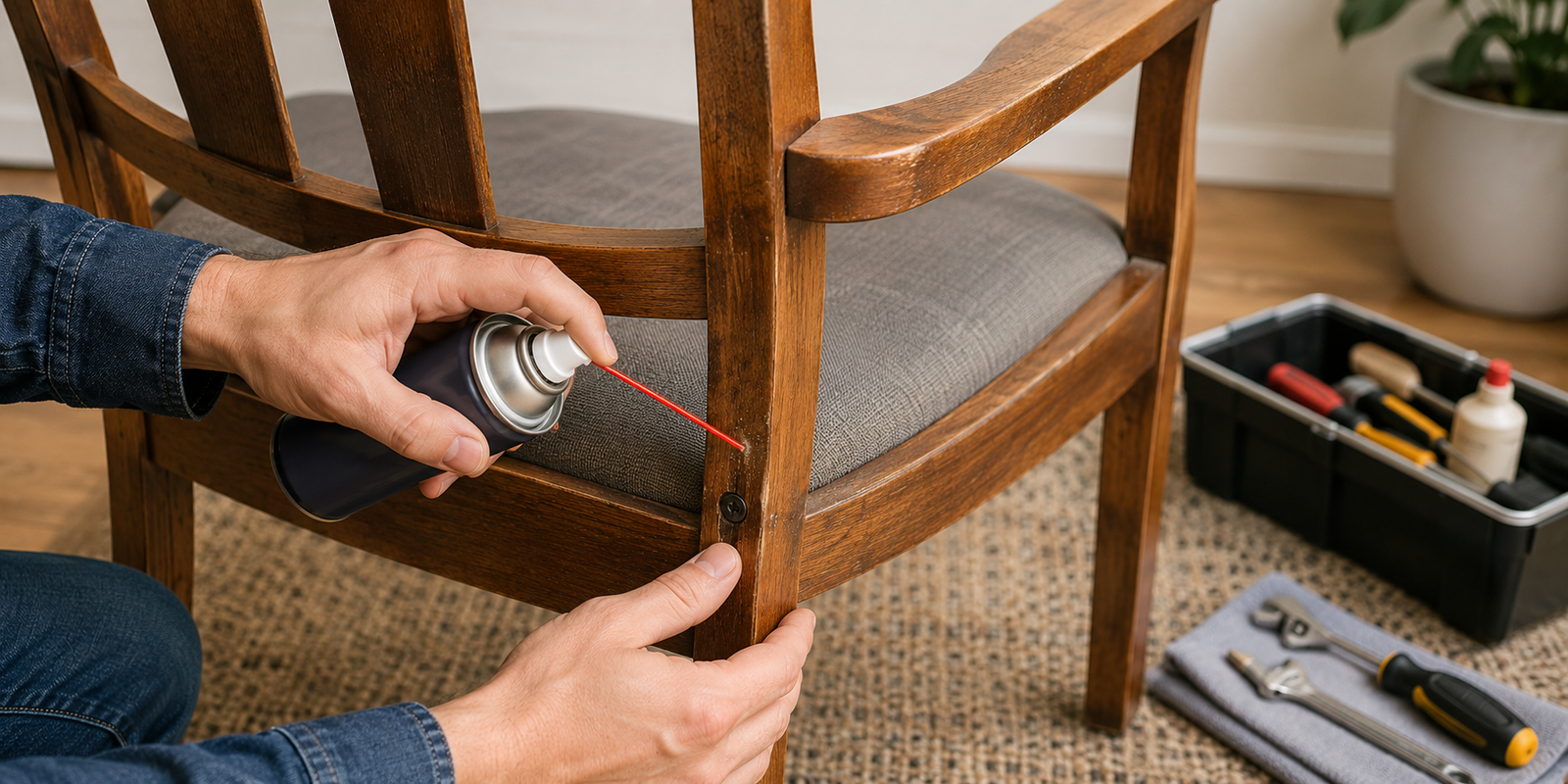
A chair that keeps squeaking every time you sit down, stand up, or move can become seriously annoying. In most cases, the noise isn’t coming from the wood itself—it is caused by movement between joints, loose hardware, or two surfaces rubbing against each other.
The good news is that you can often fix a squeaky wooden chair without replacing it. The key is to find exactly where the sound is coming from before applying glue, tightening screws, or adding lubricant.
If the squeaking is accompanied by noticeable movement or instability, first check our How to Fix a Wobbly Chair guide. A squeak can sometimes be an early warning that a joint is becoming loose.
Quick Answer: To fix a squeaky chair, locate the exact source of the noise, inspect the joints and hardware, tighten loose screws or bolts, repair loose wooden joints, and add suitable reinforcement when necessary. Don’t simply cover the noise without fixing the underlying movement.
Why Does a Chair Squeak?
A chair can squeak when two components move against each other under pressure.
Common causes include:
- Loose wooden joints
- Loose screws
- Worn dowels
- Chair legs moving inside their joints
- Dry or damaged wood
- Loose seat connections
- Movement around the backrest
- Cracked frame components
- Metal hardware rubbing against wood
A squeak isn’t always a serious structural problem, but persistent noise combined with movement should not be ignored.
How to Find the Source of the Squeak
Before repairing the chair, don’t start tightening every screw you can find.
Instead, locate the exact source.
1. Sit Down Slowly
Have someone listen while you slowly sit on the chair.
2. Rock Gently
Move your weight slightly from side to side.
3. Check Each Leg
Turn the chair upside down and gently move each leg.
4. Check the Seat
Press different areas of the seat and listen for movement.
5. Inspect the Backrest
Move the backrest gently to determine whether the noise comes from the rear joints.
Once you know where the squeak originates, the repair becomes much easier.
7 Ways to Fix a Squeaky Chair
1. Tighten Loose Screws and Bolts
Loose hardware is one of the simplest causes to fix.
Turn the chair upside down and inspect:
- Screws
- Bolts
- Nuts
- Corner brackets
- Mounting plates
Tighten loose hardware carefully.
Don’t overtighten it, especially when the screw is going directly into wood.
If the screw hole is already stripped, tightening harder won’t solve the problem.
Instead, the hole may need to be repaired or the hardware replaced.
2. Repair a Loose Wooden Joint
If the squeak comes from a wooden joint, the connection may have loosened over time.
You may notice:
- Visible movement
- A small gap
- Squeaking when the chair is loaded
- A leg moving slightly
If the joint is loose, simply adding lubricant won’t solve the underlying problem.
The joint may need to be cleaned, re-glued, aligned, and clamped.
For a detailed repair process, see our How to Fix a Loose Wooden Chair Joint guide.
3. Check the Chair Legs
A loose leg can create both movement and noise.
Turn the chair upside down and gently move each leg.
Look for:
- Loose connections
- Cracks
- Gaps
- Damaged screws
- Worn joints
If one leg moves independently from the frame, the problem may be more than just a squeak.
Our How to Fix a Loose Chair Leg guide covers several ways to repair this type of problem.
4. Inspect the Seat Frame
Sometimes the squeak isn’t coming from the legs at all.
The seat frame can move where its rails connect to the chair structure.
Press down gently on different areas of the seat while listening carefully.
If the noise comes from underneath, inspect the frame connections.
Look for:
- Loose joints
- Missing fasteners
- Cracked wood
- Gaps
- Movement between frame components
Fixing the source of the movement is better than trying to silence the sound temporarily.
5. Check and Repair Loose Dowels
Wooden chairs often use dowels to connect components.
A worn or loose dowel can allow slight movement every time the chair is used.
If the dowel connection is accessible, inspect whether the dowel itself is damaged or whether the surrounding hole has become too loose.
A proper repair may involve removing the loose joint, cleaning old adhesive, fitting a suitable replacement or repairing the connection, and then reassembling it with appropriate adhesive.
Don’t simply pour glue around an inaccessible joint and assume the problem is fixed.
The adhesive needs to make a proper connection between suitable surfaces.
6. Use Suitable Adhesive Where Appropriate
If the squeak is caused by a small amount of movement in a suitable wooden connection, adhesive may help stabilize it.
However, choose the adhesive based on the type of joint and the amount of movement.
For loose furniture joints, different adhesives have different properties. This Old House’s current wood-glue guidance, for example, discusses polyurethane glue as an option for some loose furniture joints and explains that the correct adhesive depends on the application.
Always follow the adhesive manufacturer’s instructions.
Important
Don’t use adhesive as a shortcut when:
- The wood is cracked.
- The joint is badly damaged.
- The connection has large gaps.
- A structural component is broken.
Those situations may require a more substantial repair.
7. Reinforce a Repeatedly Squeaky Joint
If you’ve repaired a joint but it keeps becoming loose, the connection may need additional reinforcement.
Depending on the chair’s construction, this could involve:
- A wooden corner block
- Appropriate screws
- A suitable bracket
- A replacement dowel
- Rebuilding the joint
Don’t add reinforcement randomly.
The reinforcement needs to connect solid, structurally sound wood.
A badly positioned screw or bracket can actually weaken the chair.
What If the Squeak Comes From a Chair Leg?
A squeaking leg often indicates movement between the leg and the frame.
First check whether the leg is loose.
If it moves, repair the connection rather than trying to silence the sound.
If the leg is completely broken or split, stop using the chair until it has been properly repaired. Our How to Repair a Broken Chair Leg guide covers more substantial leg damage.
What If the Squeak Comes From the Chair Back?
A chair back can squeak when its rails, spindles, or joints move under pressure.
Gently push the backrest forward and backward.
Listen for the exact location.
Check:
- Backrest joints
- Spindles
- Screws
- Dowels
- Frame connections
If the backrest moves significantly, don’t assume it’s just a noise problem.
A loose back joint can eventually become a structural problem.
Should You Use Oil on a Squeaky Wooden Chair?
Usually, don’t start by spraying oil onto every wooden joint.
Oil may temporarily reduce friction in some situations, but it doesn’t repair a loose wooden connection.
If the noise is caused by a structural joint moving, the proper solution is to repair and stabilize that joint.
For metal components that genuinely rub against each other, an appropriate lubricant may be useful, but first confirm that the noise is actually coming from the metal hardware.
How to Stop a Chair From Squeaking After Repair
Once you’ve repaired the source, test the chair again.
Place it on a level surface.
Then:
- Sit down slowly.
- Shift your weight from side to side.
- Move the backrest gently.
- Check each leg.
- Listen for remaining noise.
If the squeak has disappeared and the chair remains stable, the repair has likely addressed the immediate problem.
If the noise returns, inspect the same area again.
Common Mistakes When Fixing a Squeaky Chair
Spraying Lubricant Everywhere
This can hide the source temporarily without fixing the actual problem.
Tightening Every Screw
Overtightening can damage wood and hardware.
Ignoring a Loose Joint
A squeak may be an early sign of joint movement.
Using Too Much Glue
Excess adhesive doesn’t automatically produce a stronger repair.
Ignoring Cracks
A squeaky chair with a cracked structural component needs more than a cosmetic fix.
Testing the Chair Too Early
If you’ve used adhesive, allow it to cure completely before putting the chair back into normal use.
How to Prevent Chair Squeaks
Regular maintenance can help prevent annoying noises.
Check Hardware Periodically
Tighten loose screws before they become a bigger problem.
Repair Loose Joints Early
Small amounts of movement are easier to address than completely failed joints.
Avoid Rocking on the Chair
Rocking puts unnecessary stress on furniture joints.
Lift Instead of Dragging
Dragging can loosen joints and hardware.
Keep Wooden Furniture in a Stable Environment
Large changes in moisture can contribute to movement in wooden components.
When Should You Replace the Chair?
A squeak alone doesn’t necessarily mean the chair needs replacing.
However, replacement or professional restoration may be appropriate if:
- The frame is badly cracked.
- Several joints have failed.
- The chair collapses or shifts under light pressure.
- Multiple legs are damaged.
- The wood has significant rot.
- Previous repairs have repeatedly failed.
If the chair is antique or valuable, professional restoration is often preferable to experimental DIY repairs.
Final Thoughts
A squeaky chair is usually telling you that something is moving when it shouldn’t.
The best repair isn’t simply finding a way to silence the noise. Start by locating the exact source, then inspect the relevant leg, joint, hardware, or frame component.
Tighten loose hardware when appropriate, repair loose wooden joints properly, and reinforce damaged connections when necessary.
Once the repair is complete, test the chair carefully before returning it to normal use.
A quiet chair is good—but a quiet, stable chair is the real goal.
FAQs
Why does my wooden chair keep squeaking?
The most common causes are loose joints, moving chair legs, loose hardware, worn dowels, or two wooden components rubbing against each other.
Can I fix a squeaky chair with WD-40?
Don’t use a general-purpose spray as the first solution for a wooden furniture joint. Find the source of the movement first and repair the underlying problem.
Can wood glue stop a chair from squeaking?
Wood glue can help when the squeak comes from a suitable loose wooden joint, but it won’t fix cracked or severely damaged structural components.
Why does my chair squeak when I sit down?
Your weight can cause loose joints or frame components to move slightly. That movement can create friction and produce the squeaking sound.
Should I replace a squeaky chair?
Not necessarily. If the frame and joints are structurally sound, a squeak can often be repaired. Replacement may make more sense when the chair has extensive structural damage.
How do I find exactly where a chair squeaks?
Have someone slowly sit on the chair while you listen and watch the legs, seat frame, joints, and backrest. You can then inspect the area where movement occurs.
Can a squeaky chair be dangerous?
A squeak itself isn’t necessarily dangerous, but if it comes with looseness, cracking, or instability, stop using the chair until the structural problem is repaired.