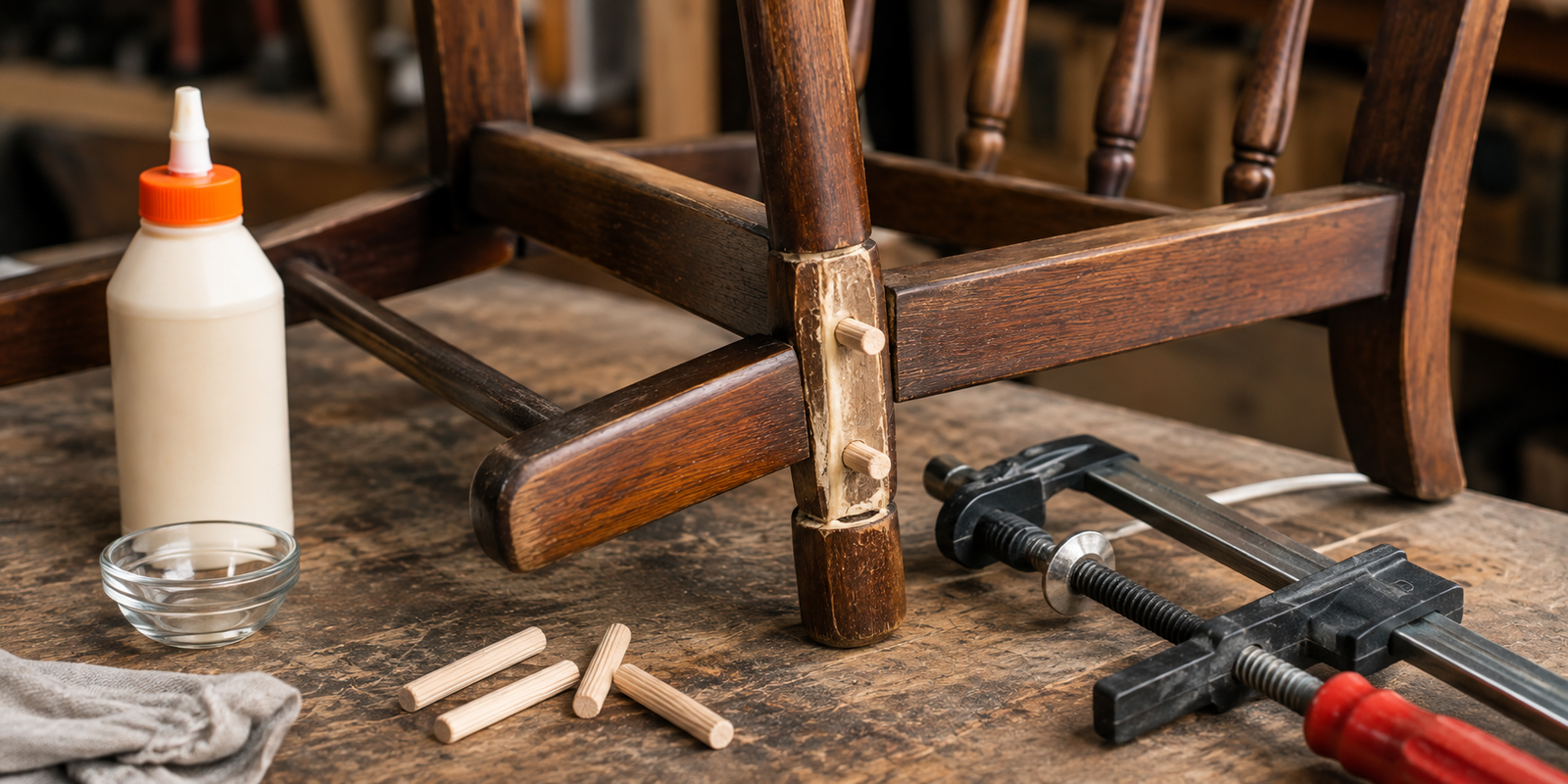
A loose wooden chair joint can make a perfectly good chair feel unstable, squeaky, or unsafe. You may notice movement where a chair leg meets the seat frame, where the side rails connect, or around the backrest.
The good news is that many loose wooden joints can be repaired without replacing the entire chair. The right method depends on whether the joint has simply loosened, the old glue has failed, or the wood itself has become damaged.
If the loose joint is making the entire chair wobble, first see our How to Fix a Wobbly Chair guide to identify the source of the movement.
Quick Answer: To fix a loose wooden chair joint, separate the joint if possible, remove old adhesive and debris, check the wood for damage, apply suitable wood glue, realign the pieces, and clamp them until fully cured. Severely worn joints may require dowels, shims, screws, or replacement wood.
Why Do Wooden Chair Joints Become Loose?
Chair joints experience repeated stress every time the furniture is used.
Common causes include:
- Old or failed glue
- Repeated movement
- Loose joints
- Excessive weight
- Chair rocking
- Dragging the chair
- Changes in humidity
- Damaged dowels
- Worn joint surfaces
- Previous poor repairs
Wood also naturally responds to changes in moisture. It can gain or lose moisture from the surrounding air and change dimensions as a result. This movement can contribute to problems in wooden furniture over time.
That’s one reason a chair joint that was tight when new can eventually develop movement.
Signs of a Loose Chair Joint
Before taking the chair apart, look for obvious signs of joint failure.
You may notice:
- A chair leg moving sideways
- Squeaking when you sit down
- Visible gaps at a joint
- Movement between two wooden pieces
- Loose backrest rails
- A chair that rocks on a level floor
- Old glue showing around the joint
Don’t automatically assume that a wobbly chair needs a new leg.
Sometimes the leg itself is perfectly sound and the joint connecting it to the frame is the actual problem.
Tools and Materials You’ll Need
The exact materials depend on the type of joint.
You may need:
- Wood glue
- Clamps
- Screwdriver
- Rubber mallet
- Sandpaper
- Small brush
- Wood shims
- Wooden dowels
- Drill and drill bits
- Replacement screws
- Clean cloth
- Safety glasses
For a basic loose joint, you may only need wood glue, clamps, and a few simple hand tools.
7 Ways to Fix a Loose Wooden Chair Joint
1. Re-Glue a Loose Joint
Re-gluing is often the best starting point when the wood itself is still in good condition.
If you can separate the joint without damaging the chair, carefully remove loose old adhesive and debris.
Then:
- Clean the mating surfaces.
- Allow them to dry.
- Test-fit the joint.
- Apply suitable wood glue.
- Reassemble the pieces.
- Check the alignment.
- Clamp the joint securely.
- Allow it to cure according to the adhesive manufacturer’s instructions.
Don’t rush the curing process.
A joint that feels firm after a short time may not yet have developed its full strength.
2. Clean Out Old Glue Before Reassembly
Simply adding new glue over old, loose adhesive isn’t always a good repair.
Old hardened glue can prevent the wooden surfaces from fitting together properly.
If the joint can be disassembled, remove loose adhesive carefully.
A small scraper, chisel, or sandpaper may help depending on the joint and finish.
Be Careful
Don’t remove large amounts of sound wood just to make the surface look clean.
The goal is to create a sound, properly fitting joint—not to enlarge it.
3. Use a Wooden Shim for a Slightly Loose Joint
Sometimes the joint has become slightly oversized through years of movement.
A thin wooden shim can help restore a tighter fit in suitable joints.
The process generally involves:
- Separating the joint.
- Identifying where the excess space exists.
- Preparing a thin piece of matching wood.
- Fitting the shim carefully.
- Applying suitable adhesive.
- Reassembling the joint.
- Clamping it securely.
This method is more appropriate for a small amount of looseness.
Don’t force a thick shim into a badly damaged joint.
4. Repair a Loose Dowel Joint
Dowels are commonly used to connect wooden furniture components.
A worn dowel joint may become loose when the surrounding wood or adhesive deteriorates.
Inspect the dowel and its holes.
If the dowel is damaged, replacement may be necessary.
If the holes have become enlarged, the repair may require rebuilding the connection rather than simply adding more glue.
Keep the Joint Aligned
A dowel that is installed at an incorrect angle can make the chair frame sit incorrectly.
Measure carefully before drilling or replacing components.
5. Reinforce the Joint With Appropriate Hardware
Some chairs can benefit from additional mechanical reinforcement.
Depending on the design, this might involve:
- A corner brace
- Suitable screws
- A replacement bolt
- A mounting plate
- A wooden corner block
However, don’t add hardware randomly.
The fastener needs to connect structurally sound sections of the chair.
Also check screw length carefully so that it doesn’t emerge through the opposite side.
6. Rebuild a Severely Worn Joint
If the joint surfaces have become badly damaged, simply adding glue may not solve the problem.
Signs of a severely worn joint include:
- Large gaps
- Crushed wood fibers
- Broken dowels
- Missing material
- Repeated joint failure
- Cracks around the connection
In these cases, the joint may need to be rebuilt.
A more advanced repair could involve replacing damaged wood, installing a new dowel, rebuilding the joint surfaces, or adding structural reinforcementIf the damage extends into the chair leg itself, our How to Repair a Broken Chair Leg guide covers more substantial leg repairs.
7. Clamp and Realign the Chair Frame
Sometimes the biggest mistake isn’t the glue—it’s the alignment.
Before the adhesive cures, make sure the chair frame is sitting in its correct position.
Check:
- Leg position
- Seat frame alignment
- Backrest position
- Joint gaps
- Contact with the floor
Then apply enough clamp pressure to hold everything securely.
Avoid excessive pressure that could damage the wood or squeeze almost all of the adhesive out of the joint.
How to Repair a Loose Chair Leg Joint
If the problem is specifically where the chair leg connects to the frame, inspect that connection carefully.
First turn the chair upside down and gently move the leg.
If the leg moves but the wood isn’t cracked, the joint may simply need to be cleaned and re-glued.
For additional methods specifically focused on the leg connection, see How to Fix a Loose Chair Leg.
If the leg itself is cracked or broken rather than simply loose, don’t treat it as a basic joint repair.
How Long Should the Joint Stay Clamped?
The required clamping time depends on the adhesive you’re using.
Always follow the manufacturer’s instructions.
Keep the chair undisturbed during the recommended curing period.
Don’t test the joint by repeatedly moving it while the glue is curing.
That can weaken the repair before the adhesive has fully developed its strength.
How to Test a Repaired Chair Joint
After the adhesive has fully cured, inspect the repair before using the chair normally.
Check the Joint
Look for:
- New gaps
- Excessive glue
- Cracks
- Movement
- Misalignment
Test the Chair
Place it on a level floor and gently apply pressure.
Check whether:
- The chair rocks
- The repaired joint moves
- A leg lifts from the floor
- New squeaking appears
If the joint still moves, don’t continue using the chair until you identify the reason.
Common Mistakes to Avoid
Adding Glue Without Cleaning the Joint
New adhesive may not properly bond to loose old glue.
Using Too Much Glue
More glue doesn’t necessarily create a stronger connection.
Ignoring Joint Alignment
A strong but incorrectly aligned repair can leave the chair unstable.
Using Random Screws
A poorly placed screw can split the wood or weaken the joint.
Clamping Too Tightly
Excessive pressure can damage the wood and squeeze too much adhesive out.
Testing Too Early
Give the repair adequate curing time before applying a normal load.
Can Humidity Make Chair Joints Loose?
Yes, changes in moisture can affect wooden furniture.
Wood is hygroscopic, meaning it exchanges moisture with the surrounding air. As its moisture content changes, wood can expand or contract.
That’s why furniture can experience changes in fit over time, particularly in environments with significant humidity fluctuations.
You can’t completely stop natural wood movement, but keeping indoor conditions reasonably stable can help reduce unnecessary stress.
How to Prevent Loose Chair Joints
Once you’ve repaired the joint, a few habits can help prevent future problems.
Don’t Rock on the Chair
Rocking places additional stress on the joints.
Lift Instead of Dragging
Dragging can loosen connections over time.
Don’t Overload the Chair
Use furniture according to its intended purpose.
Check Joints Periodically
A small amount of movement is easier to repair than a completely failed joint.
Keep the Furniture Dry
Avoid prolonged exposure to water and excessive humidity.
When Should You Replace the Chair?
Not every chair is worth repairing.
Consider replacement or professional restoration if:
- Multiple structural joints have failed.
- The frame is badly cracked.
- The wood has extensive rot.
- Several legs are damaged.
- The chair remains unstable after repair.
- Important structural pieces are missing.
For an antique or valuable chair, avoid aggressive DIY repairs that could reduce its value.
Final Thoughts
A loose wooden chair joint is often repairable when the surrounding wood remains sound.
Start by identifying exactly where the movement occurs. If the joint can be safely separated, clean away loose old adhesive, check the fit, apply suitable glue, and clamp the pieces in their correct position.
For slightly worn joints, a wooden shim or appropriate reinforcement may help. More severely damaged joints may require dowels, replacement wood, or professional restoration.
The goal isn’t simply to stop the chair from moving temporarily. The repair should restore a strong, properly aligned connection.
FAQs
How do I fix a loose wooden chair joint?
Separate the joint if practical, remove loose old adhesive, check the wood for damage, apply suitable wood glue, realign the pieces, and clamp them until fully cured.
Can I fix a chair joint without taking the chair apart?
Sometimes. Accessible joints may be repaired in place, but separating a badly loose joint often allows for a much better repair.
Why do wooden chair joints become loose?
Repeated stress, failed adhesive, worn wood, movement, and changes in moisture can all contribute to loose joints.
Is wood glue enough for a loose chair joint?
It can be when the joint surfaces fit properly and the surrounding wood is sound. Severely worn or damaged joints may need additional reinforcement.
Should I use screws to reinforce a chair joint?
Only when the chair’s construction allows for appropriate mechanical reinforcement. Incorrectly placed screws can split the wood or weaken the frame.
How long should I wait before using the chair?
Follow the adhesive manufacturer’s curing instructions and don’t use the chair until the repair has fully cured.
Can a loose chair joint cause wobbling?
Yes. A loose joint can allow one or more parts of the frame to move, resulting in an unstable or wobbly chair.