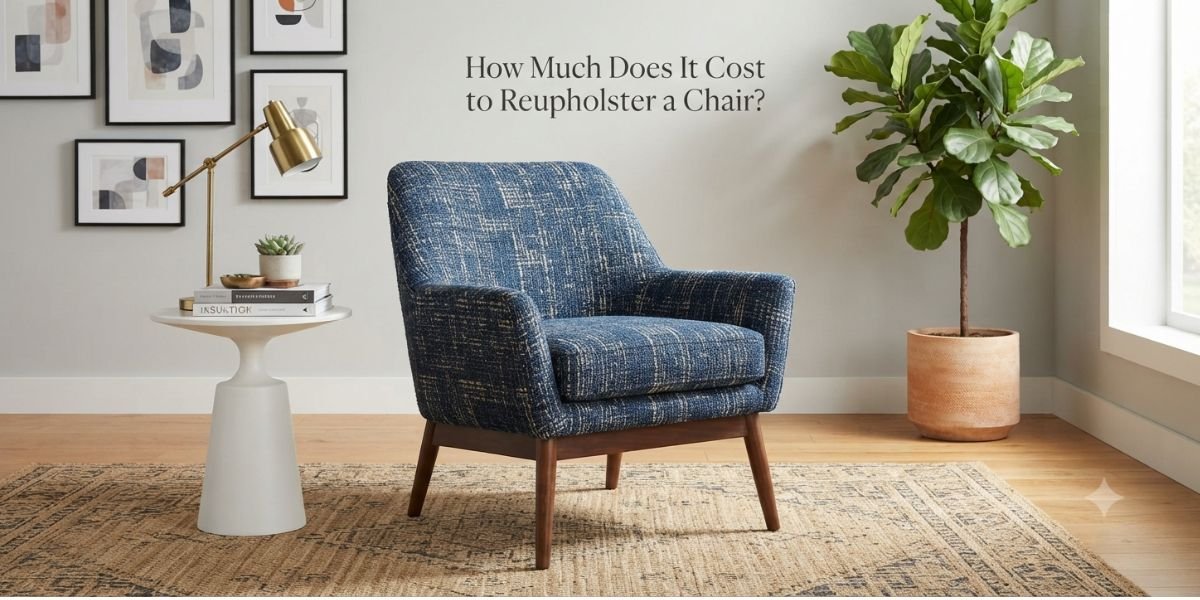
Replacing an old chair isn’t always the smartest option. In many cases, a well-built chair with a solid frame can be restored to look almost brand new through reupholstery. Whether it’s a treasured family heirloom, a comfortable armchair, or a dining chair that’s seen better days, reupholstering can give it a fresh appearance while extending its lifespan.
As someone who has worked on home renovation and furniture improvement projects for more than a decade, I’ve seen homeowners throw away quality furniture simply because the fabric looked worn. In reality, many older chairs are built with stronger hardwood frames than today’s budget furniture. A professional reupholstery job can often preserve that quality while allowing you to update the chair to match your home’s style.
In this guide, you’ll learn how much it costs to reupholster a chair, what factors influence the price, whether it’s worth the investment, and how to decide between DIY and professional upholstery services.
Planning a complete living room refresh? Read our guide on Small Living Room Ideas That Make Any Space Look Bigger to discover furniture layout tips that help you make the most of your space.
Quick Answer
The average cost to reupholster a chair ranges from $150 to $800, depending on the chair type, fabric choice, labour rates, and whether repairs are needed. Dining chairs are usually the most affordable, while wingback chairs, recliners, and antique furniture cost more because they require additional materials and skilled craftsmanship.
Average Cost to Reupholster a Chair
The final price depends on several factors, but the table below gives a realistic estimate for common chair types.
| Chair Type | Average Cost (USD) |
|---|---|
| Dining Chair | $75–$250 |
| Office Chair | $100–$300 |
| Accent Chair | $250–$500 |
| Armchair | $300–$700 |
| Recliner | $400–$900 |
| Wingback Chair | $500–$1,000+ |
| Antique Chair | $600–$1,500+ |
These estimates usually include labour but may not include premium fabrics or major structural repairs.
Why Reupholster Instead of Buying a New Chair?
Many people assume replacing furniture is cheaper than repairing it. However, that’s not always true.
If your chair has a solid hardwood frame and remains structurally sound, reupholstery can be a cost-effective way to extend its life. It also allows you to customise the fabric, colour, and finish so the chair matches your current décor.If you’re planning to update multiple pieces of furniture, Better Homes & Gardens offers practical advice on choosing fabrics, colours, and decorating styles that work together throughout your home.
Reupholstering is often worth considering if:
- The frame is made from solid wood.
- The chair has sentimental or antique value.
- You want a custom fabric that’s difficult to find on new furniture.
- The chair is comfortable and fits your space perfectly.
On the other hand, if the frame is damaged beyond repair or built from low-quality materials, replacing the chair may be the more economical choice.
What Affects the Cost of Chair Reupholstery?
No two upholstery projects are exactly the same. Several factors influence the final cost.
1. Chair Type
The size and complexity of the chair have the biggest impact on price.
A simple dining chair may take only a couple of hours to reupholster, while a wingback chair or recliner can require many hours of detailed work.
More cushions, curved arms, tufted backs, and decorative trim all increase labour time.
2. Fabric Choice
Fabric prices vary significantly.
Budget fabrics may cost $10–$20 per yard, while premium materials such as genuine leather, velvet, or designer textiles can exceed $100 per yard.
Choosing the right fabric isn’t just about appearance. Durability, stain resistance, and ease of cleaning are equally important, especially for chairs used every day.
Tip: If you’re considering leather upholstery, link naturally to your Leather Sectional Buying Guide to help readers understand the differences between leather types.
3. Labour Costs
Labour is often the largest part of the bill because upholstery requires precision and experience.
Professional upholsterers carefully remove the old fabric, inspect the frame, replace worn padding if necessary, fit the new material, and ensure every seam is properly finished.
Rates vary by region, so it’s worth requesting several quotes before making a decision.
4. Foam and Cushion Replacement
Sometimes the fabric isn’t the only problem.
If the foam has flattened or the cushions no longer provide proper support, replacing them can improve comfort but will increase the total project cost.
For chairs you use every day, replacing old foam is often money well spent.
5. Frame Repairs
During the upholstery process, damaged joints, loose legs, or cracked wooden frames may need repairing.
Although these repairs add to the overall cost, they also improve the chair’s safety and extend its lifespan.
Is Reupholstery Worth the Cost?
In many cases, yes.
From my experience, homeowners often regret replacing high-quality furniture with cheaper alternatives. Older chairs built with hardwood frames tend to be more durable than many mass-produced models available today.
If your chair has good bones, investing in professional upholstery can give you another decade or more of use while allowing you to personalise the fabric to suit your home’s interior.
However, if the chair is unstable, heavily damaged, or made from low-quality materials, replacing it may be the better long-term option.
DIY vs Professional Chair Reupholstery
One of the biggest questions homeowners ask is whether they should reupholster a chair themselves or hire a professional. The answer depends on the chair’s design, your budget, and your DIY experience.
Simple dining chairs with removable seats are often beginner-friendly projects. However, larger pieces such as recliners, wingback chairs, or antique furniture require specialised tools and advanced upholstery skills.
In my experience, DIY projects work best when the chair has a simple design and the frame is still in excellent condition. If you’re dealing with decorative stitching, tufting, or damaged springs, hiring a professional usually delivers a better result.
DIY Reupholstery
Pros
- Lower overall cost
- Great learning experience
- Complete control over fabric selection
- Flexible schedule
Cons
- Requires tools and materials
- Time-consuming
- Mistakes can become expensive
- Results may not look professional
Professional Reupholstery
Pros
- High-quality craftsmanship
- Better finish and durability
- Structural repairs included if needed
- Saves time
Cons
- Higher upfront cost
- Turnaround time may take several weeks
Chair Reupholstery Cost by Fabric Type
The fabric you choose can significantly affect the total cost of the project. Premium materials cost more, but they often last longer and improve the chair’s overall appearance.
| Fabric Type | Estimated Cost Per Yard |
|---|---|
| Cotton | $10–$30 |
| Polyester | $15–$40 |
| Linen | $20–$60 |
| Microfiber | $25–$50 |
| Velvet | $40–$100 |
| Genuine Leather | $80–$200+ |
| Faux Leather | $25–$70 |
For chairs that receive daily use, it’s worth investing in durable upholstery fabric with a high rub count. While cheaper fabrics reduce the initial cost, they may wear out more quickly.
How Long Does Chair Reupholstery Take?
The time required depends on the chair’s complexity and the upholsterer’s workload.
Typical turnaround times are:
- Dining chair: 1–3 days
- Accent chair: 3–7 days
- Armchair: 1–2 weeks
- Recliner: 2–3 weeks
- Wingback chair: 2–4 weeks
Custom fabrics or structural repairs can increase these estimates.
When Is Reupholstery Worth It?
Not every chair is worth restoring. Before spending money, consider the overall value of the furniture.
Reupholstery is usually a smart investment when:
- The chair has a solid hardwood frame.
- It has sentimental or antique value.
- The design is unique or difficult to replace.
- You want custom fabric that matches your décor.
- The chair is still comfortable and structurally sound.
Buying a new chair may be the better option if the frame is badly damaged, the joints are beyond repair, or the furniture was originally low quality.
Ways to Save Money on Chair Reupholstery
You don’t always need to choose the most expensive fabric or service to achieve excellent results.
Here are a few practical ways to reduce costs:
Choose Durable Mid-Range Fabrics
High-performance polyester blends and quality microfiber fabrics often provide excellent durability at a lower price than premium materials.
Reuse Existing Foam
If the seat cushions are still supportive, you may not need to replace the foam.
Compare Multiple Quotes
Labour rates vary between upholstery shops. Requesting several estimates can help you find the best balance between price and quality.
Supply Your Own Fabric
Some upholsterers allow customers to provide their own fabric, which can reduce the total project cost if you find a good deal.
Common Mistakes to Avoid
Many homeowners spend more than necessary because they overlook a few important details.
Choosing Fabric Based Only on Appearance
A beautiful fabric isn’t always the most practical. Consider durability, stain resistance, and ease of cleaning, especially if you have children or pets.
Ignoring the Frame
Fresh upholstery won’t solve structural problems. Always check the frame for loose joints, cracks, or damage before investing in new fabric.
Hiring the Cheapest Service
Very low prices can sometimes mean lower-quality materials or rushed workmanship. Instead of choosing the cheapest quote, compare experience, reviews, and examples of previous work.
Forgetting Long-Term Maintenance
Even the best upholstery needs regular care. Vacuuming fabric, cleaning spills promptly, and following the manufacturer’s care instructions will help extend the life of your chair.
Expert Tips from a Home Improvement Professional
After working on renovation and furniture improvement projects for many years, here are a few tips I always share with homeowners:
- Invest in quality materials if the chair has a strong hardwood frame.
- Ask to see fabric samples in natural daylight before making a final decision.
- Choose stain-resistant fabrics for busy family homes.
- Keep pets’ nails trimmed to reduce wear on upholstery.
- If you’re restoring antique furniture, work with an upholsterer who has experience handling vintage pieces.
A well-executed reupholstery project can completely transform an old chair while preserving its character and comfort.
Cost Comparison: Reupholster or Buy a New Chair?
One of the biggest decisions homeowners face is whether to restore an existing chair or replace it with a new one. While buying new furniture may seem easier, it’s not always the most cost-effective solution.
Here’s a simple comparison:
| Option | Average Cost | Best For |
|---|---|---|
| Reupholster a Dining Chair | $75–$250 | Quality chairs with solid frames |
| Reupholster an Armchair | $300–$700 | Comfortable, well-built furniture |
| Reupholster a Wingback Chair | $500–$1,000+ | Antique or premium furniture |
| Buy a Budget Chair | $100–$300 | Temporary or low-cost solutions |
| Buy a Premium Chair | $600–$2,000+ | Long-term investment |
If your existing chair has a sturdy hardwood frame and remains comfortable, reupholstery often provides better long-term value than replacing it with a lower-quality alternative.
Signs Your Chair Is Worth Reupholstering
Not every chair deserves a second life, but many do.
Your chair is a good candidate for reupholstery if:
- ✔️ The frame is solid hardwood.
- ✔️ The joints are stable.
- ✔️ The chair is comfortable.
- ✔️ It has sentimental or antique value.
- ✔️ Only the fabric or foam is worn.
- ✔️ You want a custom design that matches your décor.
If the frame is cracked beyond repair, heavily damaged by moisture, or made from low-quality materials, replacing the chair may be the smarter choice.
Final Thoughts
Reupholstering a chair is often about more than saving money. It allows you to preserve furniture that is well made, comfortable, or personally meaningful while giving it a completely new look.
From my experience working with homeowners, the best results come from restoring chairs with strong hardwood frames and choosing durable, high-quality upholstery materials. Although the upfront cost may seem significant, a professionally reupholstered chair can provide many more years of reliable use.
Before making your decision, compare the cost of restoration with the quality of a replacement chair. In many situations, investing in reupholstery offers better value, greater customisation, and a more sustainable approach to home improvement.
FAQs
Is it cheaper to reupholster a chair than buy a new one?
It depends on the chair. Reupholstering is often worth it for high-quality furniture with a solid frame, while replacing may be more economical for inexpensive, mass-produced chairs.
How much fabric is needed to reupholster a chair?
Most dining chairs require about 1–2 yards of fabric, while larger armchairs and wingback chairs may need 5–8 yards, depending on their size and design.
How long does reupholstery last?
A professionally reupholstered chair using quality materials can last 10–20 years with proper care.
Can I reupholster a chair myself?
Yes, simple chairs with removable seats are suitable for DIY projects. However, complex furniture such as recliners, tufted chairs, and antiques usually require professional upholstery skills.
Does leather upholstery cost more than fabric?
Yes. Genuine leather is generally more expensive than most upholstery fabrics, but it also offers excellent durability and can last for many years with proper maintenance.
Is reupholstery environmentally friendly?
In many cases, yes. Restoring existing furniture reduces waste and helps keep quality pieces out of landfill, making it a more sustainable option than replacing them.