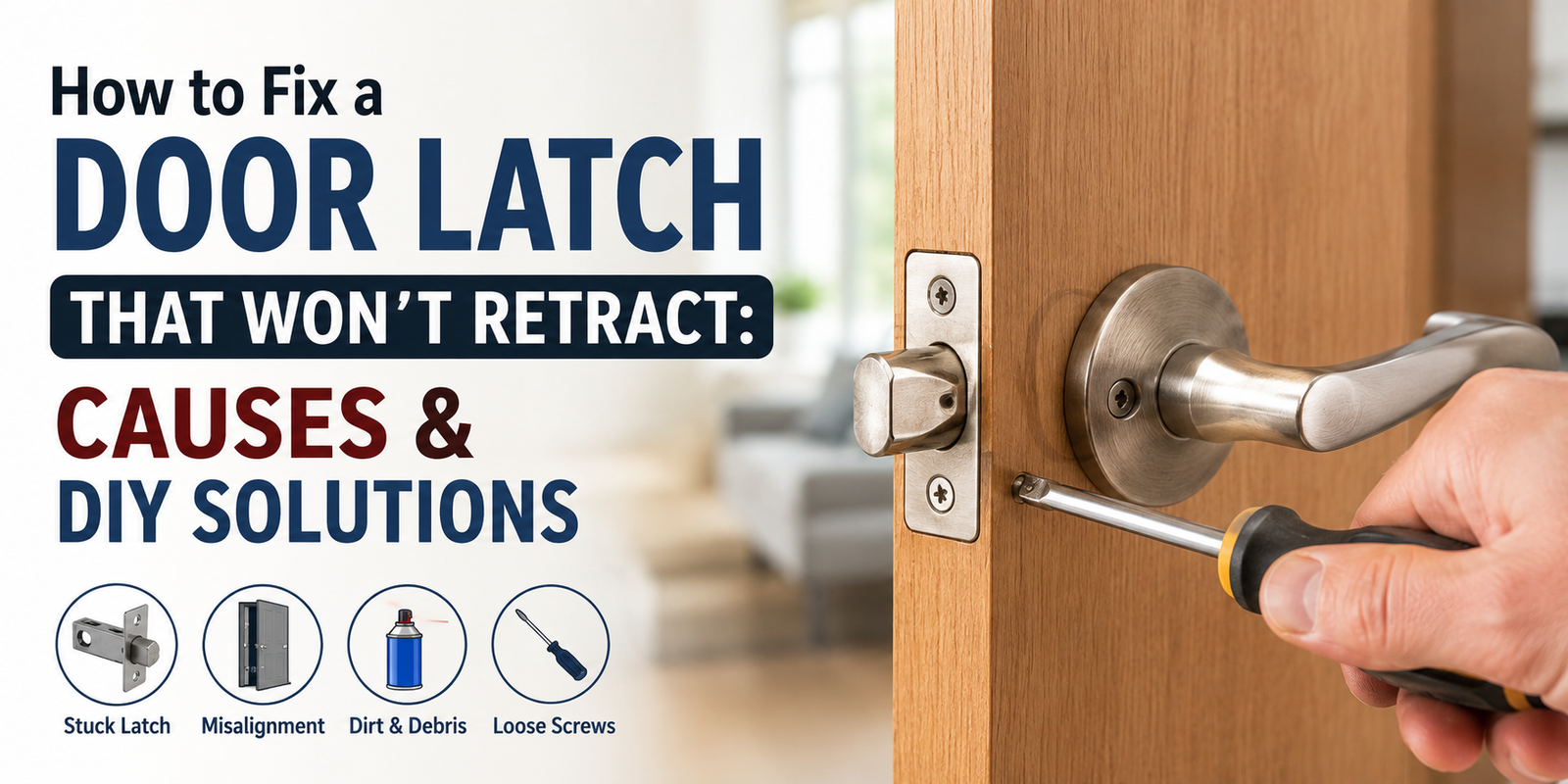
A door latch that won’t retract can turn a simple door problem into a frustrating one.
You turn the handle, but the latch barely moves. Sometimes it stays partly extended even after you release the handle. In other cases, the handle feels loose or stiff, and the door becomes difficult to open.
Before replacing the entire door handle, take a few minutes to find out what is actually causing the latch to stick.
A latch can stop retracting because of a loose handle, a dry or dirty mechanism, poor alignment, a damaged spring, or pressure from the strike plate. The right repair depends on which part is creating the problem.
Quick Answer
If a door latch won’t retract, start by operating the handle while the door is open. Watch whether the latch moves completely into the door edge.
If it works normally with the door open but binds when the door is closed, the problem is often related to the strike plate or door alignment.
If the latch remains stuck even with the door open, inspect the handle, spindle, latch mechanism, and spring.
Start with simple adjustments before replacing the hardware.
How a Door Latch Should Work
A standard door latch is designed to move in and out when you operate the handle or knob.
When you turn the handle, the spindle rotates the latch mechanism and pulls the latch back into the door.
When you release the handle, a spring normally pushes the latch back out.
That simple movement is what allows the door to close and latch securely.
If the latch doesn’t retract completely, something is interfering with that movement.
1. Test the Latch With the Door Open
This is the first test I recommend because it immediately separates two different problems.
Open the door completely and operate the handle several times.
Watch the latch on the edge of the door.
Does it:
- Move completely into the door?
- Move only halfway?
- Feel stiff?
- Stay partially extended?
- Move normally but slowly?
- Fail to move at all?
If the latch works perfectly while the door is open, the latch mechanism may be fine.
In that situation, the problem is more likely to involve the strike plate or the alignment between the door and frame.
If the latch still refuses to retract while the door is open, concentrate on the handle and latch mechanism instead.
2. Check the Door Handle
A loose or damaged handle can prevent the latch from moving properly.
Hold the handle and gently move it up and down.
There should not be excessive movement.
If the handle feels unusually loose, check the mounting screws.
Depending on the type of handle, there may also be a spindle connecting the two sides of the hardware.
If the handle is not turning the spindle correctly, the latch may not receive enough movement to retract completely.
Tighten loose hardware carefully and test the latch again.
Don’t overtighten the screws, especially if they are going directly into the door.
3. Inspect the Latch Face
Look at the metal face of the latch on the edge of the door.
Check whether it sits flat against the door.
Look for:
- Loose screws
- Bent metal
- Dirt around the latch
- Paint buildup
- Scratches or unusual wear
- A latch that appears crooked
If paint has built up around the latch face, it may interfere with the mechanism.
Remove only the material that is actually causing the problem.
Avoid forcing a stuck latch with a screwdriver unless you understand how the hardware is assembled.
4. Check Whether the Latch Works Better With the Door Open
This is one of the most useful troubleshooting tests.
Operate the handle with the door open.
Then close the door slowly and operate the handle again.
If the latch moves freely when the door is open but becomes difficult when the door is closed, the mechanism may be under pressure from the strike plate.
That means the latch itself may not be broken.
The door may simply be sitting slightly out of alignment.
Before replacing the latch, inspect the strike plate and hinges.
If the door has other alignment symptoms, our guide on How to Adjust Door Hinges can help you determine whether the hinges need attention.
5. Check the Strike Plate Alignment
The strike plate is the metal plate mounted to the door jamb where the latch enters when the door closes.
If the latch and strike plate aren’t aligned correctly, the latch can hit the edge of the opening instead of moving smoothly into it.
Close the door slowly and watch where the latch meets the strike plate.
If the latch is hitting above, below, or to one side of the opening, the strike plate may need adjustment.
A slightly loose strike plate can also shift enough to create resistance.
The Home Depot recommends checking the strike plate and latch alignment when a door doesn’t latch properly, including tightening loose screws and making small adjustments to the strike opening when necessary.
6. Tighten Loose Strike Plate Screws
Before moving the strike plate, check its screws.
A loose strike plate can move away from its original position.
Use the correct screwdriver and tighten the screws carefully.
Then close the door and test the latch.
If the latch now retracts and engages correctly, you may have solved the problem without replacing anything.
If a screw simply spins and won’t tighten, the wood around the screw hole may be damaged.
Don’t keep forcing the screw.
The hole may need a proper repair before the strike plate can be secured again.
7. Look for Door Alignment Problems
A latch problem can sometimes be a door problem in disguise.
If the door has sagged slightly, the latch may no longer line up with the strike plate.
Look at the gaps around the door.
Are they even?
Does the door appear lower on one side?
Does it rub against the frame?
If the door has several alignment symptoms, fix the underlying position before replacing the latch.
A new latch will not solve a door that is hanging incorrectly.
8. Check for Paint or Dirt Buildup
Small amounts of dirt can accumulate around moving hardware over time.
Paint is another common culprit.
If the door or latch has been painted several times, look carefully around the latch face and strike plate.
A thick layer of paint can reduce clearance and interfere with movement.
Clean away loose dirt and remove only problematic paint buildup.
Be careful not to damage the finish around the hardware.
9. Lubricate the Latch Mechanism
If the latch is clean and properly aligned but still feels stiff, lubrication may help.
Use a suitable lubricant intended for door hardware and apply a small amount to the moving parts.
Don’t flood the mechanism.
After applying the lubricant, operate the handle several times so the lubricant can work through the moving components.
Then wipe away any excess.
If the latch remains stiff after cleaning and lubrication, the internal mechanism may be worn or damaged.
10. Inspect the Spindle
The spindle is the part that transfers movement from the handle or knob to the latch mechanism.
If the handle turns but the latch barely moves, the spindle or its connection may be the problem.
With the door open, slowly turn the handle and watch the latch.
If there is a noticeable delay between handle movement and latch movement, inspect the connection.
A damaged or incorrectly fitted spindle can prevent the latch from retracting fully.
11. Look for a Damaged Internal Spring
Inside many standard latch mechanisms is a spring that helps return the latch after the handle is released.
If that spring becomes weak or damaged, the latch may stop returning properly.
You may notice:
- The handle feels unusually loose
- The latch moves slowly
- The latch stays partly inside the door
- The handle doesn’t return to its normal position
- The latch works inconsistently
At this point, replacing the latch mechanism may be more practical than trying to repair individual internal components.
What If the Door Latch Is Stuck Out?
If the latch is fully extended and won’t retract, don’t repeatedly force the handle.
First test the handle while the door is open.
If the latch still doesn’t move, the mechanism may be damaged or jammed.
If the latch works while the door is open but binds when the door is closed, return to the strike plate and alignment checks.
The difference between these two situations is important because they require completely different repairs.
What If the Door Won’t Close Because of the Latch?
If the latch is preventing the door from closing, check whether it is aligned with the strike plate.
A latch that hits the edge of the strike opening may prevent the door from sitting correctly in the frame.
If the door itself is rubbing against the frame as well, there may be an alignment problem behind both symptoms.
Our guide on How to Fix a Door That Won’t Close Properly covers the wider troubleshooting process, including hinges, door gaps, paint buildup, and strike plate alignment.
What If the Door Is Also Hard to Open?
A latch that won’t retract can obviously make a door difficult to open.
But if the door is difficult to open even after the latch retracts, there may be another issue.
Check whether the door is rubbing against the frame.
Also check the hinges and door gaps.
Our guide on How to Fix a Door That Is Hard to Open explains how to distinguish between latch problems, rubbing, swelling, paint buildup, and hinge alignment.
Don’t assume every difficult-to-open door has a bad latch.
When Should You Replace the Latch?
Replacement makes sense when the mechanism is clearly worn or damaged.
Consider replacing the latch if:
- The internal mechanism is broken
- The latch remains stuck after cleaning and lubrication
- The handle no longer controls the latch properly
- The return spring has failed
- The latch is badly worn
- The metal body is damaged
- The mechanism repeatedly jams
When replacing a latch, measure the existing hardware carefully.
The new latch needs to fit the door thickness, backset, faceplate, and existing handle or knob.
Common Mistakes to Avoid
Forcing the handle
If the latch is stuck, excessive force can damage the handle or spindle.
Moving the strike plate too much
Small alignment adjustments are usually better than moving the plate dramatically.
Replacing the latch immediately
A misaligned strike plate can create symptoms that look like a failed latch.
Using too much lubricant
More lubricant doesn’t necessarily mean smoother operation. Excess can collect dust and dirt.
Ignoring the hinges
A misaligned door can put pressure on the latch and make it appear faulty.
When to Call a Professional
A simple latch adjustment is normally a manageable DIY repair.
However, get professional help if:
- The door is an exterior security door.
- The lock or latch is part of a complex security system.
- The door cannot be opened safely.
- The frame is badly damaged.
- The latch mechanism is broken inside the door.
- Several doors suddenly develop similar problems.
- You suspect movement in the surrounding wall or frame.
If the door is protecting an exterior entrance, reliable operation is more important than experimenting with complicated repairs.
Quick Troubleshooting Table
| Problem | Possible cause | First check |
|---|---|---|
| Latch won’t retract with door open | Damaged latch or handle | Handle and latch |
| Latch works open but not closed | Alignment problem | Strike plate |
| Handle feels loose | Loose hardware | Handle screws |
| Latch moves slowly | Dirt, dryness or worn mechanism | Clean and lubricate |
| Latch hits strike plate | Misalignment | Strike plate position |
| Door rubs and latch won’t work | Door alignment | Hinges |
| Latch stays partly extended | Internal spring or mechanism | Latch replacement |
| Problem started after painting | Paint buildup | Latch and frame |
Final Thoughts
A door latch that won’t retract doesn’t always mean the latch needs to be replaced.
Start with the simplest test: open the door and operate the handle.
If the latch works normally, look at the strike plate and door alignment.
If it doesn’t work with the door open, inspect the handle, spindle, latch, and internal mechanism.
Work through the problem one step at a time instead of changing several things at once. That makes the repair easier to diagnose and reduces the chance of creating another problem.
For more practical door repair and home improvement guides, visit the IngeBIM Blog and explore the related Door Repair articles.