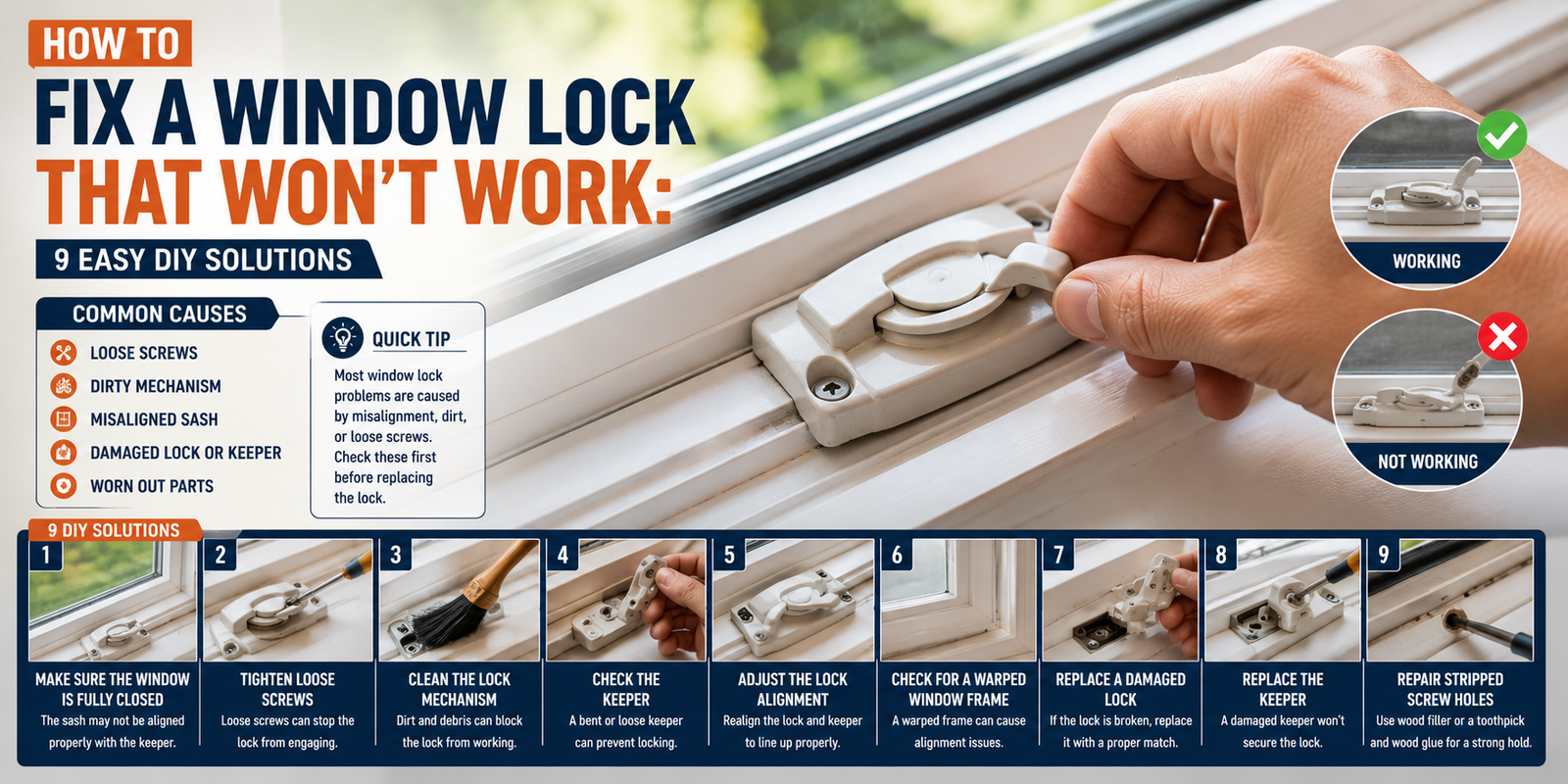
A window lock that won’t work can be frustrating and can leave you wondering whether the entire window needs to be replaced. In many cases, however, the problem is caused by a loose screw, misalignment, dirt, worn hardware, or a damaged lock or keeper.
Before replacing anything, it’s important to identify exactly why the lock isn’t engaging. A lock that won’t turn is a different problem from one that turns but doesn’t actually secure the window.
This guide explains the most common causes and practical DIY solutions for fixing a window lock that won’t work.
Quick Answer
If a window lock won’t work, first check whether the sash is fully closed and aligned. Then inspect the lock, keeper, screws, and surrounding frame for dirt, damage, or looseness.
Tighten loose screws, clean the mechanism, correct minor alignment problems, and replace a damaged lock or keeper when necessary.
For manufacturer-specific windows, always check the correct replacement hardware and installation instructions before removing the lock.
Why Won’t My Window Lock Work?
Several problems can prevent a window lock from working correctly.
Common causes include:
- Loose mounting screws
- Misaligned sash
- Dirty lock mechanism
- Bent keeper
- Damaged lock
- Worn hardware
- Broken internal mechanism
- Warped window frame
- Incorrect replacement hardware
- Window not fully closed
The first step is figuring out whether the problem is with the lock itself or the window’s alignment.
9 Ways to Fix a Window Lock That Won’t Work
1. Make Sure the Window Is Fully Closed
Before repairing the lock, check that the window is actually sitting in the correct closed position.
A sash that is slightly raised, tilted, or out of alignment may prevent the lock from engaging with the keeper.
Try closing the window gently and then operate the lock.
Don’t force the handle.
If the lock works when the sash is pushed into a particular position, alignment is probably the underlying issue.
If the window itself is difficult to close, our guide on How to Fix a Window That Won’t Close can help you diagnose that problem first.
2. Tighten Loose Lock Screws
Loose screws are one of the easiest problems to fix.
Inspect the screws holding the lock to the sash or frame.
If they are loose:
- Position the lock correctly.
- Tighten the screws carefully.
- Avoid overtightening.
- Test the lock.
If the screw holes are stripped, simply tightening the same screws may not provide a lasting repair.
In that case, the mounting area may need additional repair or compatible replacement hardware.
3. Clean the Lock Mechanism
Dirt and debris can interfere with moving parts.
Inspect the lock for:
- Dust
- Dirt
- Corrosion
- Paint
- Debris
- Old lubricant
Clean accessible surfaces carefully.
For moving hardware, use only a small amount of lubricant that is suitable for the specific mechanism.
Avoid flooding the lock with oil because excess lubricant can attract dust.
4. Check the Keeper
The keeper is the part that the window lock engages with when the window closes.
If the lock moves normally but doesn’t catch, inspect the keeper.
Look for:
- Bent metal
- Loose screws
- Cracks
- Corrosion
- Incorrect position
- Physical damage
A slightly shifted keeper can prevent the lock from engaging even when the lock itself is perfectly functional.
Andersen’s official replacement guidance treats the lock and keeper as related components and provides separate replacement instructions for both.
5. Adjust the Lock Alignment
If the lock and keeper don’t line up, the window may need a small alignment adjustment.
Close the window slowly and observe where the lock meets the keeper.
If the two components are offset, check whether the mounting screws allow minor repositioning.
Make only small adjustments.
Then close the window and test the lock again.
Don’t move the hardware significantly without checking the manufacturer’s instructions.
6. Check for a Warped Window Frame
Sometimes the lock isn’t the real problem.
A warped frame can change the position of the sash and prevent the lock from lining up.
Look for:
- Uneven gaps
- Swollen wood
- Cracks
- Rot
- Water stains
- Frame distortion
If the window has become difficult to close at the same time the lock stopped working, investigate the frame and sash alignment.
If you’re also dealing with a window that is difficult to operate, see our guide on How to Fix a Window That Is Hard to Open.
7. Replace a Damaged Lock
If the lock is cracked, broken, badly corroded, or its internal mechanism no longer works, replacement may be the best solution.
Before buying a replacement:
- Identify the window type.
- Check the manufacturer.
- Measure the existing lock.
- Compare screw-hole spacing.
- Check the lock style.
- Make sure the replacement matches the window.
Don’t assume that two locks that look similar are interchangeable.
Andersen notes that lock and keeper styles can vary between window series, which is why identifying the correct window and hardware is important.
8. Replace the Keeper
Sometimes the lock works perfectly but the keeper is damaged.
A broken or badly bent keeper can prevent the lock from catching.
Remove the old keeper carefully and install the compatible replacement.
Before tightening the screws completely, check the alignment between the lock and keeper.
Once everything lines up correctly, secure the hardware and test the window.
9. Repair Stripped Mounting Holes
If the lock keeps becoming loose because the screws no longer grip the frame, the mounting holes may be damaged.
This is especially common in older wooden windows.
Depending on the extent of the damage, the mounting area may need to be repaired before reinstalling the lock.
Don’t simply force larger screws into the frame without checking whether the replacement hardware and surrounding material can safely support them.
How to Fix a Window Lock That Turns but Doesn’t Catch
If the lock handle turns normally but doesn’t actually secure the window, focus on the keeper and alignment.
Check:
- Is the sash completely closed?
- Does the lock line up with the keeper?
- Is the keeper loose?
- Is the keeper bent?
- Is the sash sitting unevenly?
- Is the lock mechanism damaged?
If the lock and keeper are correctly aligned but the lock still doesn’t catch, the internal mechanism may be worn or broken.
How to Fix a Window Lock That Won’t Turn
If the lock itself won’t turn, don’t immediately apply force.
First check whether:
- The window is fully closed.
- Dirt is blocking the mechanism.
- Paint has built up around the hardware.
- The lock is corroded.
- The sash is putting pressure on the lock.
Clean accessible areas and check the alignment.
If the mechanism remains completely seized, replacement may be safer than forcing it.
What If the Window Lock Is Loose?
A loose lock usually points to loose screws or damaged mounting material.
Start by tightening the screws.
If they won’t tighten properly, inspect the screw holes.
For wooden frames, damaged or stripped material around the screw holes may need repair before the lock can be securely reinstalled.
How to Replace a Window Lock
Replacing a basic sash lock can be a manageable DIY project when the replacement part matches the existing window.
Step 1: Identify the Replacement
Before removing anything, make sure you have the correct replacement lock.
Step 2: Open the Window
Open the sash enough to access the lock safely.
Step 3: Remove the Old Lock
Remove the mounting screws with the appropriate screwdriver.
Keep the screws if the manufacturer recommends reusing them.
Step 4: Position the New Lock
Place the replacement lock in the correct position.
Make sure it lines up with the existing screw holes and keeper.
Step 5: Install the Screws
Start both screws before fully tightening either one.
This gives you an opportunity to make small alignment corrections.
Step 6: Test the Lock
Close the window slowly.
Engage the lock and make sure it catches securely.
Andersen’s manufacturer instructions similarly emphasize supporting the sash when necessary and checking that the lock/keeper installation is correctly engaged.
Window Lock vs. Window Handle: What’s the Difference?
These components aren’t always the same.
A window lock secures the sash.
A window handle may operate the window, particularly on casement or uPVC-style windows.
Some modern window systems combine operating and locking functions into one mechanism.
That’s why identifying your window type before ordering replacement hardware is important.
How to Prevent Window Lock Problems
Regular maintenance can extend the life of window hardware.
Every few months:
- Check lock screws.
- Inspect the keeper.
- Clean visible hardware.
- Look for corrosion.
- Test the lock.
- Check sash alignment.
- Inspect the frame for moisture damage.
- Avoid forcing stiff hardware.
If the surrounding window is difficult to operate, address that issue before repeatedly adjusting the lock.
Common Mistakes to Avoid
Don’t Force the Lock
If it doesn’t engage, forcing the handle can damage the mechanism.
Don’t Buy a Random Replacement
Window locks aren’t universally interchangeable.
Match the replacement to the window.
Don’t Overtighten Screws
Excessive tightening can damage the frame or strip the screw holes.
Don’t Ignore Alignment
A perfectly good lock won’t work properly if the sash and keeper don’t line up.
Don’t Ignore Water Damage
A swollen or warped frame can cause repeated lock problems.
When Should You Call a Professional?
Professional help may be appropriate if:
- The frame is severely warped.
- The wood is rotten.
- The lock mechanism is inside a complicated multi-point system.
- The window cannot be safely opened.
- Glass is damaged.
- Major hardware has failed.
- The lock repeatedly goes out of alignment.
- You cannot identify the correct replacement part.
For complicated uPVC or multi-point locking systems, forcing the mechanism can cause more expensive damage.
Contractor’s Tip
When a window lock stops working, don’t replace the lock before checking the keeper and alignment.
I’ve seen many cases where the lock itself was perfectly fine but the sash had shifted slightly.
A few minutes spent checking alignment can save you from buying unnecessary hardware.
Final Thoughts
A window lock that won’t work doesn’t necessarily mean the window needs replacing.
Start with the basics: make sure the window is fully closed, inspect the lock and keeper, tighten loose screws, clean the mechanism, and check the sash alignment.
If the lock or keeper is physically damaged, replace it with the correct compatible hardware.
And remember that window hardware varies between manufacturers and window series, so always identify the correct part before starting a replacement.
FAQs
Why won’t my window lock catch?
The most common causes are sash misalignment, a shifted keeper, loose screws, or a damaged lock.
Why does my window lock turn but not lock?
The lock may not be reaching the keeper correctly, or the internal locking mechanism may be worn or damaged.
Can I fix a loose window lock myself?
Yes. If the problem is simply loose mounting screws, tightening them may solve it. Damaged mounting holes or hardware may require additional repair.
Should I replace the lock or keeper?
Inspect both first. If the lock works but doesn’t catch, the keeper or alignment may be the problem. If the lock mechanism itself is damaged, replacement may be necessary.
Can a warped frame stop a window from locking?
Yes. A warped or swollen frame can move the sash out of alignment and prevent the lock from engaging.
Are window locks universal?
No. Window locks vary by window style, manufacturer, model, and hardware design. Always match the replacement carefully.
How do I know which window lock to buy?
Check the manufacturer, window model, lock style, dimensions, screw-hole spacing, and keeper design before purchasing a replacement.
Can I lubricate a window lock?
Some mechanisms can benefit from suitable lubrication, but use only a small amount of product appropriate for the hardware.