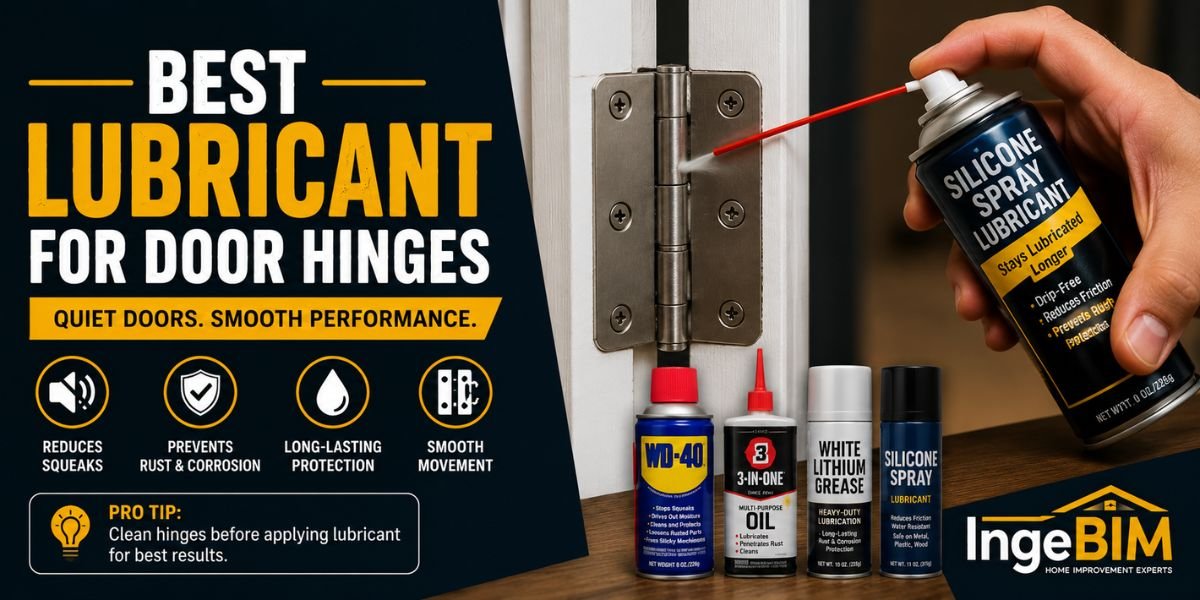
Introduction
Squeaky or stiff door hinges are one of the most common household problems, but they’re also one of the easiest to fix. Choosing the right lubricant can eliminate annoying noises, reduce wear, and help your doors open and close smoothly for years.
However, not all lubricants are created equal. Some attract dust and dirt, while others are designed specifically for metal components and long-term protection. Using the wrong product may solve the squeak temporarily but create bigger maintenance problems later.
In this guide, you’ll learn which lubricants work best for different types of door hinges, how to apply them correctly, and which products to avoid.
If your hinges are already making noise, start with our How to Stop Doors From Squeaking guide before applying lubricant to identify the root cause of the problem.
Quick Answer
The best lubricant for door hinges depends on the application. Silicone spray is ideal for most interior and exterior doors because it reduces friction without attracting dirt. Graphite lubricant works well for lock mechanisms, while white lithium grease provides long-lasting protection for heavy-duty or frequently used doors.
Why Door Hinges Need Lubrication
Every time you open or close a door, the hinge pin and hinge barrel create friction.
Without lubrication, this friction can lead to:
- Squeaking noises
- Rust formation
- Stiff movement
- Premature hinge wear
- Increased stress on the door frame
- Difficulty opening and closing the door
Routine lubrication helps extend the life of both the hinges and the door itself.
If your hinges are properly lubricated but the door still rubs against the frame, alignment may be the real issue. Our How to Adjust Door Hinges guide explains how to correct common hinge alignment problems before replacing any hardware.
Types of Door Hinge Lubricants
Understanding the different lubricant types will help you choose the right product for your needs.
1. Silicone Spray
Best For
- Interior doors
- Exterior doors
- Garage doors
- General household maintenance
Pros
- Doesn’t attract dust
- Water-resistant
- Easy to apply
- Long-lasting
- Safe for most metal surfaces
Cons
- Needs periodic reapplication
2. White Lithium Grease
Best For
- Heavy exterior doors
- Commercial doors
- High-traffic areas
Pros
- Excellent long-term protection
- Handles heavy loads
- Reduces metal-on-metal wear
Cons
- Can collect dust if overapplied
3. Graphite Lubricant
Best For
- Door locks
- Lock cylinders
- Fine mechanical components
Pros
- Dry formula
- Doesn’t attract dirt
- Excellent for locks
Cons
- Not ideal as the primary lubricant for standard door hinges
4. PTFE (Teflon) Dry Lubricant
Best For
- Precision hinges
- Humid environments
- Outdoor applications
Pros
- Clean finish
- Low friction
- Dirt-resistant
Cons
- Usually costs more than silicone spray
Lubricants to Avoid
Avoid using these products on door hinges:
- Cooking oil
- Vegetable oil
- Butter or household oils
- Motor oil
- Petroleum jelly
These products may provide temporary relief but attract dust, harden over time, and can damage the hinges.
If your hinges remain noisy even after using the correct lubricant, worn hinge components may be the cause. Our How to Replace Door Hinges guide explains when replacement is a better solution than repeated lubrication.
Tools You’ll Need
- Silicone spray or other suitable lubricant
- Clean microfiber cloth
- Paper towels
- Small brush
- Screwdriver
- Safety gloves (optional)
Having these tools ready will make the maintenance process quick and mess-free.
Step 1: Clean the Hinges
Before applying lubricant, remove dirt and old residue from the hinges.
- Wipe the hinge with a clean cloth.
- Remove dust and debris with a soft brush.
- Dry the hinge completely.
- Inspect for rust or visible damage.
A clean surface allows the lubricant to penetrate more effectively.
Step 2: Apply the Lubricant Correctly
Using the right technique is just as important as choosing the right lubricant.
Follow These Steps
- Shake the lubricant if required.
- Spray or apply a small amount directly onto the hinge pin.
- Open and close the door 10–15 times.
- Allow the lubricant to spread evenly.
- Wipe away any excess with a clean microfiber cloth.
Avoid overapplying the lubricant, as excess product can attract dust and dirt over time.
Step 3: Remove the Hinge Pin (If Necessary)
If the hinge is heavily rusted or continues to squeak, removing the hinge pin allows for a deeper cleaning.
Here’s How
- Close the door to keep it stable.
- Place a nail or punch beneath the hinge pin.
- Gently tap the pin upward with a hammer.
- Pull the pin out carefully.
- Clean the pin using a cloth.
- Apply lubricant to the entire pin.
- Reinsert the pin and test the door.
Only remove one hinge pin at a time to keep the door properly supported.
If your lock also feels stiff while maintaining the hinges, it’s a good idea to service both at the same time. Our How to Fix a Door Lock guide explains how to clean, lubricate, and troubleshoot common lock problems.
Step 4: Test the Door
After lubricating the hinges, open and close the door several times.
Check that:
- The squeaking has stopped.
- The door moves smoothly.
- The hinges operate quietly.
- There is no excess lubricant dripping from the hinges.
- The door opens and closes without resistance.
If the noise remains, inspect the hinges for wear or damage.
How Often Should You Lubricate Door Hinges?
Most residential doors only need lubrication once or twice a year.
However, lubricate more frequently if:
- The door is exposed to rain or humidity.
- The door is used many times each day.
- You notice squeaking or stiffness.
- The hinges show early signs of rust.
Regular maintenance helps prevent expensive repairs later.
Common Lubrication Mistakes
Avoid these common mistakes:
- Applying too much lubricant.
- Using cooking oil or household oils.
- Ignoring rust before lubricating.
- Forgetting to wipe away excess product.
- Lubricating damaged hinges instead of replacing them.
- Skipping routine maintenance.
Proper application provides better long-term results than excessive lubrication.
Expert Maintenance Tips
To keep your door hinges in excellent condition:
- Clean hinges before every application.
- Tighten loose hinge screws during inspections.
- Check for rust every six months.
- Replace bent or damaged hinges promptly.
- Store lubricant in a cool, dry place.
A few minutes of maintenance each year can significantly extend the life of your door hardware.
If your door still sticks or rubs against the frame after lubricating the hinges, the problem may be related to alignment rather than friction. Our How to Fix a Door That Sticks guide explains how to identify and repair the underlying cause.
Following the manufacturer’s maintenance recommendations helps keep hinges working smoothly for longer. WD-40 Specialist provides practical guidance on proper lubrication techniques, reducing friction, and protecting metal components from corrosion.
Pro Tip
If your door hinges begin squeaking again only a few days after lubrication, don’t keep adding more lubricant. Persistent noise often indicates worn hinge pins, bent hinges, or alignment problems that should be repaired instead of repeatedly lubricated.
Final Thoughts
Choosing the best lubricant for your door hinges can eliminate squeaks, reduce wear, and keep your doors operating smoothly throughout the year. For most homeowners, a quality silicone spray offers the best balance of performance, cleanliness, and ease of use. However, the right choice depends on your door type, environment, and maintenance needs.
By cleaning your hinges regularly, applying lubricant correctly, and replacing worn hardware when necessary, you can extend the life of your doors and avoid more expensive repairs in the future.
FAQs
What is the best lubricant for door hinges?
For most residential interior and exterior doors, silicone spray is the best choice because it reduces friction, resists moisture, and doesn’t attract dust. White lithium grease is better for heavy-duty hinges, while graphite lubricant is mainly recommended for locks rather than hinges.
Can I use WD-40 on door hinges?
Standard WD-40 can help loosen rusted hinges and remove moisture, but it isn’t designed as a long-term lubricant. For lasting results, use a dedicated silicone spray, PTFE dry lubricant, or white lithium grease after cleaning the hinge.
How often should I lubricate door hinges?
Most household doors only need lubrication once or twice a year. Doors exposed to heavy use, humidity, or outdoor weather may require more frequent maintenance.
Why do my door hinges still squeak after lubrication?
Persistent squeaking may indicate bent hinges, worn hinge pins, loose screws, or poor door alignment. In these cases, repairing or replacing the hardware is usually more effective than applying additional lubricant.
Can too much lubricant damage door hinges?
Excess lubricant won’t usually damage the hinge itself, but it can attract dirt and dust, creating buildup that affects long-term performance. Apply only a light, even coat and wipe away any excess.
When Should You Replace Instead of Lubricate?
If your hinges no longer sit securely because of movement in the surrounding wood, repairing the frame should come before installing new hardware. Our How to Repair a Door Frame guide explains how to restore a solid mounting surface for long-lasting results.
Lubrication is effective for routine maintenance, but replacement is often the better solution if you notice:
- Bent hinge leaves
- Cracked hinges
- Excessive rust or corrosion
- Worn hinge pins
- Loose hinges that no longer tighten securely
- Visible structural damage
Replacing worn hardware provides a safer and more reliable long-term repair.