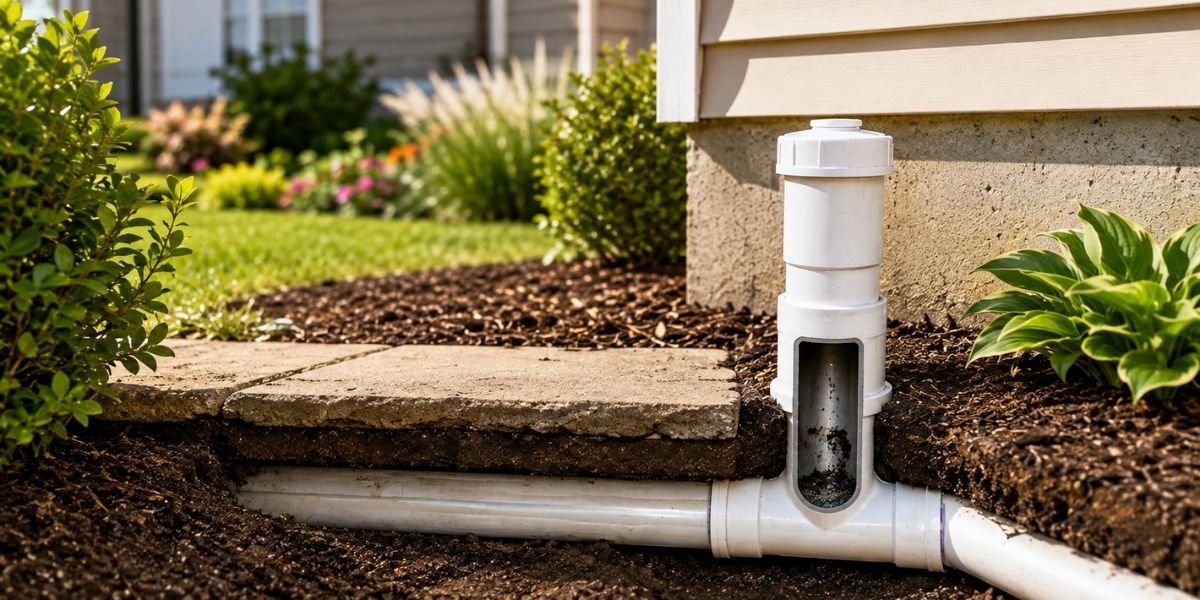
A drain cleanout is an accessible opening in a home’s drainage or sewer piping that allows you to inspect, clean, and clear clogged pipes. It is usually covered with a removable cap or plug and is designed to give plumbers direct access to the drain line without removing toilets, sinks, or other plumbing fixtures.
If a drain becomes seriously blocked, a cleanout can make the problem much easier to diagnose and fix. Instead of feeding a drain-cleaning cable through a sink or toilet, a plumber can often access the main drainage pipe directly through the cleanout.
In this guide, we’ll explain what a drain cleanout is, how it works, where you may find one, and when you should call a professional.
What Is a Drain Cleanout?
A drain cleanout is a specially designed access point installed along a drainage pipe. It normally consists of a short section of pipe with a threaded cap or removable plug.
The cleanout provides access to the inside of the drainage system when a blockage, buildup, or other plumbing problem needs to be investigated.
Cleanouts can be installed on:
- Main sewer lines
- Branch drain lines
- Basement drainage systems
- Exterior sewer pipes
- Long horizontal drain runs
- Areas where the plumbing system changes direction
The exact location and number of cleanouts depend on the home’s plumbing layout and local building requirements.
What Does a Drain Cleanout Do?
The main purpose of a cleanout is to provide easier access to a drain pipe.
When a blockage develops deep inside a drainage system, accessing the pipe through a cleanout can make the cleaning process more direct.
A plumber may use the opening to:
- Insert a drain-cleaning cable
- Use a sewer auger
- Inspect the inside of the pipe
- Remove accumulated debris
- Locate a blockage
- Flush or clean the drainage line
- Perform certain sewer-line inspections
This access can save time because the plumber may not need to remove a plumbing fixture just to reach the affected section of pipe.
Where Is a Drain Cleanout Located?
Finding a drain cleanout can sometimes be difficult because it is not always located in an obvious place.
Depending on the plumbing design, you may find one:
Inside the Home
Indoor cleanouts can be located in:
- Basements
- Utility rooms
- Crawl spaces
- Garages
- Mechanical rooms
- Near major drain lines
Some indoor cleanouts are positioned close to the floor and may look like a small capped pipe coming out of the wall or floor.
Outside the Home
Exterior cleanouts are often installed near the foundation or along the route between the house and the municipal sewer connection.
They may be covered by soil, landscaping, or a small access box, especially on older properties.
If you’re unsure whether a capped pipe is a cleanout, don’t force it open. A professional can identify the fitting and determine whether it is safe to access.
What Does a Drain Cleanout Look Like?
Most residential drain cleanouts are relatively simple.
You may see a section of PVC, ABS, cast iron, or another type of drainage pipe with a removable cap or plug.
The cap may have:
- A square or hexagonal head
- A threaded fitting
- A raised plug
- A flat removable cover
Exterior cleanouts may be larger and can sometimes resemble a small circular or rectangular access cover.
The appearance varies depending on the age of the plumbing system and the materials used.
Drain Cleanout vs. Sewer Cleanout
The terms drain cleanout and sewer cleanout are sometimes used interchangeably, but they can refer to different parts of a plumbing system.
A drain cleanout generally provides access to a drain or branch line inside or around the property.
A sewer cleanout usually provides access to the main sewer line carrying wastewater away from the home.
For example, a bathroom branch drain may have its own cleanout, while the home’s main sewer line may have a larger exterior cleanout.
The exact terminology can vary by location and plumbing system.
Why Are Drain Cleanouts Important?
A cleanout may not seem important when everything is working normally. Its value becomes obvious when a major blockage occurs.
Without a convenient access point, a plumber may have to work through a sink drain, floor drain, toilet opening, or another fixture.
A properly positioned cleanout can provide a much more direct route into the drainage pipe.
This is especially useful for main-line blockages, where the obstruction may be located well beyond the reach of a typical household drain cleaner.
Signs You May Need to Use a Drain Cleanout
A clogged sink does not necessarily mean that the main drain or sewer line is blocked. However, certain symptoms can indicate a larger drainage problem.
Watch for:
- Several drains becoming slow at the same time
- Toilets backing up unexpectedly
- Water backing up through a floor drain
- Gurgling sounds from multiple fixtures
- Wastewater returning through a basement drain
- Persistent sewage odors
- Repeated drain blockages
When multiple fixtures are affected at once, the problem may be farther down the drainage system rather than inside one individual fixture.
Can You Open a Drain Cleanout Yourself?
A homeowner may be able to identify a cleanout, but opening one requires caution.
If the drainage line is heavily blocked, wastewater may be trapped behind the cleanout cap. Removing the cap could allow dirty water or sewage to escape unexpectedly.
There can also be situations where the plug is stuck, damaged, corroded, or under pressure.
For these reasons, don’t force a cleanout cap open if you’re unsure what is inside the pipe.
If several drains are backing up or you suspect a main sewer blockage, calling a qualified plumber is usually the safer option.
How Plumbers Use a Drain Cleanout
When a plumber identifies a blockage, the cleanout can provide direct access to the affected drainage line.
A typical process may include:
- Identifying the appropriate cleanout.
- Checking the surrounding area for signs of leakage.
- Carefully removing the access cap.
- Inspecting the condition of the pipe and wastewater level.
- Feeding suitable drain-cleaning equipment into the line.
- Clearing the obstruction.
- Checking whether water flows normally again.
- Replacing the cleanout cap securely.
The exact method depends on the location and severity of the blockage.
For difficult or recurring sewer problems, a plumber may also use a drain camera to inspect the pipe for cracks, roots, collapsed sections, or heavy buildup.
How to Keep a Drain Cleanout Accessible
One of the easiest ways to make future plumbing repairs easier is to keep the cleanout accessible.
Avoid permanently covering it with:
- Concrete
- Soil
- Permanent flooring
- Heavy structures
- Landscaping features
- Stored materials
If an exterior cleanout is located in a landscaped area, make sure you can still identify and reach it when necessary.
A cleanout is only useful if a plumber can actually access it.
Common Drain Cleanout Problems
The cleanout itself can sometimes develop problems.
Damaged Cap
A cracked or damaged cap can allow water, odors, or debris to escape.
Stuck Plug
Older metal plugs can become difficult to remove because of corrosion or years of exposure.
Leaking Around the Fitting
Water around the cleanout may indicate a damaged seal, loose connection, or drainage problem.
Buried Cleanout
Exterior cleanouts can become hidden under soil, mulch, or landscaping.
Missing Cap
A missing cap leaves the drainage system vulnerable to dirt and debris and should be addressed promptly.
Does Every House Have a Drain Cleanout?
Not necessarily.
The plumbing layout, age of the property, local requirements, and construction methods all influence whether and where cleanouts are installed.
Newer homes are generally designed with plumbing access points according to applicable building and plumbing requirements, while older homes may have fewer accessible cleanouts.
If you cannot find one, a plumber can inspect the drainage layout and help identify the available access points.
When Should You Call a Plumber?
A professional plumber should be considered when:
- Multiple drains are backing up.
- Sewage is coming into the home.
- A main drain appears to be blocked.
- The cleanout cap will not come off.
- The cleanout is leaking.
- A blockage keeps returning.
- You suspect a damaged or collapsed sewer pipe.
Repeated blockages can sometimes indicate a deeper problem such as tree-root intrusion, pipe damage, heavy buildup, or an incorrectly installed drainage system.
Trying to repeatedly clear the symptoms without identifying the underlying cause may only provide a temporary solution.
Final Thoughts
A drain cleanout is an important access point in a home’s drainage system. It allows plumbers to reach drain and sewer pipes more directly when they need to inspect or clear a blockage.
Knowing what a cleanout looks like and where it may be located can save valuable time when a serious drainage problem occurs. However, homeowners should be cautious when opening a cleanout, particularly when wastewater may be trapped inside the pipe.
If several drains are backing up or you suspect a main sewer problem, professional inspection is the safest approach. Keeping your cleanout accessible can also make future maintenance and repairs much easier.