Introduction
Choosing the right door isn’t just about appearance. Whether you’re renovating your home or replacing an old door, understanding the difference between interior and exterior doors helps you make a smarter investment.
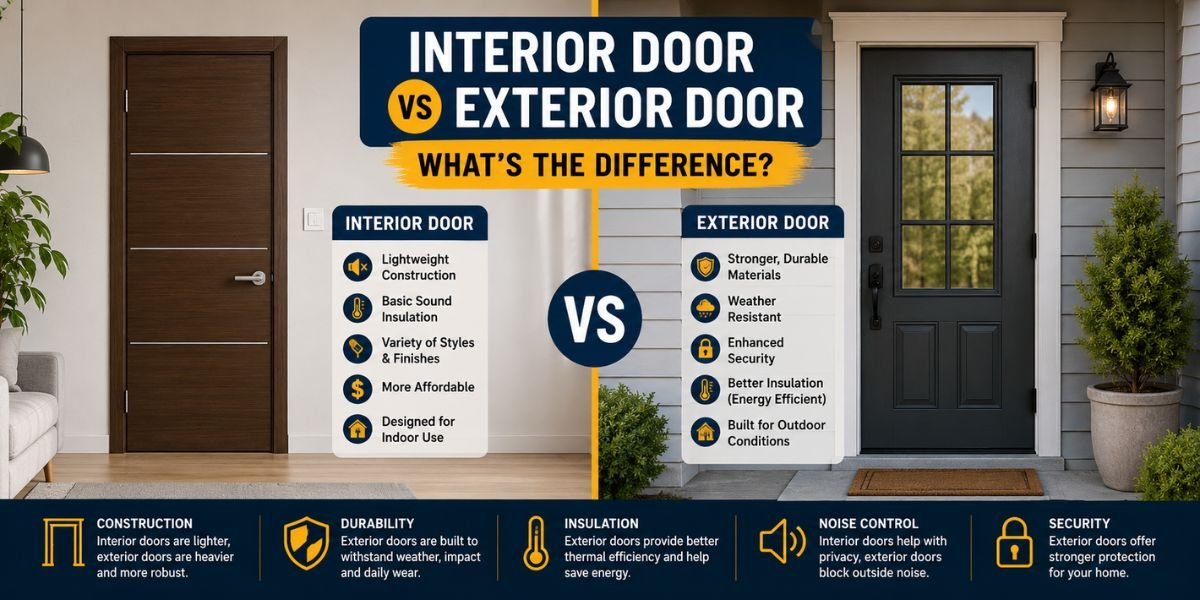
Although both types may look similar at first glance, they’re designed for completely different purposes. Interior doors prioritize privacy, style, and room separation, while exterior doors are built to withstand weather, improve security, and reduce energy loss.
In this guide, we’ll compare interior and exterior doors side by side, explain their materials, costs, insulation, maintenance requirements, and help you decide which option is right for your project.
If you’re planning to install a completely new door instead of replacing only the slab, our How to Install a Prehung Door guide explains the entire installation process from start to finish.
Quick Answer
The main difference between an interior and exterior door is their construction and purpose. Interior doors are lighter and designed for privacy inside the home, while exterior doors are thicker, insulated, weather-resistant, and built to provide security and energy efficiency.
Interior Doors Explained
Interior doors separate rooms inside the home.
They’re commonly used for:
- Bedrooms
- Bathrooms
- Closets
- Laundry rooms
- Home offices
Because they aren’t exposed to outdoor weather, interior doors are usually lighter and less expensive.
Exterior Doors Explained
Exterior doors serve as the main barrier between your home and the outside environment.
They’re designed to provide:
- Better insulation
- Stronger security
- Weather protection
- Noise reduction
- Improved energy efficiency
Exterior doors are generally heavier because they contain stronger cores and insulating materials.
If you’re installing a new exterior door, sealing it correctly is just as important as choosing the right material. Our How to Weatherproof a Door guide explains how to reduce drafts, improve insulation, and protect your home from moisture.
Key Differences at a Glance
| Feature | Interior Door | Exterior Door |
|---|---|---|
| Purpose | Privacy | Security & Weather Protection |
| Weight | Lightweight | Heavy |
| Insulation | Minimal | High |
| Security | Low | High |
| Weather Resistance | No | Yes |
| Cost | Lower | Higher |
Common Materials
Interior Doors
- Hollow-core wood
- Solid-core MDF
- Solid wood
- Glass panel doors
Exterior Doors
- Fiberglass
- Steel
- Solid wood
- Composite materials
Each material offers different benefits depending on your budget, climate, and maintenance preferences.
No matter which type of door you choose, a damaged frame can affect performance and longevity. Before installing a replacement, read our How to Repair a Door Frame guide to ensure the new door has a solid, secure foundation.
Which Door Is More Energy Efficient?
Exterior doors are specifically designed to reduce heat transfer.
Many include:
- Foam insulation
- Weatherstripping
- Thermal breaks
- Multi-layer construction
Interior doors generally don’t include insulation because they’re intended only to separate indoor spaces.
Security Comparison
One of the biggest differences between interior and exterior doors is the level of security they provide.
Interior Doors
Interior doors are designed primarily for privacy rather than protection. Most use lightweight materials and simple latch mechanisms that are suitable for bedrooms, bathrooms, and closets.
Exterior Doors
Exterior doors are built with stronger cores, reinforced frames, and high-quality locking systems to help protect your home against forced entry and harsh weather conditions.
For maximum security, pair an exterior door with a quality deadbolt and durable strike plate.
Even the strongest exterior door won’t provide reliable security if the lock isn’t working correctly. Our How to Fix a Door Lock guide explains how to troubleshoot common lock problems before replacing the entire hardware.
Cost Comparison
The price difference between interior and exterior doors can be significant.
| Door Type | Average Cost |
|---|---|
| Hollow-Core Interior Door | $50–$150 |
| Solid-Core Interior Door | $150–$350 |
| Fiberglass Exterior Door | $300–$1,000 |
| Steel Exterior Door | $250–$900 |
| Solid Wood Exterior Door | $500–$2,000+ |
Installation costs vary depending on the door size, frame condition, and labor rates in your area.
Maintenance Requirements
Both types of doors require regular maintenance, but exterior doors need more attention because they are exposed to sun, rain, humidity, and changing temperatures.
Interior Door Maintenance
- Clean regularly.
- Tighten loose hardware.
- Touch up paint when needed.
- Lubricate hinges occasionally.
Exterior Door Maintenance
- Inspect weatherstripping.
- Repaint or reseal when necessary.
- Check for water damage.
- Lubricate hinges and locks.
- Inspect caulking around the frame.
Routine maintenance extends the lifespan of any door.
Repainting worn interior doors is one of the easiest ways to refresh your home’s appearance without replacing the entire door. Follow our How to Paint an Interior Door guide for professional painting tips and a durable finish.
Regular lubrication also helps prevent squeaks and reduces wear on moving parts. Our Best Lubricant for Door Hinges guide compares the best products for long-lasting, smooth operation.
Which Door Lasts Longer?
When properly maintained:
- A quality interior door can last 20–40 years.
- A fiberglass exterior door may last 30–50 years.
- A steel exterior door often lasts 20–30 years.
- A solid wood exterior door can last 50 years or more with regular maintenance.
The actual lifespan depends on climate, installation quality, and routine care.
Choosing an energy-efficient exterior door can help reduce heating and cooling costs. The U.S. Department of Energy recommends properly insulated doors and effective weather sealing to improve your home’s overall energy performance.
Buying Tips
Before purchasing any door, consider:
- Where the door will be installed.
- Your local climate.
- Required security level.
- Insulation needs.
- Material durability.
- Maintenance requirements.
- Overall budget.
Buying the correct door the first time helps avoid expensive replacements later.
If your existing door only has worn hinges, replacing them may solve the problem without buying a new door. Our How to Replace Door Hinges guide explains how to complete this affordable DIY repair.
A door that doesn’t latch properly isn’t always ready for replacement. Our How to Fix a Door That Won’t Latch guide covers simple adjustments that often restore smooth operation in just a few minutes.
If your door appears uneven after installation, small hinge adjustments may be all that’s needed. Read our How to Adjust Door Hinges guide to improve alignment and restore proper operation.
Expert Recommendation
Choose an interior door when you need privacy, style, and affordability for indoor spaces.
Choose an exterior door when security, weather resistance, insulation, and long-term durability are your top priorities.
Selecting the right door for the correct location ensures better performance, lower maintenance costs, and improved energy efficiency.
Final Thoughts
Understanding the differences between interior and exterior doors helps you choose the right option for your home and budget. Interior doors focus on privacy and style, while exterior doors are built for security, insulation, and protection from the elements.
Whether you’re repairing an existing door or planning a complete replacement, selecting the right materials and maintaining your door properly will improve its appearance, performance, and lifespan.
FAQs
Can I use an interior door as an exterior door?
No. Interior doors are not designed to withstand rain, sunlight, wind, or temperature changes. Using one as an exterior door can lead to warping, poor insulation, and reduced security.
Are exterior doors always insulated?
Most modern exterior doors include insulated cores made from foam or composite materials. However, insulation levels vary by manufacturer and door type.
Which type of door is more secure?
Exterior doors are significantly more secure because they use stronger materials, reinforced frames, and high-quality locking systems.
How long do interior and exterior doors last?
A well-maintained interior door can last 20–40 years, while a quality exterior door may last 30–50 years or longer, depending on the material and climate.
Should I replace or repair my existing door?
If the damage is limited to hardware, hinges, or alignment, repairing the door is usually more affordable. If the door or frame has major structural damage, replacing it is often the better long-term solution.
Which Door Should You Choose?
Choose an interior door if you need:
- Privacy between rooms
- Decorative design
- Lightweight construction
- Lower installation costs
Choose an exterior door if you need:
- Better home security
- Improved energy efficiency
- Weather protection
- Long-term durability
- Noise reduction
Selecting the right type for the correct location will improve comfort, safety, and long-term performance.
If your existing door only makes noise when opening or closing, replacing it may not be necessary. Our How to Stop Doors From Squeaking guide explains how to eliminate squeaks with a few simple maintenance steps.
Upgrading the door hardware is another affordable way to improve both appearance and functionality. Follow our How to Replace a Door Knob guide for a simple DIY installation.
If the handle feels loose but the door itself is still in good condition, a quick repair may solve the problem. Our How to Fix a Loose Door Handle guide walks you through the process step by step.
A sticking door can often be repaired without replacing it. Before investing in a new door, read our How to Fix a Door That Sticks guide to identify and fix the underlying cause.